



Read a very long, very fascinating interview with Ralf Hutter and Florian Schneider from Synapse Magazine, 1976. In 1976, Kraftwerk sat at a strange, newly powerful crossroads. Autobahn […]

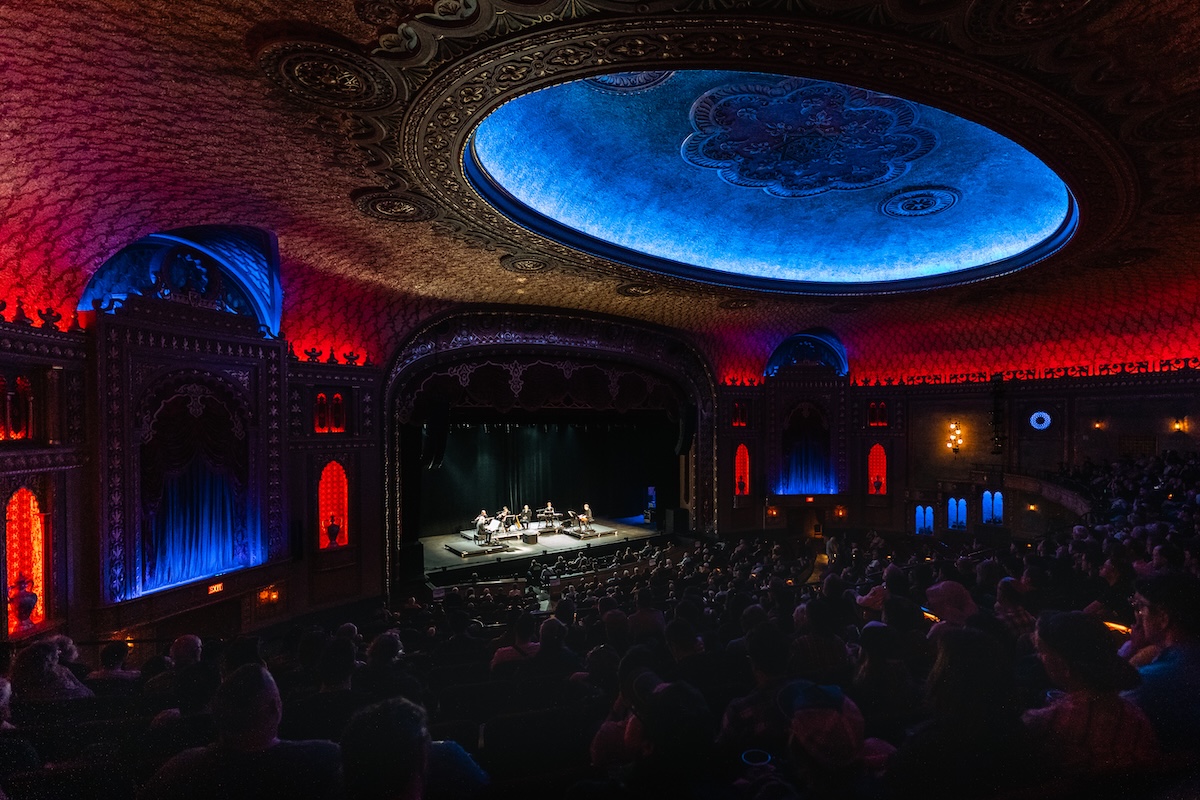
Ashley Capps has spent most of his career building unlikely listening spaces in places people didn’t expect them. In the late ’80s he opened Ella Guru’s in Knoxville, a 200-cap club where Derek Bailey, Steve Lacy or Mal Waldron might appear one night and John Prine or Uncle Tupelo the next. Long before festivals became corporate megastructures, Capps was already thinking about how different audiences could share the same musical space.
That instinct carried into the ’90s as he promoted outdoor shows across Knoxville, then onto a farm in Manchester, Tennessee, where he co-founded Bonnaroo in 2002 and helped redefine what a modern music festival could look like.
Two decades later his most distinctive creation might be Big Ears, which occurs March 26-29 in Knoxville, Tennessee. Launched in 2009, the festival moves easily between jazz, experimental music, folk, minimalism, noise and whatever else catches Capps’ curiosity that year. Over a long weekend the city fills with musicians and listeners who treat concerts less like events to check off and more like rooms to inhabit. For Capps, who grew up listening to everything from James Brown to Miles Davis to classical records spinning in his mother’s house, the premise is simple: good music deserves the right space, and a curious audience.
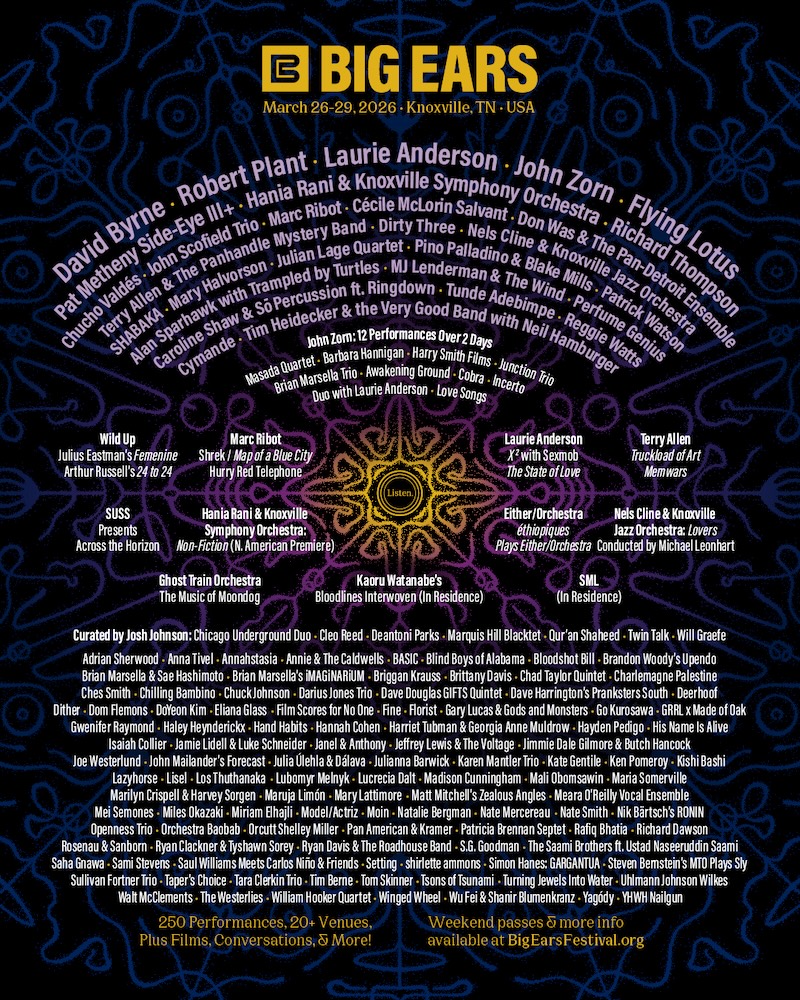
The 2026 line-up looks tailor made for In Sheep’s Clothing: a roaming constellation of artists whose work rewards close listening and curiosity rather than spectacle. William Hooker, Pino Palladino and Blake Mills, Mary Lattimore, Mary Halvorson, Lucrecia Dalt, William Tyler, Sam Wilkes, Jeff Parker, Deerhoof, SUSS, Dirty Three, Sam Gendel, Carlos Niño and dozens more of equal caliber will appear across the weekend.
True to the Big Ears ethos, several surface in multiple configurations. Gendel performs with Niño, Palladino/Mills and, as digi-squires, Nate Mercereau. Niño also appears with Surya Botofasina and Aaron Shaw. Lattimore plays solo as well as in collaborations with Walt McClements and Julianna Barwick, and Parker brings his Expansion Trio. Elsewhere, Los Angeles collective SML takes up a multi-night residency, and the ensemble Wild Up stages an Arthur Russell disco tribute, a late-night set designed to stretch Russell’s orbit from downtown minimalism to the dance floor. Across the schedule, musicians drift between groups and contexts, turning the program into something closer to a living network than a fixed bill.
I spoke with Capps ahead of this year’s festival about those early Knoxville shows, the strange art of programming Big Ears and why the best listening sometimes happens when you stop trying to see everything.
Randall Roberts: Have you always lived in Knoxville?
It’s my hometown. I’ve been out of town for various stretches for various reasons, but it’s always been home base. We had an office in Nashville for a while, largely tied to Bonnaroo and relationships developing around that. But Knoxville was always the control center, so to speak.
Had there been successful music festivals in Knoxville before Big Ears?
There were attempts. There was a festival called Rhythm & Blooms that I worked on the first year. It was launched by the Dogwood Arts Festival. Then it didn’t happen again for almost 20 years, and it came back for a while but it’s no longer around.
Back in the ’90s, from about ’92 to ’99, I promoted outdoor concerts at World’s Fair Park. During that time we did a lot of standalone shows but also had a two-day festival that kind of set the tone for some of what came later. Then they shut the park down because they were building the convention center.
What kind of artists were you booking in the ’90s?
Anybody who would work with me. I had relationships with Widespread Panic, Phish, Dave Matthews Band — a lot of the jam bands. But also Bob Dylan, Willie Nelson. At World’s Fair Park there were so many great shows: The Offspring, Tim McGraw and Faith Hill, John Fogerty, Ray Charles.
The real value of that time was that the park was basically an open field. We put up the stage, took it down, handled security ourselves. It was a real learning platform that ultimately led to some of the other outdoor festivals we ended up doing — Bonnaroo being the one everybody knows.
Those artists sound like they’d be baked into the population around Knoxville — less esoteric than Big Ears.
That’s only part of the story. The first shows I did were the Art Ensemble of Chicago, Eugene Chadbourne, Oliver Lake. This was all early ’80s. Jack DeJohnette’s Special Edition. Ralph Towner. I started working with a lot of the Windham Hill artists — Alex de Grassi, Michael Hedges. When I opened Ella Guru’s in ’88 it was a 200-capacity room. We had Steve Lacy, Derek Bailey, John McLaughlin, L. Shankar, Mal Waldron, Jay McShann. But also John Prine would do three-night runs. Marcella Detroit would do a couple nights. Leon Russell. Garth Brooks played his first two shows in Knoxville at Ella Guru’s and even wrote a song about the club. He name-checks it on one of his mid-’90s records.
A lot of that music was esoteric for Knoxville, but we wanted to appeal to as many people as we could. Sometimes we had shows seven nights a week. Variety was essential — both to survive and to attract an audience in a town this size. But it also reflected my own interests. I never wanted to be boxed in.
I grew up with a cousin who took me to see James Brown when I was seven or eight. I found my uncle’s 45s of Elvis Presley and Chuck Berry. My father had a jazz collection — Lee Konitz, Miles Davis, Duke Ellington. My mother loved classical music and trained as a pianist. To me it was all just music.
When you begin shaping a Big Ears lineup, what are you thinking each year?
Ashley Capps: These days it’s really an ongoing process. Sometimes things take several years to come to fruition because of artists’ schedules or our own capacity. So there are conversations that go on for a long time before they coalesce into something that actually happens. By the time we get close to the festival and it’s finally “done,” it’s really just a snapshot of a process that’s still in motion. Then you’re already thinking about the following year.
There are always ideas, themes, influences and interconnections between artists and their own influences that shape the programming. A lot of conversations happen with artists, with other music lovers, with people bringing ideas to my attention. It’s a very unscientific process, but there is a vision behind it. One of the most important qualities I can have as a curator is being open and susceptible to influence. Booking the festival is a journey of discovery for me too. Some artists I’ve known and loved for decades and they form a core of the festival experience. But many others I discover during the process.
In booking Big Ears, what have you learned about attention and how people listen in different kinds of rooms? Has it been hard to balance excitement with close listening?
You’d probably have to ask members of the audience or the artists themselves about that. But there is an interesting tension. Most of the music we present rewards close listening and immersive listening. It’s not something you can really dip into and out of and fully grasp. The challenge is distraction. But the reward comes when you tune out the distraction and focus on what’s right there between your ears.
At the same time, the opportunity to choose from many different experiences is wonderful. I sometimes use the metaphor of a restaurant. You can’t order everything on the menu. But if it’s a good restaurant you choose something and enjoy it — you’re not sitting there thinking about what you didn’t order.
More musicians and people in the music business seem to attend Big Ears. Has the atmosphere changed over the years?
The beautiful thing about the weekend is the community that’s grown around it. That started from the very beginning and continues to grow year after year.
It really does feel like a family. It’s a joyful way to spend a weekend if you’re a music fan. There’s so much inspiration, so many passions to learn from. Our biggest challenge going forward is how to nurture and sustain that community as the festival evolves.
What feels different about this year’s programming? Where are you experimenting with format or presentation?
We had two divergences this year. One was that we wanted to present David Byrne and Robert Plant. We were also working on an Avett Brothers project with Mike Patton that unfortunately didn’t end up happening.
In those cases we decided to make them separately ticketed events. Part of that was economic — we didn’t want to drive up the cost of the overall festival. These are big shows that operate on a slightly different economic plane. We also didn’t want people standing in line for hours worrying about whether they could get in. So we made them reserved-seat shows. We’ve done that before but not for several years.
The other thing we did was explore new venues. We lost one of our churches this year because of a scheduling conflict. Some artists were interested in performing in the round, which led us to reopen the Greyhound bus station in town, which has been closed since 2022. We worked with the owners and the city to create a new kind of immersive space. There will be drone elements, an SML residency for three nights with two sets each night, and Wild Up is doing an Arthur Russell disco show called “24 by 24.” It’s going to be a late-night thing with a disco ball.
We always try to place artists in venues that best suit what they do. If something needs a seated theater, we use one. If it needs a standing rock club, we use that. But sometimes we also like to break the model — like when we put the symphony orchestra on the floor of a rock club so people could walk around the orchestra.
Because this is for In Sheep’s Clothing, I’m curious about your listening setup at home.
I listen to a lot of CDs and vinyl. I do use streaming services but very surgically. I don’t browse playlists. I’ll go listen to a specific artist or album I’ve read about. I still love the sound quality of CDs and good vinyl. Sometimes headphones, sometimes speakers. I’ve had one set of speakers for about 30 years. In another room I have Sonos speakers. In a way it’s similar to the festival — different rooms offering different listening environments.
Read a very long, very fascinating interview with Ralf Hutter and Florian Schneider from Synapse Magazine, 1976. In 1976, Kraftwerk sat at a strange, newly powerful crossroads. Autobahn […]

Begin with the performance, stay for How to Rescue Things, Orcutt’s 2024 album that deepens the picture. Every once in a while it’s important to watch an artist […]
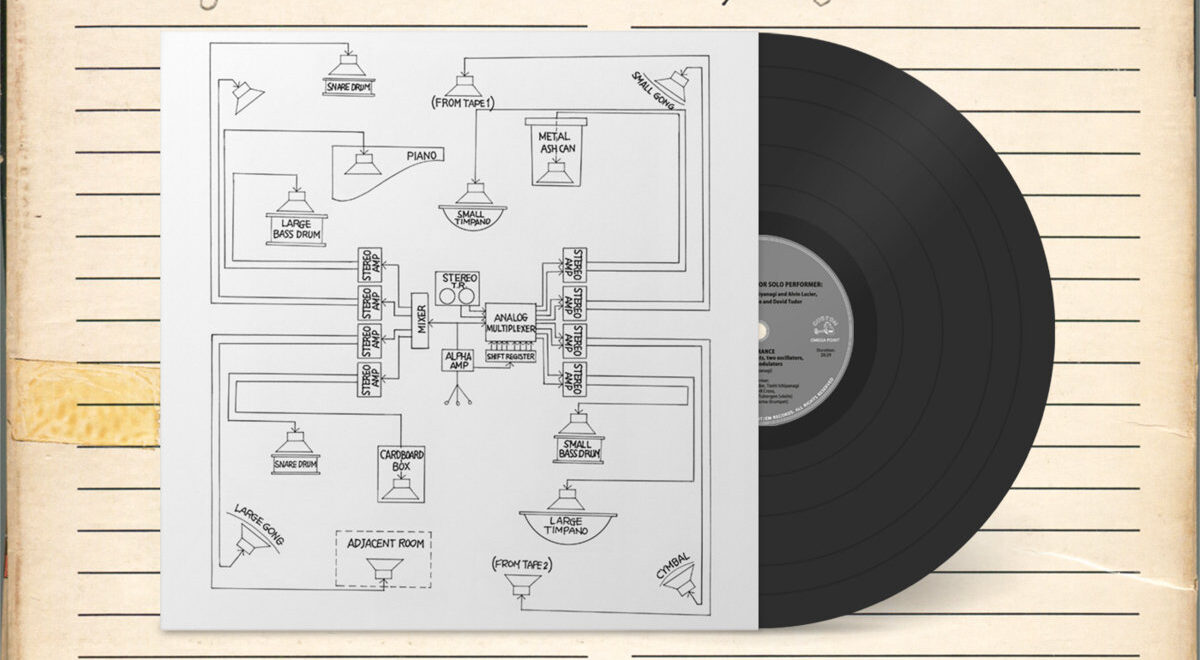
EM Records has rescued a lost 1967 performance of Lucier’s Music for Solo Performer, featuring Cage, David Tudor and Toshi Ichiyanagi. Available for pre-order from In Sheep’s Clothing. […]
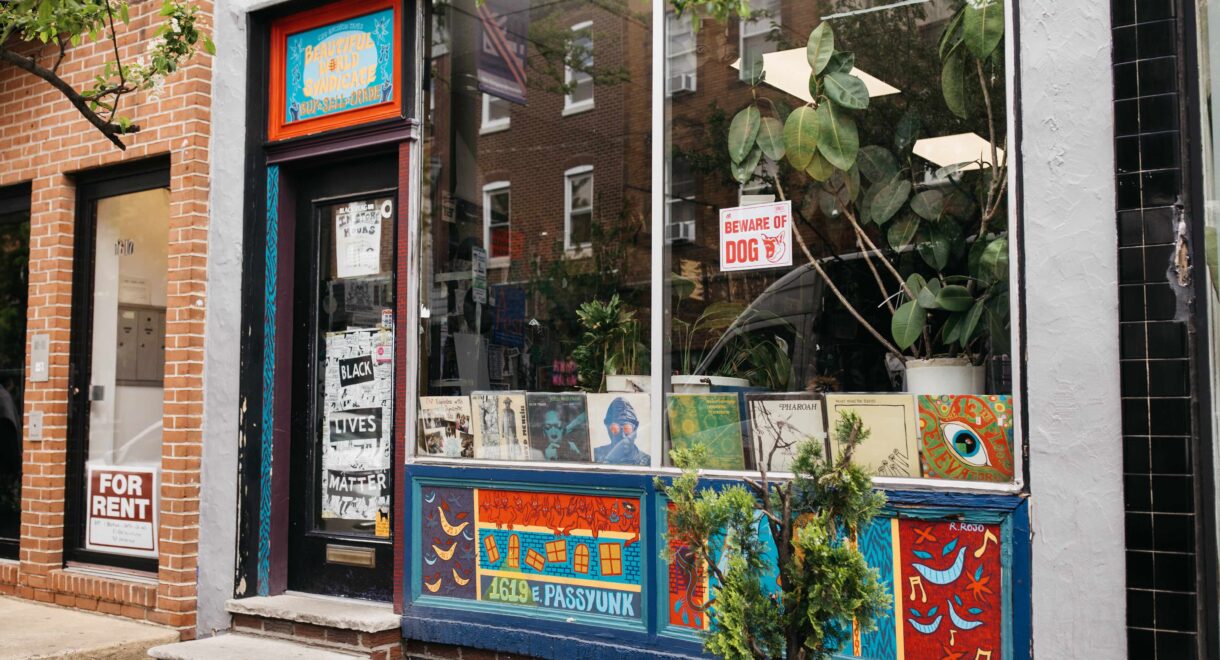
Step into one of the largest and most beloved online record shops in the world… While the defending champion Philadelphia Eagles continue their playoff run to a possible […]
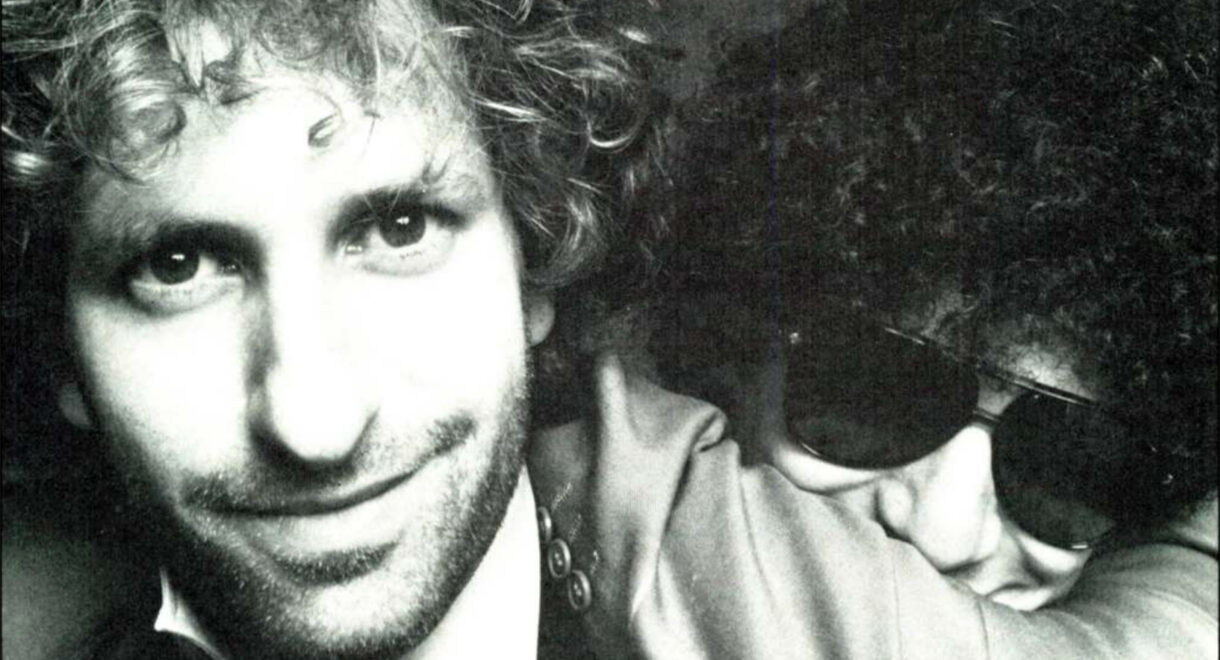
Read an archival 1984 Musician Magazine interview with cult favorite Detroit mutant funk duo Was (Not) Was. “When black people hear our music,” proclaims Don Fagenson, “they know […]
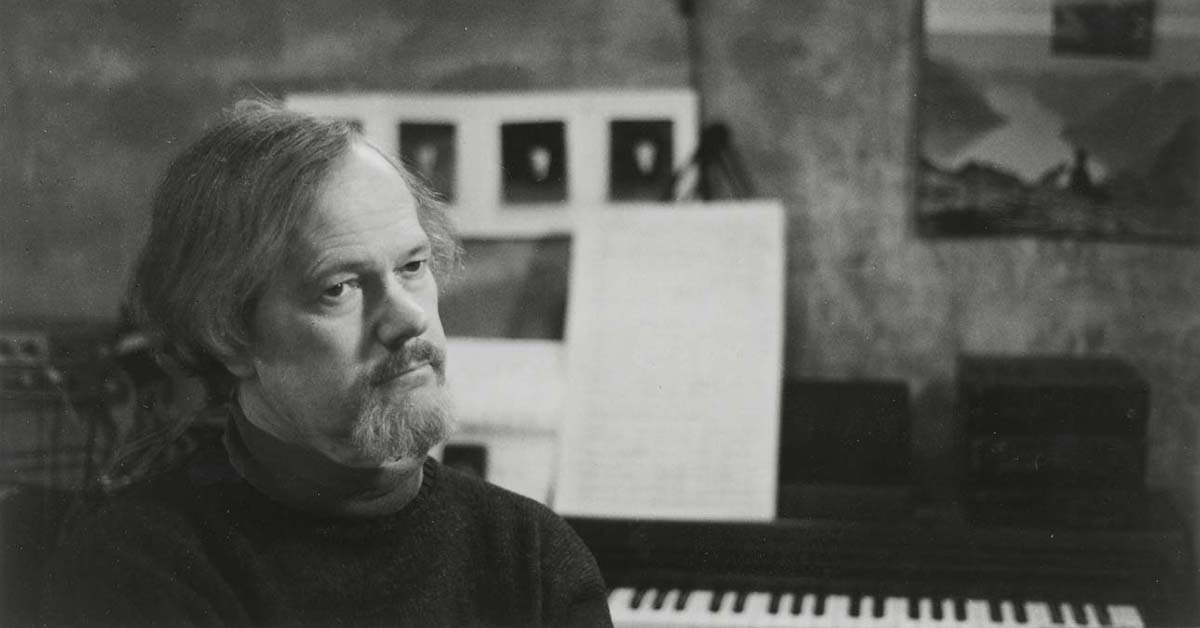
In this interview from the 1980s, Marshall looks back at the forces that shaped his music, from early tape experiments and West Coast freedom to the darker emotional […]