


April 15th: Nicola Cruz shows up to LA with a bag of Latin vinyl records for ZZK’s Onda Latina! Not to be missed… Quito, Ecuador based electronic producer, […]


The modern independent label takes many shapes and forms. With listeners absorbing new music at blistering swipe speeds, it’s often the more amorphous labels who seem to make the most sense of it all. While labels continue to serve as sanctuaries for music discovery, these days eclecticism and unpredictability, rather than niche conformity, lead the way into the next era of world building. Case in point: One of our favorite labels, A Colourful Storm, has touched on everything from minimal synth and trance to indie pop and avant-garde music. With storytelling at its core, the label has released some of the most endearing compilations and contemporary music of the past decade bringing together “a network of freaks” from around the world.
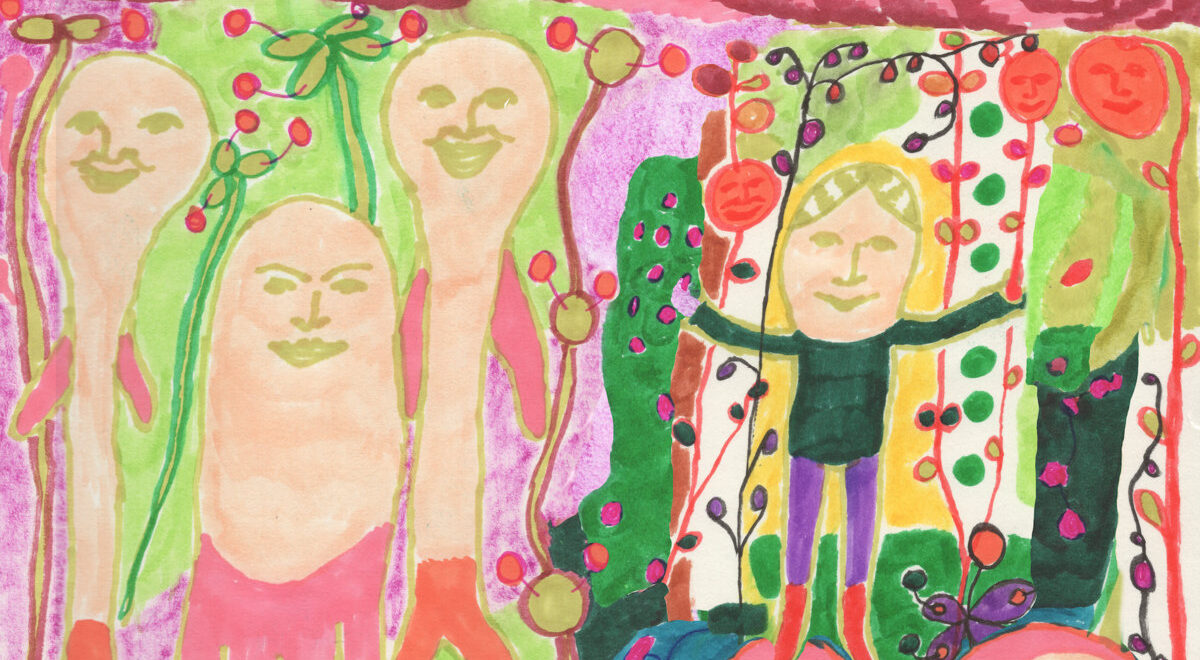
Early releases explored left-field club music dipping into the bass spectrum, while their first compilation, I Won’t Have To Think About You, shared softer tones of indie rock and twee-pop from the ’90s. The label’s most recent compilation contains new music from up-and-coming acts in the Australian underground. Whatever the genre, music on A Colourful Storm is sure to elicit a certain deeply emotional feeling, and there’s often a whimsical little message to accompany each release. Check the release notes for the label’s beloved first compilation:
“Do you ever wonder what it was really like? What was your favourite childhood memory? And what did you want to be when you grew up? … Summerdays spent on 53rd and 3rd; popkisses shared under blue suburban skies. Fleeting autumnal nights when we were left in the rain. I think It’s unashamedly lovelorn and I’m so bookish and shy.”
With A Colourful Storm celebrating its 10th anniversary this year, In Sheep’s Clothing’s Phil Cho spoke with label head Matthew Xue aka Moopie over Zoom to learn more about the label’s beginnings and approach, inspirations, Australian sounds, and recent projects.
Hey Matthew! Nice to meet you. Starting with a sort of silly question… I love A Colourful Storm’s capybara logo! What’s the story behind that and how do you feel it relates to the identity of the label?
I feel like the identity of a label takes time to develop. It’s all about trying things and taking risks. After a few releases, something really latches onto people’s interests and you follow that momentum, or you can negate it. At the moment, it feels like the capybara is quite fitting to music on the label which isn’t necessarily cute, but does evoke a certain fragility or playfulness. A lot of the label’s recent shows and releases, like Time is Away’s Ballads, the compilations, or Annie A’s The Wind That Had Not Touched Land, have that sort of atmosphere and people have seemed to resonate with them the most.
A Colourful Storm is one of our favorite labels here at In Sheep’s Clothing. The eclecticism is truly amazing… I’d love to know more about your personal musical background. What are some of your earliest memories of music?
It was probably listening to pop music on the radio in the mid-90s. Having just moved to Melbourne from Beijing, I would listen to music driving around in my mom’s car. I’d hear artists like Everything But The Girl or The Cardigans, and whatever else that would have been on the radio at that time. Those songs still hit when the time is right. The melodicism and catchiness of them is something that sticks with me for sure.
The label touches on so many different eras and sounds: folk, to avant-garde, minimal synth, IDM, electronica and more. Can you point to any key moments or scenes that shaped your musical voice?
The late ‘00s bloghouse and indie-dance era – when a lot of bands were being remixed by bedroom producers but also professionally by artists like Erol Alkan – was what got me into electronic music. That time was a big part of what shaped my musical identity, but I wouldn’t say that it directly shaped A Colourful Storm. With the label, I think of it as something that shows a different side. I started off releasing music by my friends, who were electronic music producers. Soon after, I became more interested in the music that I wasn’t playing or hearing on dancefloors.
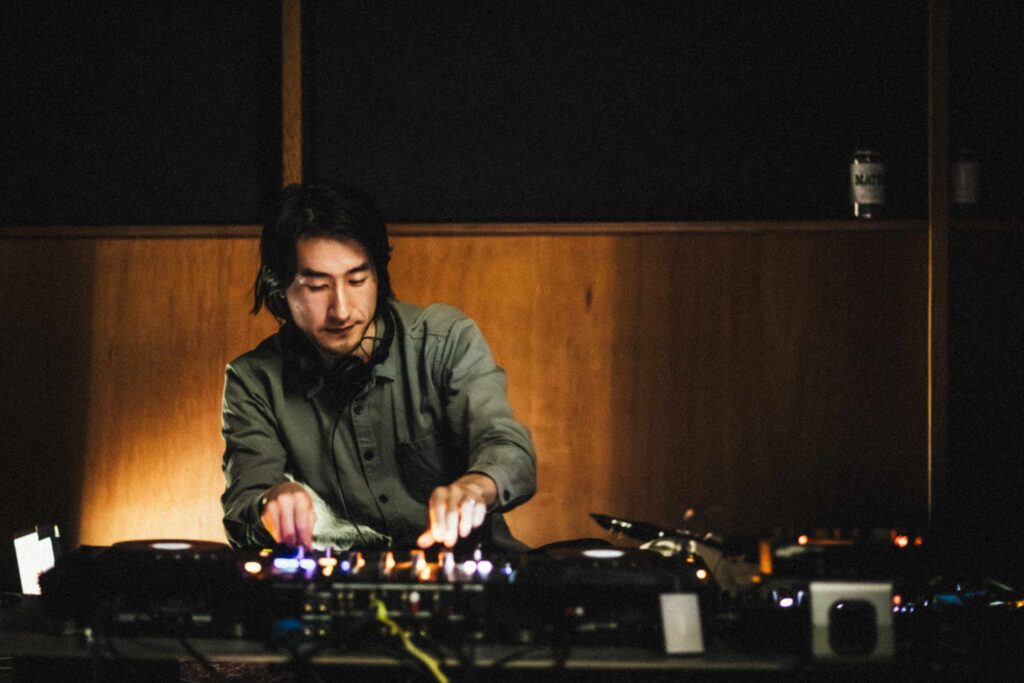
“Bayu and I started playing music that was pop-leaning, easily obtainable and sounded comparatively naive, but felt honest to our musical backgrounds. Bands like Broadcast and Stereolab and the Sarah Records catalogue.”
The band and electronic world was starting to mix together during that time so maybe that was an influence in a subtle way?
It was really inspirational reading about the Optimo guys in Glasgow and their nights. Optimo had also booked acts in Melbourne like HTRK and were really clever in their programming. It never seemed like just having a band first, and then a DJ set later. There were stories of them having weird bands at peak times, which I thought was the coolest thing. I think there’s a link to the label in terms of finding a thread through everything that you’re immersing yourself in and just trying to make sense of it all. We’re absorbing so much information and have access to so much music now so hopefully we’re also becoming more open-minded as we listen. For me, running a label and following other labels have the potential to facilitate that ideal.
Going back a bit… A Colourful Storm was first a beloved mix series before becoming a label in 2016. Can you talk about those early years and how the label formed?
So the mix series was started by Bentley and Calum, two old friends of mine from Melbourne. It was during that era when podcasts and mix series were all the rage. After a while, I had an urge to turn some of these ideas into physical releases. I came across Denial’s “California Dreaming,” a cover of The Mamas & the Papas song, and thought, “Wow this is one of the most beautiful things I’ve ever heard.” I started digging, and it turned out there was a link in Melbourne as the label owner of the original release was still playing the odd show around town. My friend Josh, who was performing under Nerve and supporting a gig of his, introduced us and that was the seed of how it all started.
Did you have any sort of idea of what the sound of the label would be at that point?
Not at all! After the first release, my friends around me were making electronic dance music at the time, and I thought, “Why not release this as well?” It goes back to what I was saying about taking time to find an identity. At that point, you really have no idea. A Colourful Storm could easily have become a reissue label or something instead — thankfully it didn’t. I just followed my instincts and whoever was closest around me.
Those early releases leaned into bass music, industrial, and techno, but I feel still had some sort of underlying narrative or idea to them. Then came the label’s first compilation in 2017 I Won't Have To Think About You, which explored indie folk and new wave. How did that first compilation come about?
I was starting to DJ around a bit more during that time and the releases on A Colourful Storm were linked to the different contexts that I was playing in. The more club-oriented stuff was obviously music that could be played in a club, but I felt it also had to be weird enough to be put on record. I didn’t want to just put out a standard house or techno record. It needed a point of difference and something to say.
I was also getting booked to play background music at bars and more sociable venues with Bayu, who I did the first compilation with. At the time, a lot of DJs in these scenes valued rarity over listenability, judging a record’s worth by their difficulty in accessibility or monetary value on the second hand market. In reaction to that, Bayu and I started playing music that was pop-leaning, easily obtainable and sounded comparatively naive, but felt honest to our musical backgrounds. Bands like Broadcast and Stereolab and the Sarah Records catalogue. Bayu has extensive knowledge of indie music in Australia and abroad and we were sharing all these tunes with each other and thought, “Let’s document this moment as a release.” We were playing stuff from the first compilation and a lot of the bartenders would come up to us and be like, “Oh, this is so refreshing. We never hear this kind of music here.” It was about contextualising things in ways that listeners might not have expected. What can we play that fits into this environment but reveals something different?
In some ways, that release really set the tone for the label in the way that it approaches storytelling. I’ve always loved the descriptions on A Colourful Storm releases. How do you approach the narrative aspect of the label? Do you start with the music and ascribe a narrative to it afterwards, or is it the other way around?
That’s a good question. I mean, narrative is important in everything – the artwork, description, tracklisting and release title all contribute to it. It’s hard to know which comes first. Maybe an important thing is that first and foremost, we didn’t want to be academic or authoritative. We didn’t want to give a history lesson of what happened in a particular scene during a particular time. So once you exclude those parameters, you start asking yourself, “What is it that you actually like about this? What are the feelings that you want to evoke from these songs?” For us, it was about the emotional aspect of music and how you feel after listening to it. Sometimes it’s overly sentimental and twee, but that’s all part of it. I don’t want our compilations to come across as the antithesis of other labels’ work, but for us, this was just one way of finding our own identity and what story we could tell.
After the compilation was released, A Colourful Storm continued to put out new music from artists around the world – Australia, Germany, Japan, London, New Zealand, and beyond. I’m curious, how did the label’s output evolve from your local friends in Melbourne to become a more global network of artists?
Every release has its own story, but a lot of it stems from real-life connections, whether through people locally or on my travels. Sometimes it’ll be connecting with people that I’ve never met before. Other times, it’s recommendations or introductions from friends or artists already on the label. There’s always some previous connection. Over time, the network inevitably gets larger. One example, with Maxine Funke, I’d loved her music so much but we’d never met after being in touch for so long. After releasing her Seance album, we ended up setting up a tour in Australia.
“I love the contrasts in landscape here as you move from the city, and maybe that comes through with the label. It’s just trying to express a multifaceted thing rather than being set on one sound.”
Outside of the global aspect, there’s also a focus on local Australian music. You’ve spoken in previous interviews about your idea of Australian music. I’d love to hear more about that, and how it shapes the label’s curation?
I’ve seen a few waves of Australian acts attract overseas interest in the past decade or so and every one has been musically so different. In terms of electronic stuff, there was this slower deep house sound that became quite popular overseas in the 2010s. After that, there was a kind of bleeps and breakbeat revival, and now a shift towards more organic sounds. It always shifts. Each of these have been tagged as an “Australian sound” by outsiders, which can be unconstructive as the class and racial struggles in that tag are neglected. This also happens in the live music scene, of course. People always try to find something that’s uniquely Australian, but Australia is so wide and there’s such a diversity of people, environments and spaces that it’s difficult to pinpoint one thing.
There’s a significant distinction here between urban spaces and the natural landscape – it changes so quickly, which I find interesting. I grew up in the suburbs and went to see a lot of live shows in the city, so I would say that the music that inspired me was mostly created in and for these contexts. But I love the contrasts in landscape here as you move from the city, and maybe that comes through with the label. It’s just trying to express a multifaceted thing rather than being set on one sound.
At one point, I remember hearing artists like Carla dal Forno, Tarquin Manek, CS+Kreme, and Kallista Kult, who seemed to come from a vaguely connected “scene.” A Colourful Storm continues to put out music from many of those artists. Do you feel like that was an Australian sound that was happening?
Those are fantastic names to bring up, and relate to music that I have been listening to a lot in recent years. Have you heard of this tag, ‘dolewave’, which was being thrown around in the 2010s? It’s associated with a supposedly Australian take on indie rock during that time which included a bunch of bands that became renowned internationally. The names you mention come from a different scene though, and are perhaps more inspired by other UK or dub-influenced sounds. I bring this up just to say that all of these artists have been labelled as “Australian” at various points, despite sounding so different. I don’t have the authority to say what makes any of them uniquely Australian.
I was speaking to Sam from CS+Kreme about this a while back, and he had similar feelings on it. Regardless, I really love that Kallista Kult record. It was quite a mysterious release at the time, but is there anything you can say about it now?
It’s been revealed that the members are Tarquin Manek, Sam from CS+Kreme, and YL Hooi, who is the vocalist. That was a one-off project between all those guys. For me, it’s such an interesting record because it occupies this space where it sounds like it could’ve been made by someone who’s properly hermetic and hasn’t left the house in weeks, but the soundscapes are spacious, wide-reaching and are suggestive of places much further away. Kallista is this beautiful, kind of witchy suburb in the outer regions of Melbourne. So there’s reference to that, and a certain mysticism or just plain weirdness that’s present in Australia.
Moving quite a bit ahead, but the label’s latest compilation features all contemporary music, and mostly artists from Australia. Can you talk about how this collection of tracks came together?
I listen to a lot of contemporary stuff and a lot of great music in that vein is coming out locally. This compilation actually came together really quickly. Working with contemporary artists can be a breeze compared to archival projects. One of the songs that spurred the whole thing was by a band called Who Cares? They self-released four tracks last year and it was a complete revelation. Their vibe and the footage I’d seen of them performing live were amazing, and I connected with it immediately. After hearing their track, I thought, “This is something that we can build a release around.” There’s also Carla dal Forno’s track, which was her rehearsing over an instrumental track by an artist called Foresteppe. She was just singing over it. I really love the spontaneity about it. The compilation is basically my dream lineup for a day’s program of music and the way it’s threaded together is based on a vibe or an atmosphere. If I’m going to be honest, it comes down to a certain production level too. It can’t be too polished or overproduced.
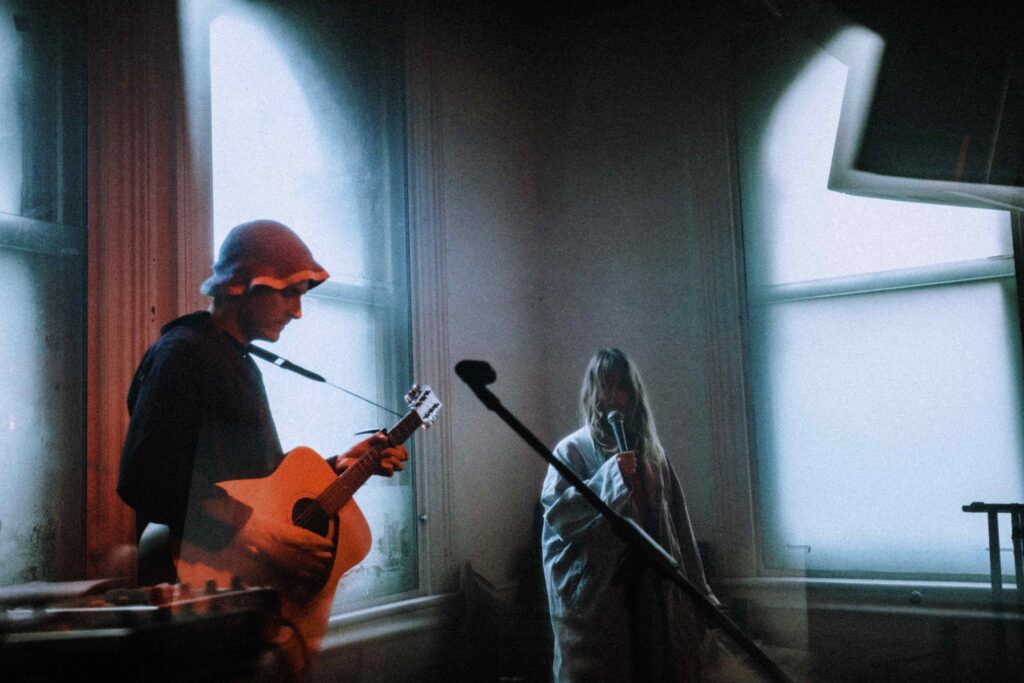
Last year, the label also returned to dance music with a new series called Delicate Bloom. It’s been nearly a decade since the label launched with those early club releases. Do you feel like the club-oriented music that you’re interested in releasing has changed since then?
Dance music trends move so quickly and trying to keep up with them is no easy feat. I think releasing something should take a bit more patience. Ultimately, it’s a physical record and you want to look back on it and still find something special in it. There has to be a certain edge or something that makes it unique. In terms of Delicate Bloom, it reached a point where releasing club music on the main label didn’t make sense to me on a curatorial level anymore. But I was still being sent all these amazing tracks, so the series came out of wanting to find a way to present that properly.
You’re also known for your prolific club and festival DJ sets. I’m curious, does what you’re doing on a DJ level influence the label at all?
There’s definitely some crossover and I love opportunities where I get to play more of the label’s releases. And Klon Dump has to be the most played artist in my sets. But ultimately, I see the label as a different side of what I’m into – something whose releases I can listen to from start to finish at home, rather than being just another serviceable dance music label. There are so many people out there doing a much better job of that than me.
Lastly, the label will be celebrating its 10-year anniversary this year. What do you have planned?
There are going to be a bunch of shows around the world and some festival showcases too. In Melbourne, we’ll do events celebrating both the live music and club-focused sides. I’d love to get Bentley, Calum and Bayu on the bill for these, and book a weird band to play at peak time, of course.