



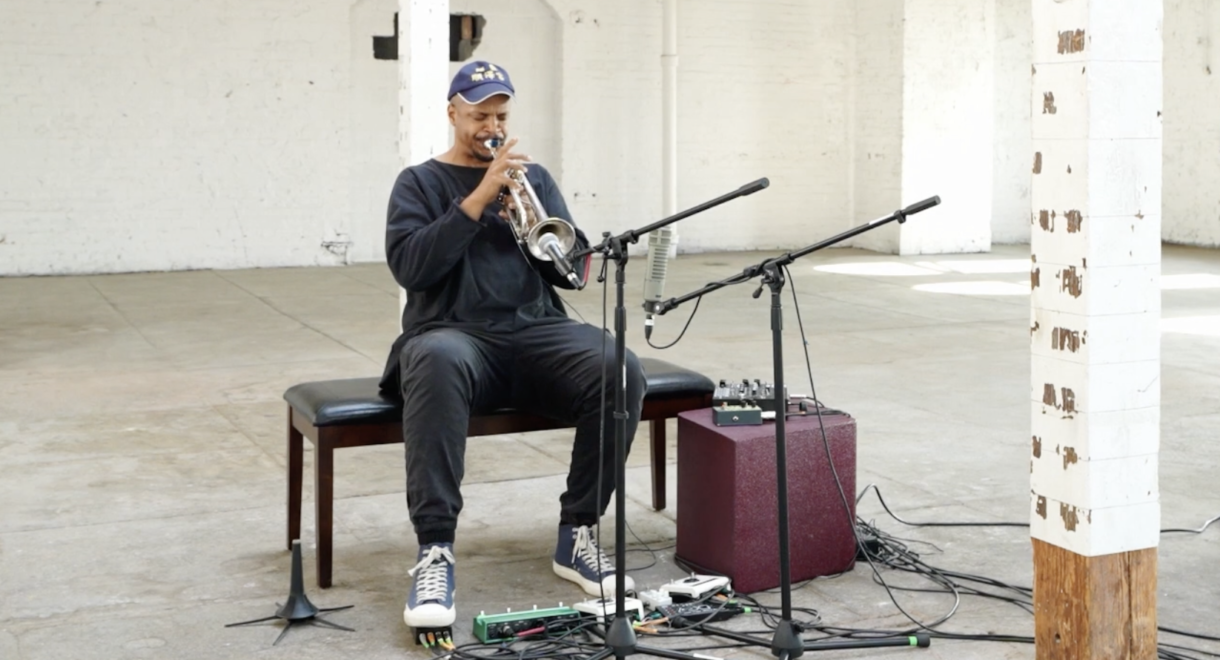
A new live video brings the AKP Recordings release into sharper view, placing Williams alongside a catalog that includes work by YAI and Jessica Ackerley, all now available […]


To get a better sense of Matthew Sage and Chaz Prymek’s new album Shelter, it helps to stretch back to the formation of Fuubutsushi, the quartet they share with Patrick Shiroishi and Chris Jusell. Since the late 2010s, the group has released a concise run of long-form recordings and live documents, building a practice grounded in collective improvisation, ecological awareness, and an acute sensitivity to time and place.
Prymek and Sage’s history runs deeper. They’ve worked side by side for years, issuing a series of duo recordings before stepping away from the format. Shelter marks their first full-length return in six years, a period that expanded both of their worlds.
They continued to drive Fuubutsushi forward while Prymek developed his Lake Mary project and shaped scenes in Salt Lake, and Sage released a string of albums on RVNG while balancing teaching, family life, and a land-based practice in Northern Colorado. Both moved through the Midwest for stretches, but their shared orientation still points west, toward Colorado and Utah.
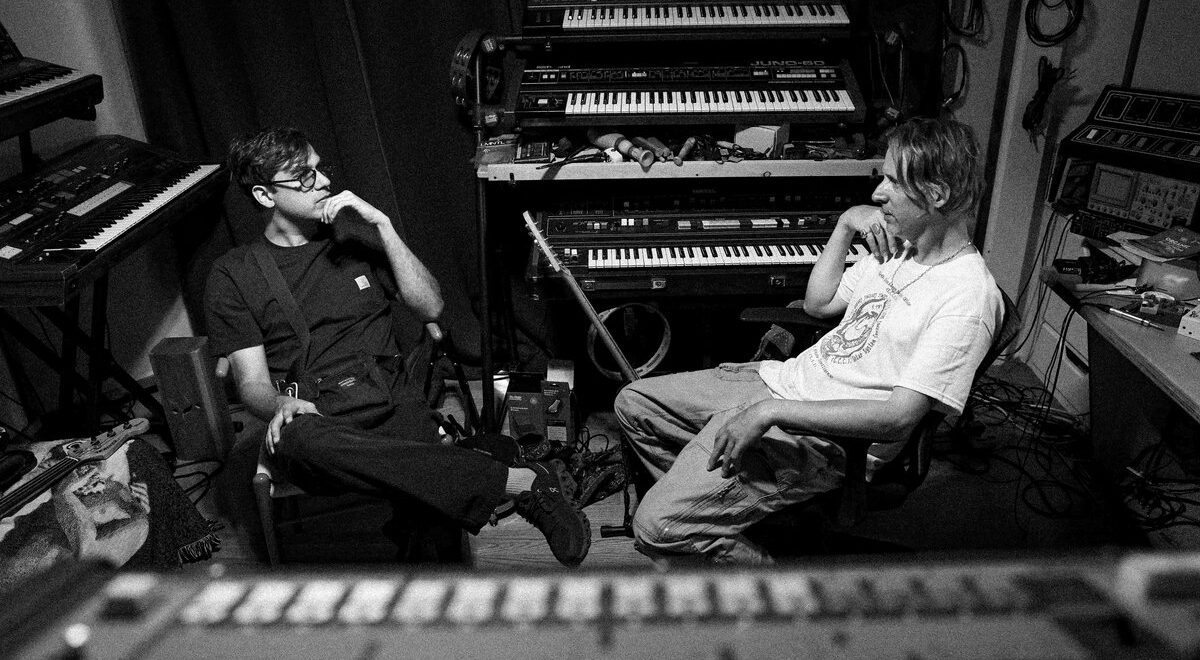
That sense of place anchors Shelter. Recorded in Sage’s pole barn studio in rural Colorado, the album centers on spare first-take improvisations with light overdubs, Prymek on electric guitar, lap steel, electric bass guitar and harmonium, Sage on piano, clarinet, synthesizers, harmonica, percussion, banjo, alto saxophone and vocals. The music opens gradually, melodic and unforced, closer to a long conversation than a formal session.
Prymek and Sage aren’t the only members of Fuubutsushi with a new release on AKP Recordings. Saxophonist Shiroishi appears on Making Colors, a trio record with Dave Harrington and Max Jaffe that pushes the shared language into sharper contrast.
The album threads quiet passages, cymbal shimmer, coiled sax lines, restrained guitar, through sudden bursts of density and motion. Its A-side unfolds as a continuous take divided into four interlocking movements, while the B-side leans into looping structures, heavier rhythmic weight, and a more open, suspended melodic field. Sage created the layout and artwork, extending the same collaborative current that runs through Fuubutsushi and into Shelter.
One more thing: Sage has a fascinating Substack. You should read his post on the history of recorded music.
A new live video brings the AKP Recordings release into sharper view, placing Williams alongside a catalog that includes work by YAI and Jessica Ackerley, all now available […]
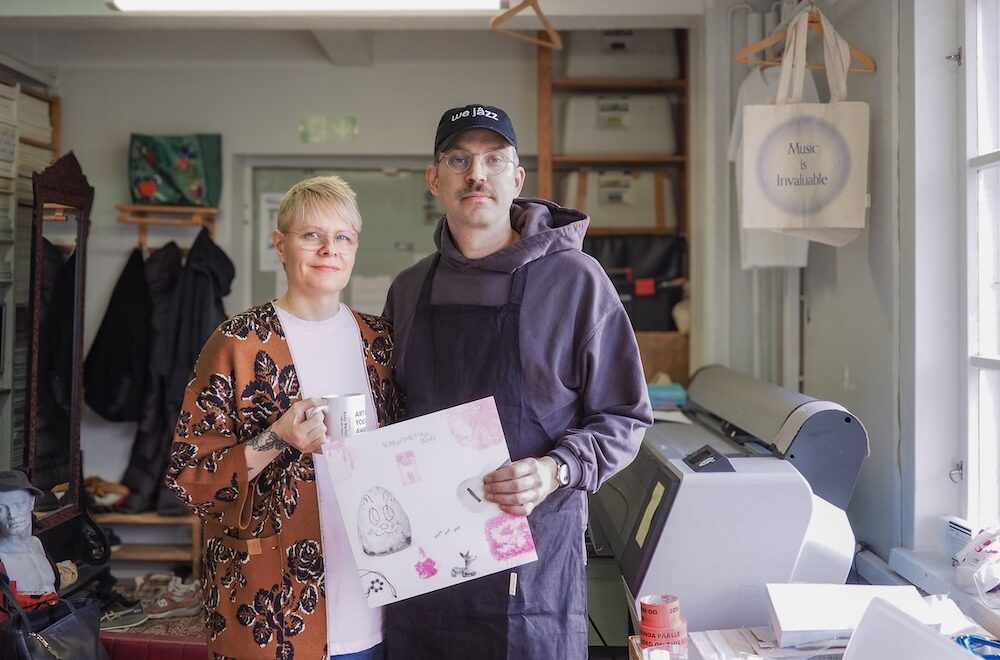
From Tampere, a shared screenprinting practice and a close-knit scene shape a catalog of ambient, jazz, and esoteric music built to be held as much as heard. Tampere sits […]
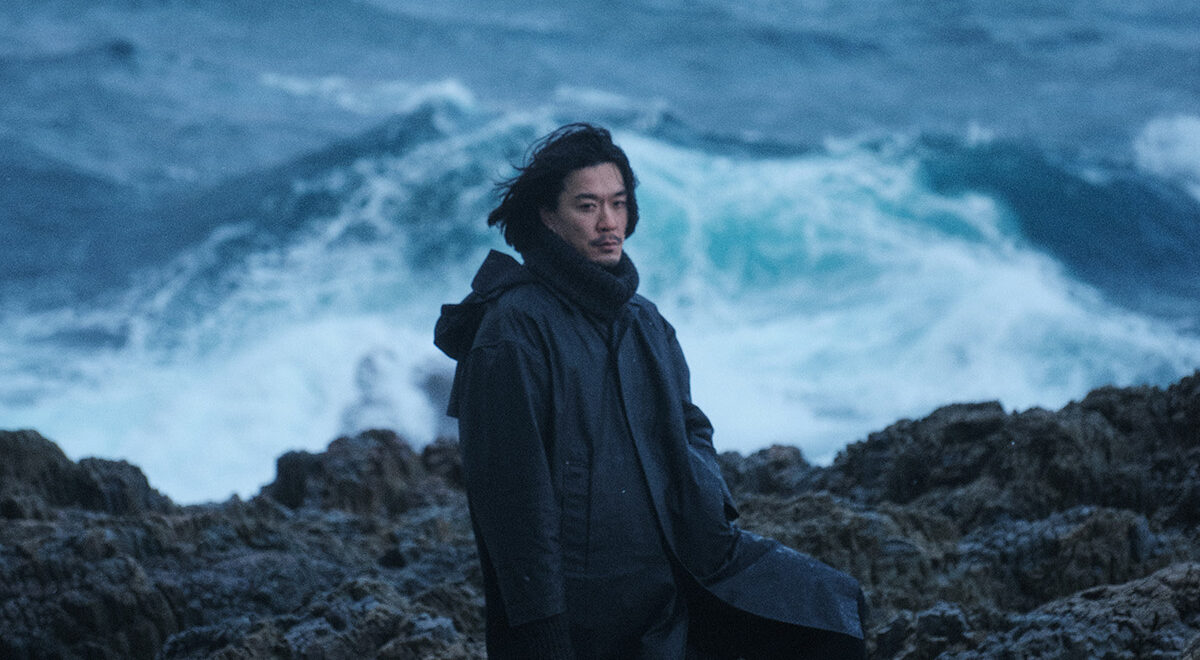
MEITEI’s latest album AGATE / 瑪瑙 is available now for pre-order via In Sheep’s Clothing Records. Daisuke Fujita aka MEITEI is a Hiroshima-born, Kyoto-based artist and composer who […]
“I don’t feel like these things are possible without the ISC team behind it and it’s not something that can be accomplished through an algorithm or AI.” Where […]
Brazilian bossa guitar meets lush electronic textures and modular synthesizers on Aquaticos, out now on Music from Memory! Fabiano Do Nascimento and E Ruscha V aka Secret Circuit […]

Olive Ardizoni and Michael Flanagan discuss their new Ghostly International album Hinterlands, the sounds and ideas behind it and an upcoming performance at the Geoponika Greenhouse. Green-House emerged […]