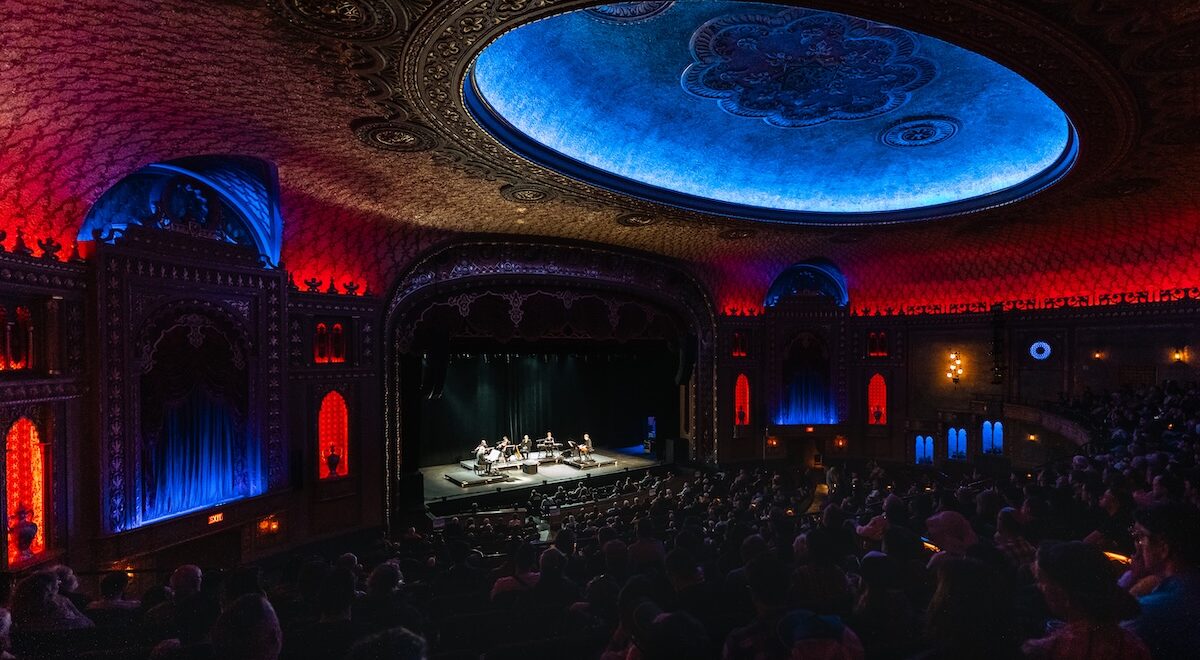




And: Watch Suicide walk onstage opening for the Cars to chants of ‘f*** you,’ a reminder of how hostile rock audiences could be to anything outside the norm. […]


Daisuke Fujita aka MEITEI is a Kyoto-based artist and composer who has dedicated his music and art to reinvigorating and disseminating Japanese traditions of the past. His genre-defining albums Kwaidan, Komachi, the Kofū trilogy, alongside the more recent SHITSURAI and Sen’nyū bring together ethereal soundscapes, delicate field recordings, and sample-based production techniques that elicit “lost Japanese moods” capturing a bygone era in Japan. “I want to revive the soul of Japan that still sleeps in the darkness,” he has said. “Even if you look at the roots of Japanese music, you’ll see that there are a lot of it belongs in the ‘Western pop music’ category. And somehow, that’s regarded as ‘Japanese’ music. I feel like our level of consciousness towards still-existing traditional Japanese scenery, like a snow-capped ‘Jizo’ stone statue or the reflection of the moon on a water surface in the countryside, is low.”
Out April 17th via KITCHEN. LABEL, MEITEI’s latest album AGATE, named after a stone formed through slow accumulation, pressure, and time, was developed over five years of touring in underground live houses and listening rooms to culturally significant sites across Japan, Europe, and Asia. The album tells a sonic tale of decay through texture, sediment and strata. Samples, traditional instruments, and organic rhythms drawn from his Kofū trilogy are broken down through phase disruption and variable bitrates to produce delicate layers of sound made new through slow accumulation, pressure, and time.
The album is out April 17th via Tokyo and Singapore-based label KITCHEN. LABEL. Pre-order available now via In Sheep’s Clothing Records.
To learn more about his music practice and the upcoming album, In Sheep’s Clothing’s Phil Cho spoke with MEITEI over email exploring topics from Kyoto to sampling to visual collaborations and beyond!
Hello Daisuke! We’re big fans of your music. To start, where are you writing from and how has the year been so far?
At the end of last year, I moved my base from Hiroshima (my hometown where I spent most of my thirties) to Kyoto. Having already lived in Kyoto twice during my twenties, this marks my third time living here. And I’ve begun living in a Kyo-machiya (a traditional Kyoto townhouse), something I’ve long admired since my twenties. Even during the day, the interior remains dimly lit, with shadows spreading throughout. I feel this kind of living environment resonates with a Japanese aesthetic sensibility. In stark contrast to the dim atmosphere of the first-floor rooms, the area above the garden has no roof, making it the only bright spot during the day. This contrast in atmosphere feels very Japanese to me and very intriguing. I haven’t yet begun serious music production since moving into this Machiya, but I believe it will surely influence me in various ways, both imaginatively and practically. I also feel it will allow me to receive creative inspirations I haven’t yet noticed. Perhaps some kind of music production will begin this spring.
You are scheduled to perform at Kiyomizudera Temple, a World Heritage site in Kyoto, and have spent many foundational years in that city. Of course, Kyoto is one of the oldest and culturally significant cities in Japan. Can you tell us about living there and how the city has influenced your work?
Kyoto is the city in Japan that has influenced me the most. It’s also the city where I spent most of my formative twenties largely alone. The circumstances of living in such a city now hold profound significance. The intuition I felt in this city during my twenties was expressed in a certain outline primarily through “Yabun,” “Kwaidan,” and several musical elements yet to be released. If I were to explain it, Kyoto is the place where I most strongly feel the contrast between Japan’s cultural past and its modern Westernized present. Amidst the scent of modern culture, the distinctive scenery of Kyoto’s Machiya townhouses spreads everywhere. The cityscape, filled with countless temples and shrines, allows one to witness the expression of distinctly Japanese characteristics as a Japanese person. However, what about the music? Even in Kyoto, Western-style music is fundamentally mainstream. While music using traditional instruments holds a traditional position in Kyoto, it’s difficult to say it’s fundamental. For example, I sometimes listen carefully to the music playing in the arcade along Kyoto’s Shijo Street. During the New Year period, koto music was played, but now it’s jazz. Frankly, jazz doesn’t resonate at all with Kyoto’s atmosphere, it feels unfortunate that the musical environment reflects this. That said, even if, say, New Age music were played, I don’t think it would be harmonious either. I now believe that music with distinctly Japanese elements, like the koto, would have been perfectly sufficient to gracefully enhance a civic space like the arcade. This is just one example. To elaborate further, I still can’t help but wonder why, even though my country already possesses such impressive musical elements like a koto, we rarely hear such music naturally in public spaces.
Against this backdrop, I became aware of some unique element within the Japanese influences I had absorbed from Kyoto. Even then, I imagined it must be music that wasn’t mainstream or non-mainstream, yet self-evident while defying categorization. Despite growing up listening to existing music, I found none that expressed such inspirations I had received from Kyoto. Thus, I explored an approach to considering what kind of music I should bring into the world, grounded in my own highly anonymous personal history and perspectives. I felt it needed to be some form of expression that steadily reflected my own concepts, without leaning toward the music history shaped by scene-forming music cultures or markets, and without aligning with either the mainstream or non-mainstream. In my case, it just happened to be in the field of music. But in my twenties, I never dreamed my future profession would be as a musician.
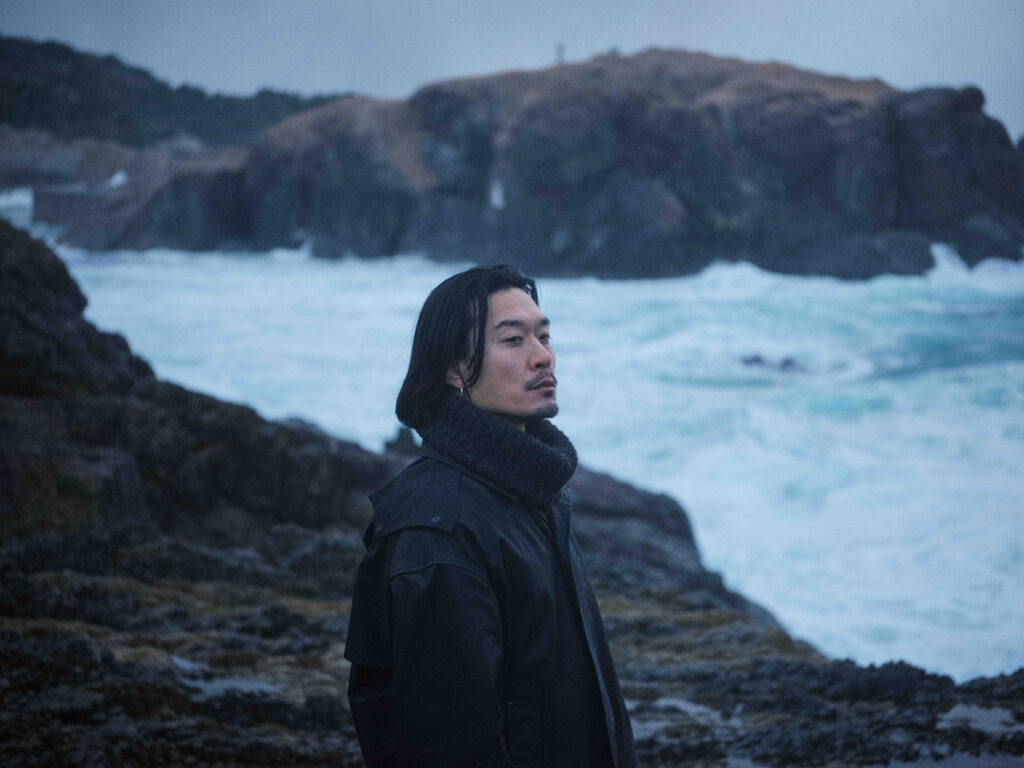
“I began to feel that various aspects and existences of Japan were worthy subjects for expression through music. What sounds characterize the Japanese night? What sound embodies the mood of Japan’s rainy season?”
Your latest album AGATE continues your exploration into the concept of “Shitsunihon,” a sense of old Japanese memory that quietly endures beyond time. What are some old Japanese sounds that inspired these compositions? These could be specific recordings or even sounds that you’ve heard or remember naturally.
I’m frequently asked about sound. That’s only natural, but I often draw inspiration from things beyond sound. Of course, I have many favorite musicians, and listening to their music enriches my daily life. However, when creating music, I believe the true value lies in expressing impressions from contexts outside of music itself. I can say “Shitsu-nihon” is symbolic of this. As you just mentioned, it could also be called a memory of Japan. That’s true, but contemporary musicians in Japan didn’t seem particularly interested in such memories of Japan. Most musicians here try to wield a common language based on Western music history, but I think it could also be said they occupy the position of followers rather than natives in Western music. When I think this way, I realized that the common language of music resides within certain domains (the musical culture formed by scenes or the musical culture formed by markets). When this thought occurred to me, I felt that expressing things as music while sensing energy from more different fields was precisely the expression I should pursue in this era.
From this perspective, I began to feel that various aspects and existences of Japan were worthy subjects for expression through music. What sounds characterize the Japanese night? What sound embodies the mood of Japan’s rainy season? The scent of Japanese summer, the fragrance of flowers and grasses, the mood of lanterns still lit late at night, and conversely, the mood of a temple shrouded in complete darkness. These examples are merely a small, representative sample of the whole. However, they are also very impressionable and captivating aspects. Experiencing them in Japan, I feel they are elements you can sense through your five senses, leaving an impression both splendid and humble. For instance, I studied Japanese painting in a personal art class. There was indeed a distinct Japanese sentimentality, different from Western sensibilities. Yet, unlike the background that emphasizes formality like tradition, I also felt it possessed a strong common touch. However, when transposed into music, no equivalent position to Japanese painting exists. While music using ancient instruments is highly traditional, I sometimes wonder: what exactly is the common touch in Japanese music?
The other day I had this experience. In the Gion area of Kyoto, there’s a famous temple called Kennin-ji. Within it lies one of fourteen sub-temples called “Ryosokuin Temple”. I was guided through its garden, sipping matcha in the tea room while savoring the view of the garden spreading out beyond the tea room’s windows. At that moment, I pondered what kind of music I could imagine emanating from the tea room. To put it another way, I was contemplating the existence of music before it becomes music. Music already exists all around us, even without pressing play or dropping a needle on a turntable. Imagining how to express it feels like a natural act of composition to me.
AGATE, named after a mineral, explores what lies beneath, sediment and strata formed through time and pressure. The album is described as a postscript to the ‘Kofū’ trilogy, reconstructed through live performances. Can you share some memories from these performances, and how the tracks evolved over time?
This is very interesting, but my first live performance was in 2019. I was probably around 34 at the time, which felt like a very late age to be getting on stage and playing music. If you calculate from when I started music in my twenties, it meant I had spent nearly ten years composing alone, with absolutely no listeners.
I was 33 when I first released “Kwaidan” to the world. Until I turned 34 the following year, I had absolutely no experience performing any kind of musical expression in front of people. But that was incredibly fortunate. Because once I started standing on stage through performances, I began receiving a kind of inspiration I had never imagined before.
This time, “AGATE” is being released as a postscript to the trilogy “Kofū,” but when I created “Kofū,” I never imagined I myself would end up standing on stage in the future. Of course, I didn’t want to either. So, one of the most novel experiences for me since 2019 has been the larger context of performing on stage. Over these seven years, the work “Kofū” has evolved through various experiences, updating its original version released back then and arriving at a remodeled new version. Playing “Kofū” songs on stage repeatedly added discoveries of styles suitable for live performance, complementing the original studio-produced style. This experience was a future I could never have imagined back when I was just composing at home. And through live performance, MEITEI’s music transformed into something louder and wilder. At music festivals, we started getting booked on the same lineup as rock bands. On the other hand, as if to prove this point, I’ve never been booked for an event dedicated to ambient music – the genre framework within which MEITEI’s music is categorized in Japan. I find this deeply intriguing. Looking back now, these seven years of footsteps, guided by a destiny that flowed in beyond my own expectations, feel like sedimentary layers deposited after being tested by some kind of fate. Within them, layers of chance and fascinating musical discoveries may be etched like geological strata.
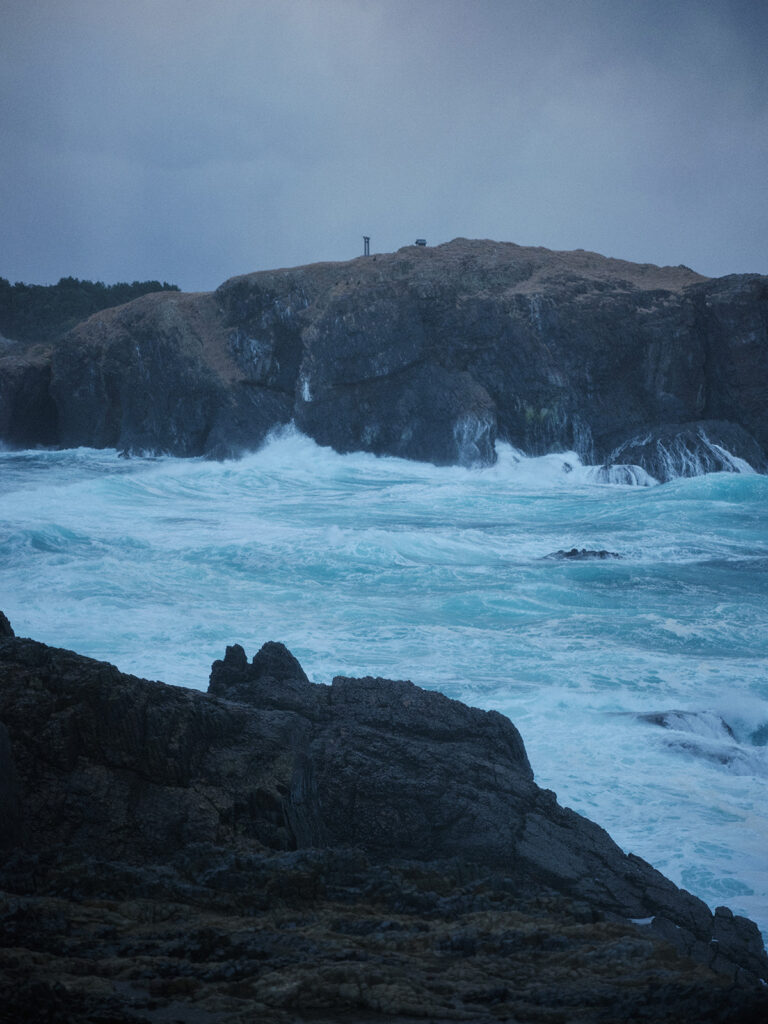
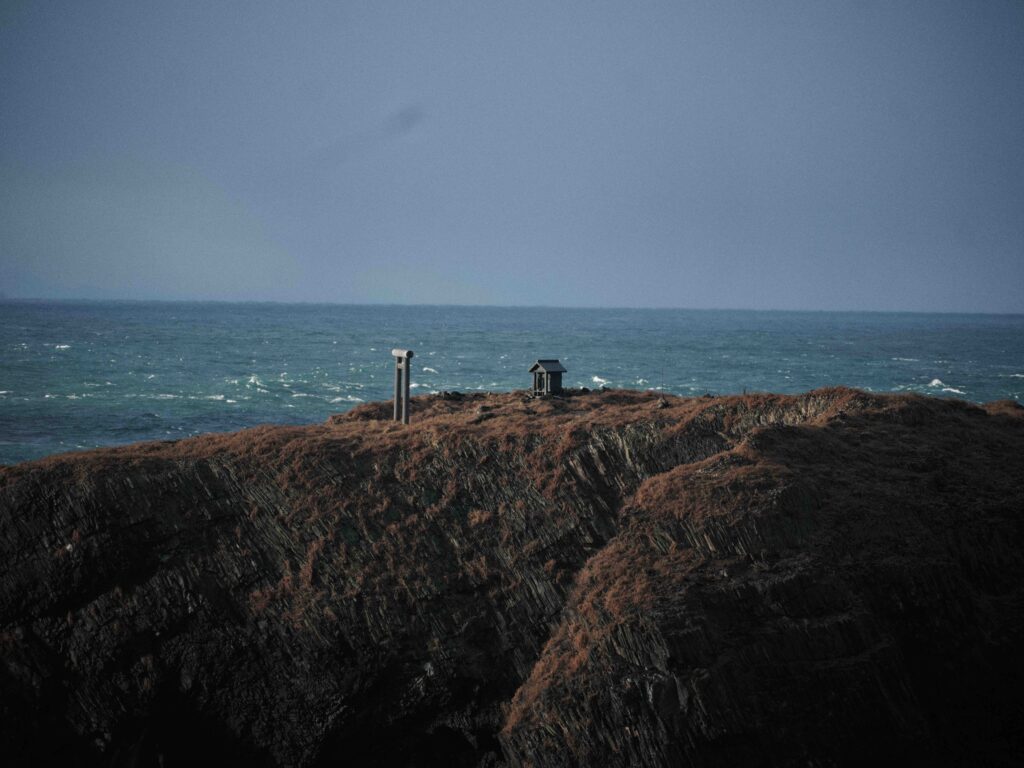
“The Japan Sea in December, with its foul weather, was lashed by fierce winds. The sea was raging. Yet, a rainbow rose over the distant horizon… This will surely become the gateway to my future path of expression.”
For your previous albums, I’ve read that you often visited certain places as a starting point for your compositions and tried to translate the air and environments into sounds. Was the process similar for this album? If not, what was your creative process in composing these tracks?
This album doesn’t reflect that kind of experience at all. As I mentioned in the previous question, elements experienced within the framework of live performance are reflected in every track. For example, taking the series of songs called “Oiran” as an example, the original version felt a bit too short and simplistic on stage. That’s precisely why I needed to change the arrangement. I began to realize that having more emotional parts would make both the performance and the audience more exciting. When creating the original versions, I cherished the process of attempting to translate the sounds of creativity that imaginatively aligned with Japanese culture and its past moods. In contrast, for this album, I used the existing original versions as a foundation, adding new parts or removing parts that were originally there. To put it simply, it’s a version where I added the musicality I wanted to share with everyone when playing on stage to “Kofū”.
In the conventional sense, I believe this album was composed through a process with a strong musical coloration. Knowing the original piece might be a prerequisite for enjoying this work. For me too, this kind of remodeling wouldn’t have been possible without the original.
This is a common example, but I think many musicians compose with live stage performances in mind before writing the music. However, I had never once composed with the stage in mind prior to 2019. Yet this album could be seen as the first time I expressed stage experience within the existing world of “Kofū.” It’s also an album that only came to fruition after repeated live performance experiences. While many musicians might center their work around live performance, my foundation was always the act of composition itself. That’s precisely why this kind of experience felt truly fresh to me. For that reason, I’m deeply grateful to the various organizers and event curators. Over these seven years, they’ve provided me with truly wonderful opportunities.
There seems to be a bit more distortion and maybe even tape saturation on the samples compared to your previous works. That can be especially heard on the final track of the album. How do you view distortion or changing the bit rates of samples as it relates to your concept of “lost moods”?
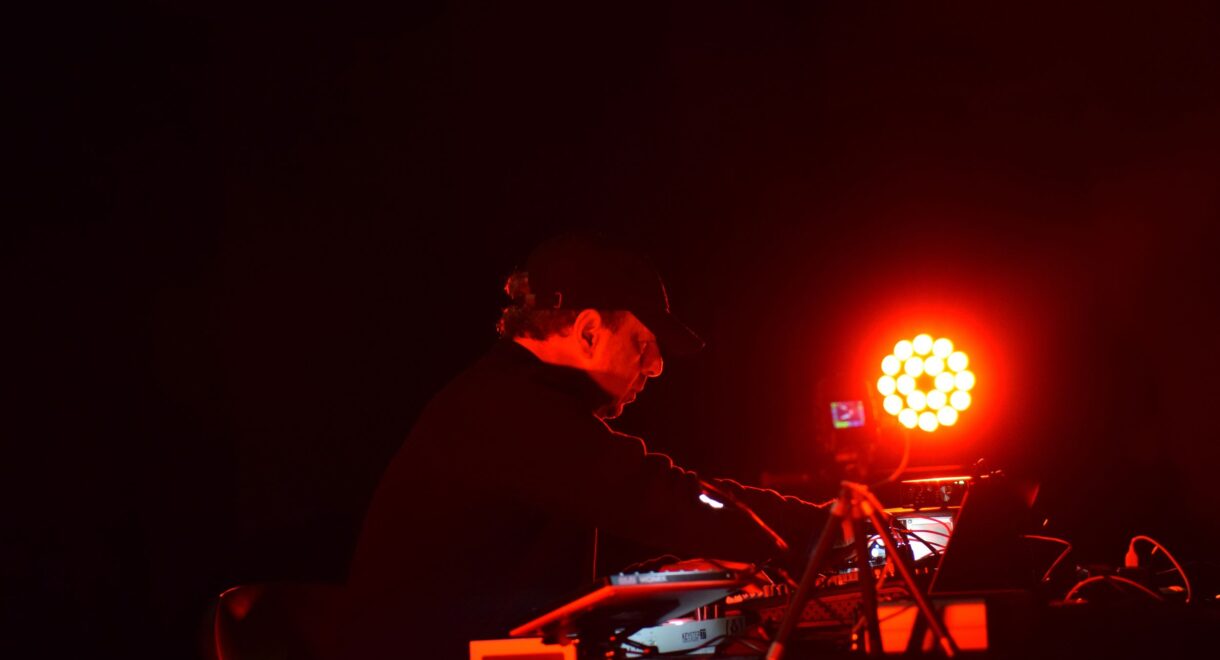
Such musical texture, I would say, is like agate that shines through layers of intuitive choices. I’ve added a very contrasting sonic texture to the traditional material, but I’m not consciously thinking logically. The only thing I can say is that the gear I use in live performances might have a big influence. I exclusively use Ableton Live with the Push 2 controller for live performances. The characteristic of Ableton Push 2 is that it allows me to add various plugins to pads, enabling a playstyle that incorporates fast-paced performances and SE-like sound effects while playing on stage. This element carries an extremely modern vibe, and I think it radiates a peculiar individuality atop the old material and traditional sounds that form the core of “Kofū”. Simultaneously, it creates a sense of instability. This initially disappointed me, as I had envisioned a live performance that better preserved the original track’s mood and logic. But after standing on stage many times, I began to think that presenting a different expression to the audience would offer a fresher experience for those who made the effort to come to the venue. In other words, around 2021, I started thinking that playing exactly as the original might not be interesting at all. And by around 2023, I feel the prototype style of the current “SHIN-OIRAN” had been completed. Though those who’ve attended MEITEI’s live shows know this well, the live performance of the released “SHIN-OIRAN” is even more intense. It’s more distorted, with scattered sounds in a state of phase disruption from variable bitrates. While I’m in the electronic music field, it possesses a very organic, live-instrument-like quality that’s unique. So please come to the live shows.
This album was mastered by Kelly Hibbert, known for his work with Flying Lotus, Madlib, and J Dilla. Your work is broadly categorized as ambient / experimental music, but also has clear ties to hip-hop. How has hip-hop shaped your production style? Are there any hip-hop albums that were particularly influential to you?
I certainly love hip-hop, but I haven’t really been listening to it with much expertise these past three or four years. In fact I don’t really have the habit of listening to a lot of music anymore. I do listen, of course. But I’m more interested in worldviews outside of music. The reason I offered Kelly as the mastering engineer this time was because I learned somewhere that he had handled mastering for recordings that also expressed musical elements of American jazz and R&B. We completed the mastering for “AGATE” through repeated sessions with him.
Actually, I did like hip-hop, but even before that, in my early twenties, before I started composing, I often listened to music at clubs that had this earthy, unique presence, you could call it jazz, like Pharoah Sanders? I listened to their music at home in my late twenties too. I think I often included them in my Spotify playlists. “Wisdom Through Music” and ‘Thembi’ were also albums I loved. And I really liked the track called “You’ve Got to Have Freedom.” I remember about 17 years ago, Red Hot Chili Peppers’ John Frusciante and Flea jamming on a hip-hop-style rhythm over part of that track’s phrase, and it was incredibly cool. While not hip hop, Red Hot Chili Peppers’ “Californication” and “By the Way” are probably albums that are absolutely foundational in my musical development. I often talk about this in Japan, but I’ve really loved listening to John Frusciante’s solo work.
On the note of sampling, do you have a specific approach to sourcing samples? Whether that’s through physical record digging, field recording, watching films, or online? What are some of the characteristics you look for in a good sample?
Speaking about my current approach, there isn’t a specific one. For instance, during the “Yabun,” “Komachi,” and “Kwaidan” periods, not a single sample from another artist’s work was included. However, at that time, I was deeply immersed in field recordings and similar practices. Building upon those, I focused solely on composing using sounds I had captured at home. On the other hand, with the “Kofū” series, I did include sampling from older third-party music as an option. The reason was that I thought this technique could serve as a method to satirize (or objectively view) the impression of Japanese musicality, and that it could also become an impressive presentation. This is because, whereas “Yabun,” “Komachi,” and “Kwaidan” expressed my internal production, I felt some form of external production was also necessary as a means. This is because, when creating music, I have always prioritized considering whether it will be a sufficient presentation for the listener. Therefore, when producing Japanese music that incorporates an outsider’s perspective, I adopted sampling from old SP records. This is done digitally. While the tactile quality of classic master recordings is intriguing, I don’t want to be nostalgic. While the sound quality of classical samples is easier for us to affirm and tends to become a kind of accepted standard, I believe embracing instability creates opportunities for artistic exploration.That’s precisely why I chose a contemporary digital approach. What matters more than whether to reference excellent samples (the supposedly correct answers) is whether we can find expressions that respect our own perspective. We modern people tend to blindly believe in various things, and I feel we’re being exploited for the potential of various harvests. As you know, good equipment doesn’t automatically make for good composition. The best instrument changes depending on what I myself want to do. So if I had to explain it, a sample is like a once-in-a-lifetime opportunity. Intuition is everything. Rather than scrutinizing how excellent a sound is, I think it’s better to leave it to fate how that sound will be output through me.
What I’m about to say has nothing to do with sampling, but for me, choosing where to live is more important than choosing instruments. The energy a place holds can profoundly shape the music that emerges. The house I lived in Hiroshima gave me “Kofū,” and Hiroshima, the prefecture where I was born and raised, gave me the intuition for “Kofū.” And I now realize it also gave me the option of sampling from a third-party worldview, something I hadn’t done before. For instance, speaking of Hiroshima, the tracks “Hiroshima” and ‘Heiwa’ from “Kofū III” are prime examples of this. Currently, I’ve chosen a residence (instrument) called a “Kyo-Machiya”, but I have no idea yet how this will affect my music, which is incredibly exciting.
However, explaining this process afterward might make it seem like some clear, logical path was laid out. But last year, I never dreamed I’d be living in Kyoto like this, and even three months before moving, I didn’t think I’d end up living here again. So, I really feel like life is being tested by some kind of destiny. I also feel like composing itself happens within this uncertainty every single time.

The artwork for your albums are all so evocative and elicit specific moods. Photographer Hiroshi Okamoto is also involved in this project. Can you talk about your collaborative process and how your musical ideas and concepts are translated into visual form?
Artwork is extremely important to me, holding equal significance to composing music. While I’m known publicly as a composer because I’m a musician, the title that feels most natural to me is actually “director.” I always have a concept decided for each album’s theme. I share this direction with the designer before creating the artwork. Primarily, Ricks from KITCHEN. LABEL handles the design for the ‘Kofū’ series and “AGATE.” He is exceptionally unique, being both the label founder and the designer. He also oversees the production of all releases from his own label, personally visiting factories to manage the production process. Without this, the aesthetic quality of MEITEI’s unique works could not have been maintained. Label founders who work like him are extremely rare. I have immense respect for him.
First, in terms of the process, after I present the direction for each work to him, I explain the album’s underlying concept, its mood, and energy. This explanation focuses more on visual elements, the color palette and visual aspects, rather than purely musical details. We probably talk more about things outside of music.
I always approach it under the banner of Japanese music, viewing it more as a project production than just song composition. I constantly imagine, in sync with the music, what kind of impression the artwork should convey. Then, Ricks begins to actually embody the direction for MEITEI. We’ve always worked in tandem, collaborating internationally between me in Japan and him in Singapore. The miracle of my envisioned Japan being output through an international perspective stemmed from this process. Had I only worked with Japanese people, I believe I would have lacked the fresh perspective needed to show what Japan is. It’s precisely because subjectivity and objectivity coexist that light and shadow emerge. This allowed our uniquely interpreted expression of the impression of Japan to take shape as the project “Shitsu-nihon.”
I offered Hiroshi Okamoto photography assignments distinct from the primary artwork for MEITEI. He is truly an exceptional photographer. In fact, he also handled the conceptual photography for the previous album, “Sen’nyū.” That album was a project embodying one of Japan’s most famous cultural elements: the Onsen in the town of Beppu. The visuals possess a uniquely Japanese beauty. Shooting at these historic, long-standing Onsen created a profoundly creative impression. He carefully understood the Japanese impression I wanted to convey, and I believe “Sen’nyū” could not have been achieved without his support. As a result, we also released a “Sen’nyū” photo book. I highly recommend picking it up. For “AGATE,” Hiroshi joined the project from a different perspective than his previous work, which involved shooting artwork photos for LP packaging. I asked him to photograph for “AGATE” the sheer cliffs at Hinomisaki in Shimane Prefecture, the westernmost point of the Japanese archipelago, a place I’ve visited every New Year for the past seven years. Enduring sub-zero temperatures, pelted by snow, rain, and sleet during that grueling shoot with him will remain a memory etched in my personal history. The Japan Sea in December, with its foul weather, was lashed by fierce winds. The sea was raging. Yet, a rainbow rose over the distant horizon. I still remember that miraculous sight, and he delivered exceptionally professional work even in such a harsh location. And it was he who captured that moment of MEITEI standing on the sheer cliff, with the Japan Sea, spattered with spray, rain, and snow, as the backdrop. I believe we achieved a very energetic expression, and I also feel it was the first time I had the opportunity to express my own personal essence within the MEITEI project. This will surely become the gateway to my future path of expression.
Any plans to tour in the United States? I remember there was a tour in the works at one point but didn’t end up happening. What is it like performing your music outside of Japan?
That’s correct. We had previously planned a US tour, but unfortunately, various incidents piled up and it didn’t materialize. We still don’t have any US tour plans for this year either. Last year, we had many performances in Asia such as Singapore, China, and Taiwan. We were especially able to visit Taiwan twice through these performances. Hosting a talk show outside of music events in Taiwan for the first time was also one of the memorable experiences. While performances in Japan are certainly very educational, overseas performances provide an opportunity to objectively understand MEITEI for me. That is very meaningful.
Lastly, what’s coming up next for you? Any recent activities (even outside of music) that are exciting?
There are various factors. Domestically, I’m focusing on organizing events that can be approached from a more distinctly Japanese perspective. This applies to the dedication performance at Kiyomizu-dera this spring as well. I believe that for performances at Japan’s World Heritage sites, there has been an expectation for performances rooted in Japan’s historical context, based on tradition, its established order and definitions, and the corresponding forms of expression. Alternatively, commercially successful mainstream music would also fall into this category. However, I have pursued my activities believing there is value in perceiving Japan from a deeply personal standpoint. This perspective may not offer an immediately understandable sensation to everyone. But what does it truly mean to understand? When you ask yourself this question again, I think you will surely realize: unless you time-travel to the past, you cannot know the true origins of a culture. Yet, in reality, we strive to learn and understand traditions from eras we never lived through, and there is no room for personal sensation in that. At the initial stage, we must first learn the forms and begin imagining how to understand what is unilaterally deemed traditional. In this sense, no one can truly know the actual past. Yet, the flow of that bygone time persists as the patina of age, scattered in countless places throughout the present, shaping the mood. One could say there lies a non-traditional, unstable, and often turbulent history. For many people, even when faced with something difficult to judge, converting it into expression will surely reveal the existence of some shared sensibility. I’m always curious about that flow of existence, neither mainstream nor minority, but something more natural.
That said, I have no clear plan. Even if I imagine something, it changes over time. I just want to make something. Then, strangely, things begin to happen naturally on their own.
Pre-Order MEITEI’s AGATE now via In Sheep’s Clothing Records.