


April 15th: Nicola Cruz shows up to LA with a bag of Latin vinyl records for ZZK’s Onda Latina! Not to be missed… Quito, Ecuador based electronic producer, […]

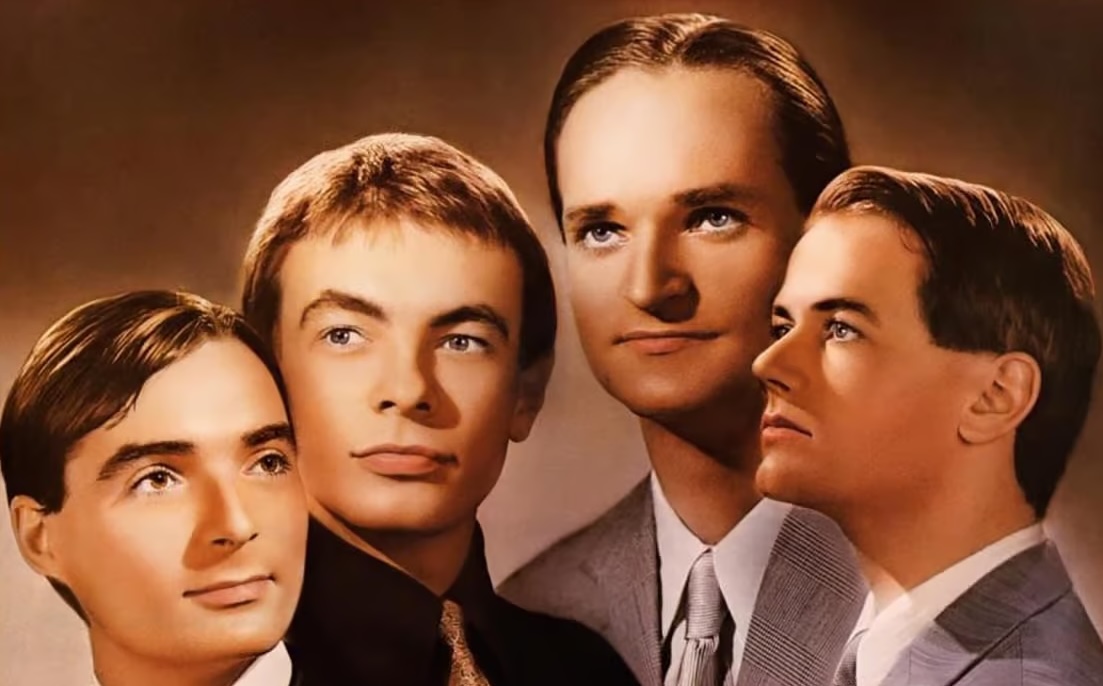
In 1976, Kraftwerk sat at a strange, newly powerful crossroads. Autobahn had carried them out of the Düsseldorf art-music underground and onto international radio. Radio-Activity had tightened their focus on transmission, signal and the psychology of modern technology, and the group was beginning to look less like a rock band using electronics than a self-contained studio organism, building its world from tape machines, custom gear, and the strict internal logic of Kling Klang.
The questions posed in this 1976 Synapse conversation catch them mid-transition, still close enough to the early concerts and art-scene experiments to talk about lying on the floor and long-form happenings, yet already thinking in systems, repetition, human-machine symbiosis, and Europe as a circuit you can travel, tune, and loop.
Synapse wasn’t a conventional music magazine, and it wasn’t interested in celebrity or consumer guidance. In the mid-1970s it occupied a narrow but fertile zone where electronic music, cybernetics, media theory, and speculative culture overlapped. Interviews assumed readers were already curious about how things worked, technically and philosophically, and that assumption shaped the exchange.

As conducted by interviewers Doug Lynner and Bryce Robbley, Kraftwerk’s Ralf Hütter and Florian Schneider think aloud about tape consciousness, tonality, broadcast culture, paranoia, television, and the everyday presence of machines. it was published as Trans Europe Express was taking shape and Kraftwerk’s identity as a human-machine ensemble was hardening.
You can peruse a digitized version of the original issue of Synapse here.
Doug Lynner
How did Kraftwerk begin? And what were you doing at that time?
Ralf Hutter
We had been getting together at the musical academy and then started to perform live concerts of amplified music in ’68, and then directly getting into what we call repeat music, and from then on we started to continually work. In 1970 we opened our studio, Kling Klang Studios, Dusseldorf, just with some tape recorders, and that was the beginning of our recording activities. From then on we worked in our studio, from one thing to the next, progressing.
Doug
You and Florian started Kraftwerk?
Ralf
Yes.
Doug
When did you add the other members?
Ralf
We have always worked with different people according to the music we have been writing. Sometimes we have 6, 4, 5, 3 members. We even played a series of concerts with just the two of us. There was an album of that period. We have two electronic drummers in our new group, which has been the most consistent so far.
Doug
Could you explain what kind of instruments the electronic drummers play?
Ralf
Self-designed electronic drums that are manually operated. We also have, of course, automatic electronic sequencer drums. It is not a great invention in a sense but the way it affects our psychological performance has been very strong. There is no member in our group producing direct acoustic sounds. We create loudspeaker music, direct loudspeaker impact.
Doug
When you were at the academy, were you studying music and composition?
Ralf
Yes.
Doug
Who were you studying with?
Ralf
Nobody of any stature.
Doug
Were they teaching electronic music there?
Ralf
No. It was classical training. What you would call very basic classical training.
Doug
When Kraftwerk first started, did you have any problem arranging concerts and having them attended by audiences?
Ralf
Yes and no. Germany is very open to new music. It is not like America, where there is a strong entertainment thing. Everything in America is measured by its entertainment value. If you do not draw a sellout, then you are nobody.
In Germany, it is not measured this way, so it is rather for pure interest. People really come and listen and sit down. Florian and I have done some concerts for very long periods, also with close relation to visual arts. We have worked with some artists and done all kinds of things like lying on the floor or playing from other positions. It is not really an entertainment show. It is an avant-garde music scene, and the whole scene is very open to anything that comes out and brings some information.
Bryce Robbley
Why do you think that is the case in Germany, as opposed to America or other places?
Ralf
Well, there is this cultural tradition. On one hand we have the same that you have with official entertainment. We could say we have this with state music, which is classical music supported by the state radio stations and state cultural opera houses. They all get money from government tax. People pay tax and this money is used to produce classical music concerts, which might be good, but I do not really want to support them, but I have to because they cannot exist on their own. It is a dictatorship of the established musical culture.
But again there is a very strong movement against this, with any open new musical culture. As soon as somebody comes up and tries to do something, then he gets support from very many people who also feel disillusioned with repeating classical operas over and over again for the hundredth year. It is really of no use at all.
Bryce
Do you think Stockhausen had a lot to do with the way the avant-garde developed?
Ralf
Yes, but it is not just one person that stands out in the general spiritual movement and attitude.
Doug
Is Europe on the whole generally open to this sort of music?
Ralf
Well, there is always the chance for outsiders, because it is not so big. You travel for one hour, then you come into a completely different country. We live a half hour from Holland and Belgium. If you travel another hour, you go right into France. So it is a mixing of different cultures on the Rhineland, and this makes possible for different spiritual things to happen.
Doug
Have you found yourself being influenced by this cross-culture availability?
Ralf
I think yes on the conscious level, but also subconsciously, from our general history and kinetic existence. My passport says I am a German but in reality the Rhine where we live has been German, has been Romanian, French, has been Dutch, even Russian. The country has been taken over and over again by different cultures, so we are really like a cultural supermarket.
Doug
Do you normally, in the shows you are doing now, involve visual arts on the stage?
Ralf
We have worked three or four years with Emil Schult. He is a graduate of the Dusseldorf Art Academy. We work together on the composition of lyrics, poetry, sound poetry, and also visually. He does album covers and things we discuss together and work at together, but he is the one who does this actually. And also projection of pictures. It is not a light show but it is rather static. Sound paintings, we call them sound paintings.
Doug
Do you have any visuals that are interfaced with your electronics by means of voltage control?
Ralf
No, nothing which goes directly, but rather it goes through the people. First it goes through a human being, and then into the audience.
Florian Schneider
In the past we have made some comics.
Bryce
Comics?
Ralf
Yes, we also designed comics, musical comics, and we are working this year, and maybe we will finish during the end of the year, a music book to give instruction and present more aspects of our music than are just possible on record or in a live concert. Things that we have when we talk together, sitting in a cafe or somewhere, and all these things going on all the time. Music coming out of coffee cups or anywhere. All the sounds in general from the environment. We are working on this. It might be finished by the end of the year.
Doug
Could you describe what the comic was?
Florian
It is a story with these small plug-in systems trying to get in the inputs and outputs, trying to…
Ralf
Contact. In electronics, always you have different components trying to get in contact and form things. It is like people meeting, and we have a story of these small, different electronic components meeting each other and getting together and making up something, forming a special group. It is hard to illustrate by talking, but when you see it.
Doug
Has this been released publicly?
Ralf
Yes, but only part of it, and when we have this book together, there will be more of these stories.
Doug
When you started recording in your studio, how did you interest a company in distributing your record?
Ralf
We did not go to any companies or anything like this because it was not on our mind. It was rather, we did what we did, and we played at universities and old cinemas and art galleries, and sometimes we played some festivals. The longer we played, more and more people were coming up to us and handing us business cards saying this or that. We were not really interested in producers or any people that wanted to sell themselves to us, or sell some ideological thing that we should do. We knew right away what we wanted to do, so we went to our studio and produced tapes and then later played for some people, and they just took off from there. So we produced ourselves right from the beginning. There were never any outside producers or anything like that involved in taking over our lives or our mind, telling us to play in C or C minor.
Bryce
Do you still maintain that same freedom now?
Ralf
Yes. When we go somewhere and we have a failure, then we can always say who it was. We cannot say it is the fault of the producer so-and-so, he told me to play in C.
Florian
It is always our decision.
Ralf
Yes, we have full responsibility for the music we put on.
Doug
Recently, I saw in Billboard that Radio-Activity was the number one LP in France.
Ralf
For two months.
Doug
Has it been the kind of success you have been having in general across Europe?
Ralf
Well, it is hard to say. It is the first time we have gone to anything like number one. What does it mean? I do not know, but we have always found a positive reaction in general to our music. As I explained before, we do not stand alone in putting this music across. There are many people who play electronic music at home and build hobby radios. The Germans have a very strong technical culture and a heavily mathematical attitude, which is even brought up in schools, so engineering is rated very high. Many young people make their own radio and speak to their friend next door and things like that.
Doug
So the whole culture would seem to be a lot more supportive of the music that you are currently making. In this country there has recently been a radio boom, but because of the advertisement that has been done about it.
Ralf
Yes, in America we find many things are purely rated for their commercial value. A radio station is more than just advertising to me. Maybe it is a very important aspect, but if it is the only aspect, it is so boring. It is not worth the time you spend. What is life going to be if you just value these terms? You lose everything else.
For one thing, you lose all the rest, and you have to reconsider if it is really worth spending 60 or 80 years just looking at one thing. I do not think it is worth it. We do not even consider music the only thing we can do. We do all kinds of things. Everything circles around music, but there are many, many aspects.
Doug
Have you built much of your own equipment, or has some of it been bought from commercial manufacturers?
Ralf
Well, some are from commercial manufacturers, but some things are custom-built, some things are rebuilt, and others are just put together from different components which are not meant to be put together that way. We always work with another friend, an engineer who is still in the technical college. It is not the thing itself, it is also the use. Like a microphone. What does it mean, a microphone? You can record birds singing or you can record a motor race or you can record the human voice or interviews. It is only a medium. A good electronic music studio does not make good electronic music.
So that is why we have created this word, the Human Machine, or the Man Machine, or Kraftwerk, which it stands for. At one time we are machinery, but at the same time we are human. So we are neither simply humans nor machines. It is a symbiosis.
Bryce
Do you think we will become cybernetic? Cybernetic meaning that there will be an interface between electronics and the physical nature of human beings?
Ralf
Oh yes.
Florian
It becomes more… more.
Bryce
Where do you think that will take us futuristically?
Ralf
Well, more, maybe more fun. The thing is not to be afraid. I think sometimes people are so afraid, just scared away, and would rather stick to cowboy music.
Bryce
Do you consider yourselves pioneers in that respect?
Ralf
I do not know, but maybe sometimes we are not so much afraid to try something new and just take a risk. I find it boring to go back to 1848 and try to sing about this. What does it mean today? We are 1976. There are different things in the air today which we have to speak about to have any value at all, other than being a living museum.
Doug
Your album Autobahn got to number five in the charts here. Was it a surprise that that would happen in this country?
Ralf
This is one major turning point in our lives when we first crossed the Atlantic with our electronic equipment. We arrived with some old suitcases in New York City. Before, in Germany, we went from our studio to some place and then did something and went back. Then we went somewhere and suddenly the world was round. It was a different psychological situation too. I think this shows in our music that we have been doing since then. It is another dimension.
Doug
How do you feel this reflects in your music?
Ralf
Well, there is this continuity which we call… you could say. Our new album is called Europe Endless.
Doug
Cyclic, so you are never coming to the end?
Ralf
Right, that is what the music is also like. We have to start the concert at 8:00 and we have to stop sometime because the halls are rented for a certain time, but the music goes on in your mind before and after you play. It is really just an agreement you make to stop at a certain time. On record it goes for 40 minutes because an album has these dimensions. It is just an agreement. But really the music goes on. That is what we want to do, to open up people’s ears to everyday sounds so that they can find more music and are not so much dependent on just three-minute records.
Doug
I cannot help but think of John Cage.
Ralf
Yes.
Doug
One thing he tries to get across is that we do not have to be organizers in order to have music, that music exists without us. We only need to be open and listen.
Ralf
We call it Tape Consciousness.
Doug
What is Tape Consciousness?
Ralf
Your mind is like a blank tape, and so whatever comes in is recorded.
Bryce
Who invented this phrase?
Ralf
It just came. This is possible since the ’40s when magnetic tape was introduced in Germany. So this is not just an object but it affects your mind. It is not just outside on tape but it is also here. You know when you push the red button that you live in a different situation.
Doug
Do you find people like John Cage, Stockhausen, and Ligeti to be influences on your thinking?
Ralf
Yes, because they had official status and we were the next generation. We would hear their music on the radio. It was very natural. It seems in America on one hand things are very advanced with all this technology, but on the other hand…
Florian
The hardware in America is very advanced, but the software is very often antique.
Ralf
You have modern TV systems and then you put on a cowboy show. The program should be adequate to the technology of the apparatus. That is what we try to do. If we succeed, I do not know.
Bryce
All of Europe is not like that, I am sure. It seems they are as susceptible to the entertainment factor as we are.
Ralf
Oh sure, I can watch Bonanza if I have nothing else to do. I feel always there are so many things that we should do and have to do that I do not take the time. But there is a very large portion of people that are lazy and they take whatever is on television for granted. Once you realize how it is done and what it really means, you come even to the point that you cannot watch it because you get physically sick. It makes me sick.
Florian
I can’t stand American…
Ralf
We never watch TV here, or very rarely. It conditions your mind. You do not talk to everybody in the street, so why should I listen to everybody on television just because he is on television? It does not mean he has anything to say. Just the status of being in the medium does not mean the information has any more value. I would rather listen to a friend who I meet and who might not be on television that has something to say to me.
Bryce
What kind of response did you get in America?
Ralf
We have had a very positive reaction to our music because I think in America there is also this consciousness that people want something different, new, instead of something routine.
Bryce
Most of your music is black-and-white keyboard oriented. Other composers are into a more esoteric music where the black-and-white keyboard is almost taboo. They are into touch-sensitive modulation, skin response, and alpha waves.
Ralf
This for us is also a realistic problem. In order to record alpha waves we have to have some academic status to be able to get the necessary equipment, and we do not really go for academic status. We were lucky to get in touch with these things and expose ourselves to such news.
Doug
We were talking before about the symbiosis between the environment we can technologically create for ourselves and what we are as people and how they affect each other and form a symbiosis. How do you see computers entering into this? Do they interest you for your performances?
Ralf
Yes, we use a lot of computer components although we do not have a big computer system, but we use computer storage, like sequencers.
Doug
How have you evolved from Radio Activity to Europe Endless? What has changed, what is new?
Ralf
It is hard to say. We do not have the distance to talk freely about it. It is still very, very close. As far as I can say now, it is dealing more with this psychological aspect we were talking about, whereas some of our former albums were dealing with certain outside things like Autobahn. On there we have this story of our music being played over the car radio while we are sitting in the car and driving. This is what actually happened while we were in America. We were driving from the airport to the hotel and turned on the radio and our music was coming out. The composition was about this and it is reality for us.
Doug
And it is cyclic. It comes out of the radio, goes into you, and onto your next record.
Ralf
Yes, we just have to stop because it is a record. The new album is more self-reflective of our cultural standpoints.
Bryce
Are you involving as much, if not more, vocal material on Europe Endless as you have in the past?
Ralf
Yes, but for nine years we were afraid to put our voice on tape.
Bryce
Why is that?
Ralf
I do not know, it is some kind…
Florian
Paranoia.
Ralf
Tape paranoia.
Doug
And yet it is such a way to achieve that symbiosis.
Ralf
Yes, once we were able to put these voices out and find a positive reaction, it has happened more and more. Now we have… I shall not say overcome, that is not right, but we have.
Bryce
You do not feel as paranoid.
Ralf
Yes we do, but we can handle it. Because it is still there, it would be wrong to deny our tape paranoia, as you have noticed with something in America called Watergate tapes. This is also tape consciousness. It is present in all parts of everyday life. It would be wrong to deny tape paranoia. It would be a lie. We can work with this in such a way as to help us, our existence. It discovers things within ourselves we would not have known before.
Bryce
On your pre-Autobahn album there were acoustic instruments pictured on the cover. Do you plan to utilize acoustic instruments in the future?
Ralf
We are totally electronic apart from voice. It is just that the means for producing our ideas is ideal in electronics. When we have something we want to say on a violin, we will then use a violin to say it, but what we wanted to say in the last two or three years was purely through electronic mediums.
Doug
Is there a special way you use voices? Is it semantic or used for its sound value?
Ralf
For both. We always compose what we call sound poetry where the words are chosen, or come out of a special sound pattern, so that even if we sing in German, which we did on Autobahn, we were understood in America and in Japan because the words sound like what they mean, although they may have a more semantic or logical meaning. Most of our lyrics we compose out of sound. Some of the lyrics are composed strictly for meaning, then they also are spoken. We use the voice in all different aspects.
Florian
Vocal painting…
Doug
Have you done any works using vocal sounds as the only sound?
Florian
Not yet, but we think about that.
Ralf
We also make most of the music out of singing, so we make the oscillator sing and breathe. It is not that all the things are purely mechanical or very detached, but some of our compositions are like airwaves, so the airwaves sing.
Doug
That seems like a continuation of the symbiosis concept where the technology and the human being become…
Rolf
One.
Doug
We were talking earlier about the power of the entertainment media. Popular music seems to be one of the largest manifestations of that idea in this country. Kraftwerk is able to exist on that level too. How do you see yourselves in relation to popular music? Would you consider your music as being popular music or do you see it as contradictory to the medium?
Ralf
No, it just happened to be popular.
Doug
It was not your intent to make it popular?
Ralf
We just want to speak to other people with our music, but we cannot force anyone to like it or not like it.
Florian
When you have found something you think is true, you try to make it popular.
Ralf
We consider ourselves not so much entertainers as scientists. The idea of the scientist, or mad scientist, finding something that is true within its definition. We work in our studio, laboratories, and we find something, we put it on a tape, it is there, and we present it. We find that many people like the way we work.
Doug
In my thinking I would say that Kraftwerk is an ensemble and that seems to be part of your musical intent. Yours is not a synthesis trying to create orchestral grandeur, but a group of four, an ensemble. What do you think about Tomita, Larry Fast, and Walter Carlos who are trying to do orchestral electronic music, where they do not relate as performers but mostly as master controllers? What is your feeling about that sort of usage of electronic music?
Ralf
Very good, but it is like you said, a master controller, and they do not write about any experience. They just adapt the technology to something. I think Walter Carlos only wrote music on one album about the seasons, and on the other records he adapted the music to the technology. You can just listen to the record at home, but when we play the music comes out different. It is like we take the risk.
We have one piece called Electric Roulette because our electronic equipment is very breakable. From time to time, after a series of concerts, something breaks. We have to take these risks. The records you were talking about do not take that risk. They stay in the studio behind closed doors and release a finished tape.
Doug
It does not seem to work toward symbiosis.
Ralf
No, we go there and stand in front of other people and we make up the music. I think that is why our music has also found good reaction. People like to see people doing something, not just pretending. If we play a tape, we play a tape, and we show that we play a tape. Most conventional entertainment is just playing a tape, but people pretend to be very live, they shout and sweat. If you come to the essence of it, it is just a tape that is being produced. We play a tape, we play a tape, we do not sweat. When we play music or make up music, then we make up music and show what we do.
Bryce
What was the thing that involved you with electronic technology to begin with?
Ralf
Tape consciousness.
Florian
The limitations of traditional instruments.
Ralf
What happens when you turn on the tape is the basic question.
Bryce
Are many composers in Europe approaching music in other than a black-and-white keyboard approach?
Ralf
Most electronic musicians are afraid of tonality. When you see the world of frequencies there is tonality. You cannot deny it. The dictatorship of tonality or the dictatorship of non-tonality is the same.
Florian
The outer musical world.
Ralf
So when we feel harmony we play harmony. When we feel disharmony, or free tonality, or openness, we play open. It makes no difference. It is the range of frequencies.
Bryce
What did you mean by the outer musical world?
Florian
It is what happens on the street. It is all you hear. I hear a lot of cars playing symphonies.
Ralf
They play in harmonics. They play free harmonics. Even engines are tuned.
Florian
The 60 hertz tone from the AC outlet.
Doug
And these lights.
Bryce
The air conditioner.
Doug
Are there any instruments you would like to see that are not in existence so far?
Ralf
One where you can instantly hear what you think.
Bryce
So immediate transfer from thought process to sonic process.
Ralf
Without time delay, like thinking of something, writing it down, and going the next day to the studio to spend hours and hours to produce something.
Bryce
Do you think it can be developed at this time?
Ralf
Yes.
Florian
We have worked together for eight or nine years, and sometimes it takes just one word and I know what he means. Sometimes you see people and you know what they play, you know what they sound like.
Bryce
So you feel that art and music will be transmitted telepathically in the future?
Florian
Definitely.
Ralf
What else is there to do?
Florian
Think about Rosemary Brown.
Bryce
Who is Rosemary Brown?
Florian
She is a medium living in England.
Ralf
She receives visits from classical composers.
Florian
She writes in this way.