


A guide to the conversations shaping this year’s festival, from John Zorn’s far-reaching influence to the future of music writing, independent labels, and the ways listening itself gets […]


While the defending champion Philadelphia Eagles continue their playoff run to a possible back-to-back, here at In Sheep’s Clothing we’re shining a light on another side of the great “City of Brotherly Love.” Philadelphia is known for a number of musical icons: Todd Rundgren, Patti Labelle, The O’Jays, Philadelphia International Records and MFSB, Erykah Badu, The Roots, Bahamadia, Kurt Vile, and more recently the internationally renowned electronic music festival Making Time. For analog music lovers, the city is also known for having one of the best online record shops in the world…
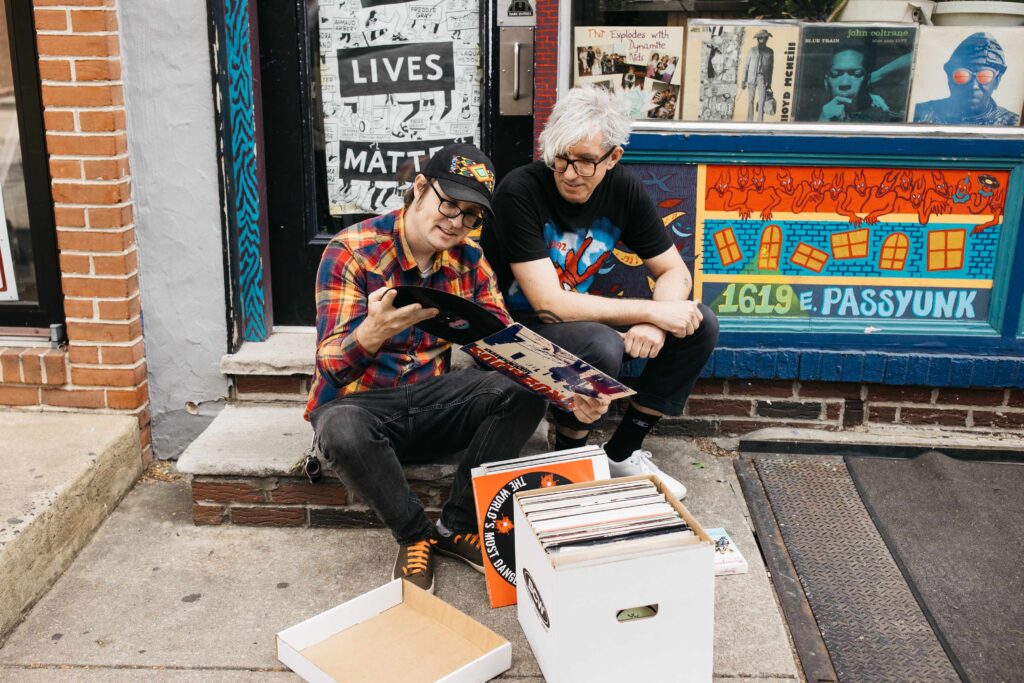
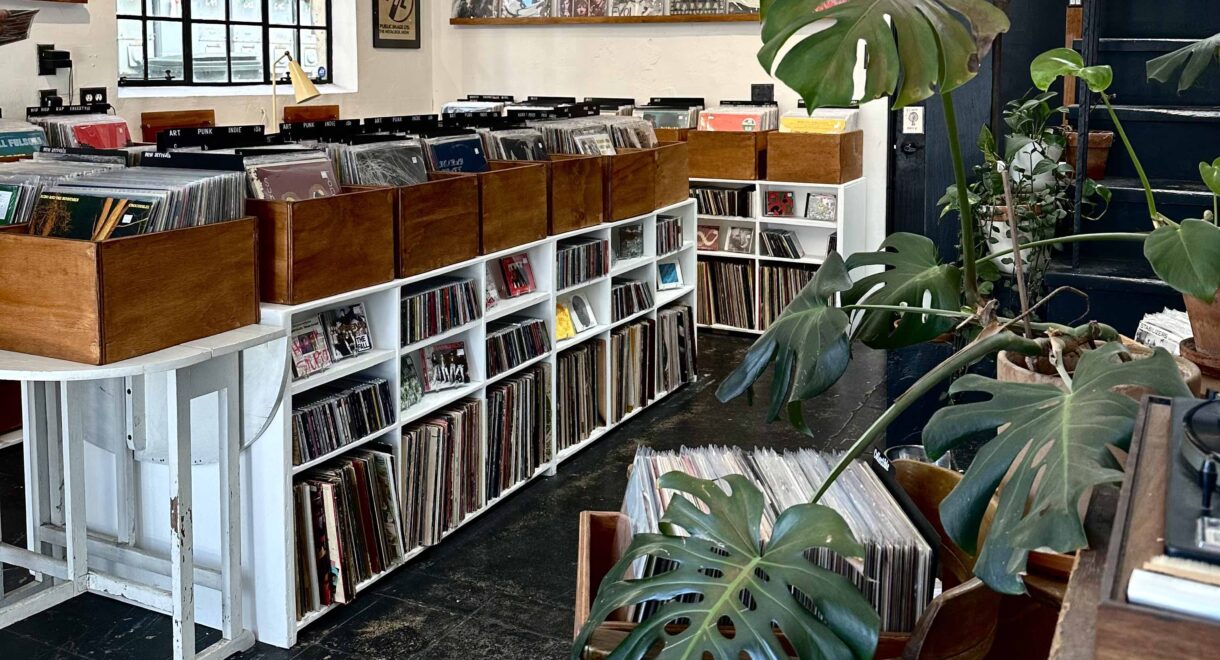
Founded in the early ’00s, Philadelphia Music is an independently-owned record shop that largely operates on Discogs. Over the years, they’ve moved millions of records to music lovers around the world, and currently have a 99.9% positive feedback with over 228k ratings. The shop describes itself as a “volume based seller,” and at any given point has over 100k items available for sale: vinyl, tapes, CD’s, and all other kinds of music media they allow for sale on Discogs. The shop also has a physical storefront called Beautiful World Syndicate in the same building as the online warehouse where locals can dig through a smaller, highly curated selection, pick up their online orders, and hang with staff.
To learn more about Philadelphia Music, In Sheep’s Clothing’s Phil Cho spoke with founder Jon Yates about his musical background, record buying stories, their online operation, favorite records, and more!
Explore Philadelphia Music’s Discogs Shop!
Hi Jon! So great to meet you. Big fan… My friend Brian Cassidy (Universal Cave) tells me your story is pretty interesting. So to start at the beginning… What’s your background with music? How did you get into collecting records?
I’m in my mid-40s now and I’ve kind of bought and sold records for my entire life. When I was 15, I was a punk kid and didn’t have enough money to buy records. So I did this thing where I started a little punk distribution. I would buy five copies of a record, sell four of them, and then that would pay for my own copy. In the late ‘90s, the punk distribution led me to traveling the U.S. to festivals with all these punk bands. It was never really an intentional thing, and just something that would pay for my travel. I’d go to all the record stores and buy records for $2 that I could then sell for $10 at the concert. So I’d say I started “softball” buying and selling at a really young age. Back then, I was really punk focused.
Then in my early 20’s, I moved to Philly and weirdly got a job as a janitor at the First Unitarian Church. While there, I started selling punk records and CD’s along with some more indie rock stuff in the church’s hallway because there was a concert venue called R Five Productions located in the basement. I never really took it very seriously, but then in the early 2000’s I lived next door to a guy who just gave me an entire collection of 3,000 krautrock, psych, and punk records. I went to a record show, sold them for $10 each, and made like $10,000. As a kid, I was like, “Oh my God. This is insane!” I’m pretty sure I sold some crazy stuff, but at this point, it doesn’t really matter.
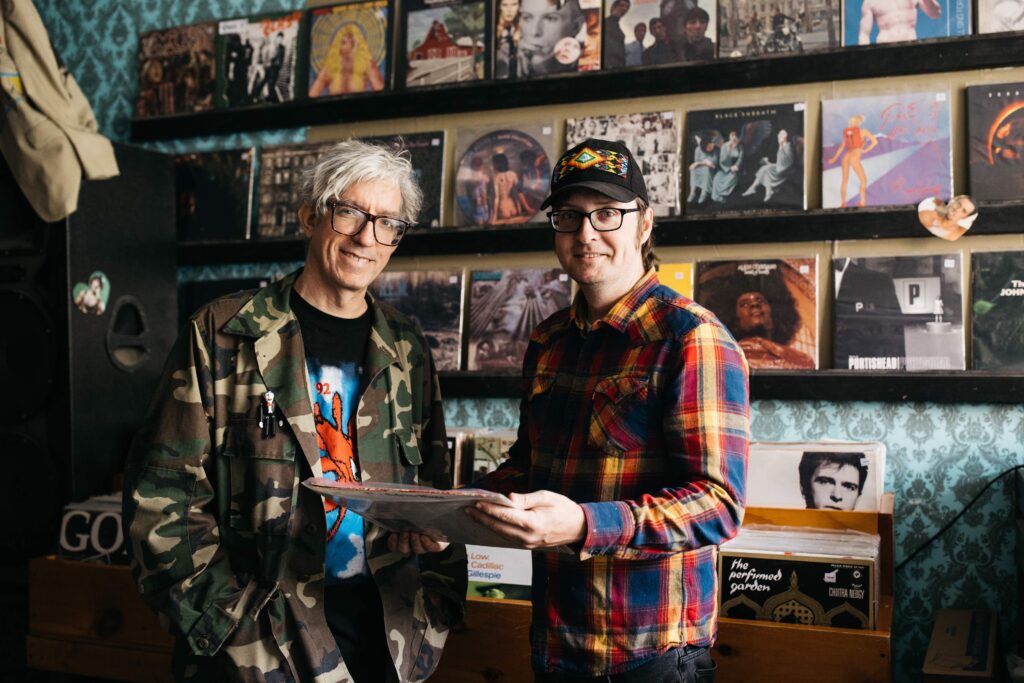
“I kind of like the fact that Philadelphia Music is everything. I want to be a record seller for people who actually want music. This job is supposed to be about putting music out in the world.”
Then I started buying and selling more used records. Philly, like a lot of big cities, has a bunch of crazy old record dealers. Some of them are sane, some of them aren’t. I started buying and selling from them and meeting foreign buyers. I started advertising to buy records. I ended up buying so many records that I had to look for a storage space, and came across this lady who was renting out this building. Philly was really cheap at this time. I wanted to rent out just the office space on the second and third floor, but she said, “We can rent the whole building to you for $200. Why don’t you just open a record store?” So I accidentally opened a record at like 20-years-old back in 2005.
It was still kind of a side business for a while until about fifteen years ago when the guy who owned the place we were renting offered to sell me the entire building and the warehouse behind it. I realized I would have to actually make some money if I was going to do that. So I started selling on discogs, and then it went from buying and selling by the car load to buying and selling by the van load… It all just kind of grew organically. Once you have 10 employees, slowing down means you’d have to get rid of your friends. Now there are like 25 of us, and it’s really fun. I mean, my full-time job is just buying now. I have all the buying stories in the world…
Yeah I was actually wondering about the order of how everything happened. So it started as a physical shop first and then discogs came later?
We started selling on discogs around 2007 or 2008. It was like another little side hustle. We were pretty early to the whole discogs thing. Back then, people were selling 10,000 12-inch singles for like $400. That was just what they were worth in the record buying business. They weren’t worth much of anything, but I realized I could sell them on discogs. That’s where it all kind of started. It made a lot of sense to me. I can buy the stuff, and then sell it to the people who like it on discogs.
I’ve been to the warehouse before and there are an insane amount of records there… Was a lot of the collection bought during this era when records were still very cheap?
We’re well past that stuff. At that point you could still buy stuff at an absurdly cheap price. Now, we’re still buying crazy amounts, but it’s not that cheap anymore. But I’m probably better at buying now than I was then.
You mentioned record buying stories earlier. I’m curious about some of the memorable collections you’ve purchased. Brian mentioned you guys just had a really special one come in?
Well, the collection we just bought is probably the best collection I’ve actually ever come across. We’ve bought a couple collections that were equally as good, but they were like industry consignment kind of deals, which is a different thing. This is a 70,000 piece jazz collection out of Pittsburgh. Have you ever heard of Jerry’s Records? Well, the collection we bought was from a guy named “Pittsburgh George,” whose wife was Jerry’s first employee back when it was called Garbage Records.
George was buying jazz and soul in the ’80 and ’90s, stuff that’s really cool now, but back then was crazy cheap. He had every Strata East record ever, sealed! He had every free jazz record you could possibly imagine, and probably over a thousand sealed Blue Notes from the late ‘60s and early ‘70s. I’ve never seen anything like that in someone’s actual house. I also particularly like this collection because it has soul to it. The guy actually went and found the stuff. He didn’t just go out and buy a thousand dollars worth of records. Also, unlike most hoarders, he had a wife who loved him, children, a job, and was a normal guy who just managed to amass one of the best collections I’ve ever seen in the wild. It’s really truly crazy. I mean, something like a sealed Funkadelic record looks normal in this collection…
It must be exciting that a collection like that can still pop up.
I mean, there are still so many records out there. The 70-year-old now was 20 in 1975 so in the next 10-20 years, there’s probably going to be the most record turnover of all time. Those are the guys who are holding all of the crazy stuff.
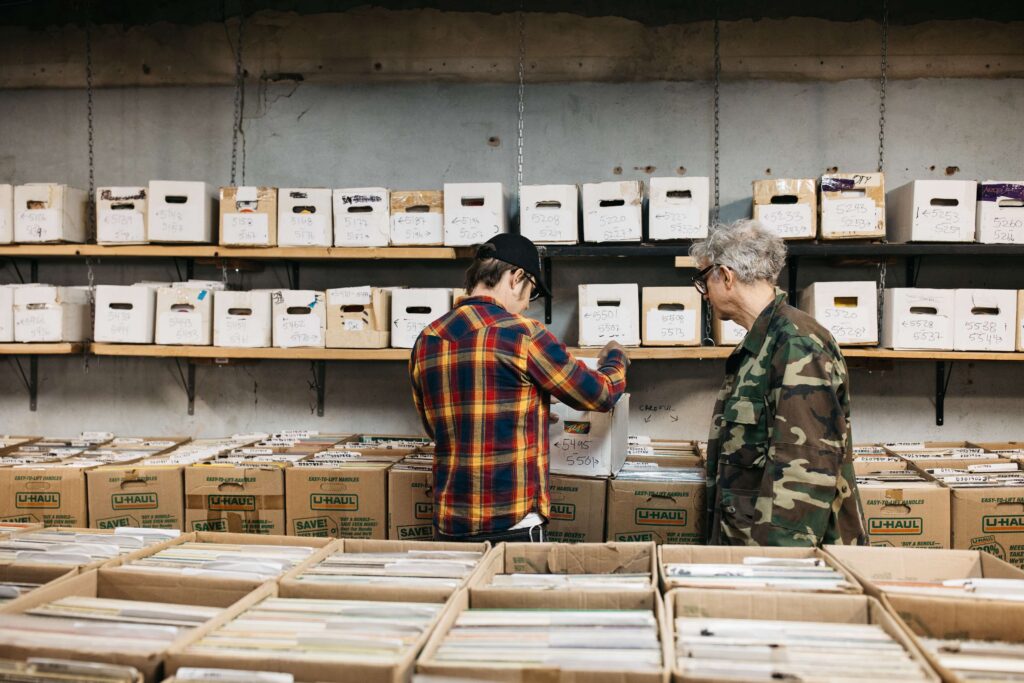
“Whether you’re buying a $2 12-inch or a $2,000 Blue Note, you should be rushing to your turntable to put it on. That’s why you want it. Not for trophy hunting, investment, or whatever.”
I’ve never actually thought about it like that. Any other really special collections you remember from over the years that stand out to you?
We did a sale with a guy named Vinyl Charlie from Vinyl Mania, which was a shop above the DMV in Coney Island. We cleared out his warehouse which had something like half-a-million records that were the remains of a distributor. That was about 10 years ago. We’ve sold all of it now, but that collection really helped me learn more about the industry. Charlie was an older guy in the business and he gave me a lot of really good advice. That one was really exceptional because it had like 2,000 sealed Madonna 12-inches, and that kind of thing. It was so massive. Like I said, I have every kind of record story: the cops being called, people taking the money and running out to buy drugs, etc. I’ve gotten a classical collection that had four sealed legendary psych records in the middle of it that made no sense!
You’ve sold an incredible amount of records over the years at Philadelphia Music, and with so many different genres as well. How do you go from selling punk records to classical, 12-inch dance singles, country, soul, and everything else?
You know, it’s happened organically. That’s kind of why I liked 12-inch singles when we first really started on discogs. It made sense to me, and the customer made sense to me because they’re somebody who wants a song, and they want to play it. Once I was comfortable with 12-inch singles, I moved on to classic rock, then to soul, to CD’s, etc. It all happened one after another. Now, I can pick through any classical collection…
I kind of like the fact that Philadelphia Music is everything. I want to be a record seller for people who actually want music. This is something I say a lot, and it’s not exactly controversial, but it’s maybe a little counterintuitive: I would rather sell a Garth Brooks CD for $2 to someone who wants it and is happy, than some thousand dollar soul 45 to someone who’s putting it in four plastic sleeves, putting it on a shelf, and never touching it again. This job is supposed to be about putting music out in the world. That’s why I really want to keep the business model where we try to sell everything we stock.
On that note, Philadelphia Music describes itself as a volume-based company. Can you explain what that means, and how you approach the business?
When I saw just how many records there are out there, I realized that the value of a lot of records was really quite made up. I would put a record up that was supposedly worth $8, and it would sit there for like four years with no one ever buying it. At this point, I was buying at a clip where we were never going to catch up with sales. We were always overflowing. Then, we basically decided that if a record doesn’t sell at $8, then in two months, we sell it for $6, and three months for $4.50, four months at $3, and then if it still doesn’t sell, then we move it onto the flea market world. We have like a hundred thousand items up on discogs at any time, but nothing there is over six months old. We just really want to sell the item. Sometimes, a $40 record unfortunately isn’t a $40 record, and it sells immediately. But we’re selling hundreds of thousands of items a year, and we’re buying hundreds of thousands of items a year. I want it to be about volume rather than curating a selection of $3,000 records.
Philadelphia Music is now one of the biggest sellers on Discogs. Yet, there’s practically zero social media presence, which is kind of rare in today’s record world. How did Philadelphia Music become the giant seller that it is today?
I think we just organically grew along with discogs. We’ve always been the type of seller that doesn’t play any games. Our promotion is in the fact that we have hundreds of thousands of positive feedback, and are clearly an established seller. Doing things like lowering prices is a kind of promotion in and of itself. We also do local advertising, send out flyers, etc. As a buyer, if five sellers have the same record and one of them is $1 more, but that person has 99.9% feedback versus a guy with 97%, I always pick the one that’s $1 more because I know there’s going to be no issues or problems. I think that’s really kind of it. In the world of records, there are a lot of stores that don’t have good customer service. I feel like we’ve just tried to create a store that I would personally want to buy from myself. If we make a mistake, we’ll make it right.
For me, the massive and varied selection helps so much as well. I think a lot of my orders at Philadelphia Music start with one record I’m looking for and then seeing there are 10 other records from my wantlist that I can add to the order.
Yeah I think we were actually one of the first sellers to do unlimited shipping on discogs. Back then it was $5, and it’s more now, but it just made sense.
You seem to have been quite good at navigating, adapting, or even starting trends.
Well, everything changes within the record world every three or four years. I kinda look at what’s selling and follow it. There have been some huge trends like 12-inch singles having value now. The ones I was throwing away in 2005 would be worth boatloads of money today. Right now, we’re watching the record world completely shift. Classic rock is less strong than it was before. Modern records seem to go up and down like crazy. A $40 record becomes a $6 then becomes a $300 record, which is hard to even track. CD’s are clearly having a huge revival. To me, CD’s make sense like 12-inches made sense back then because you can still buy them at a reasonable price. People who want to buy them actually want the music. It seems like vinyl is trending to become more like baseball cards than records in some ways, which I find to be a bit disappointing. I mean, I can’t actually be angry that someone wants to give me more money, but I’m kinda like, “Wait. It’s supposed to be about the music.”
I was watching an interview with Brian where he talks about how dollar bin or cheap records are more interesting or have just as much value as those holy grail type records. Is this approach a part of the ethos at Philadelphia Music?
That’s truly what I believe. Whether you’re buying a $2 12-inch or a $2,000 Blue Note, you should be rushing to your turntable to put it on. That’s why you want it. Not for trophy hunting, investment, or whatever it is. Again, I’m not actually mad about it because clearly it’s good for business. It’s just that I became a record collector because I’m a nerd, and wanted to hear what the record sounds like. That’s still what I’m after.
For those that have never visited, Philadelphia Music is the name of the discogs store, but there’s also a physical record storefront called Beautiful World Syndicate. What’s the relationship between the two operations? The selection at Beautiful World Syndicate is of course much smaller compared to Philadelphia Music.
They’re like sister businesses, and kind of the same business. They both operate under the same entity. I never really wanted to have a big record store, so we try to make Beautiful World Syndicate really curated. We try to have a shop that I would want to go to, which is a shop that always has Pink Floyd, Al Green, Marvin Gaye, Miles Davis, etc. – things that people actually want. Then it also has a cool rarity here and there, some cool punk records, a little of this and that. We’re just trying to make the record store fun.
The majority of the business is on discogs and eBay, which is all data entry and logistics, you know, sitting in front of a computer. The physical record storefront just adds a whole dimension of the business being a real thing with real people. I’ve always wanted to have a record store, but I think that having a record store in 2025 just by itself would be very hard to make a living. I always make the joke that Beautiful World Syndicate is like the front for us doing something illegal in the back warehouse, but yeah — I think it just gives it soul. We’ve had the store for 20 years now. It’s so fun to watch customers grow older. We have customers who came in as kids, and now they’re bringing their own kids in. It’s just great. I feel like that’s what all record stores should be.
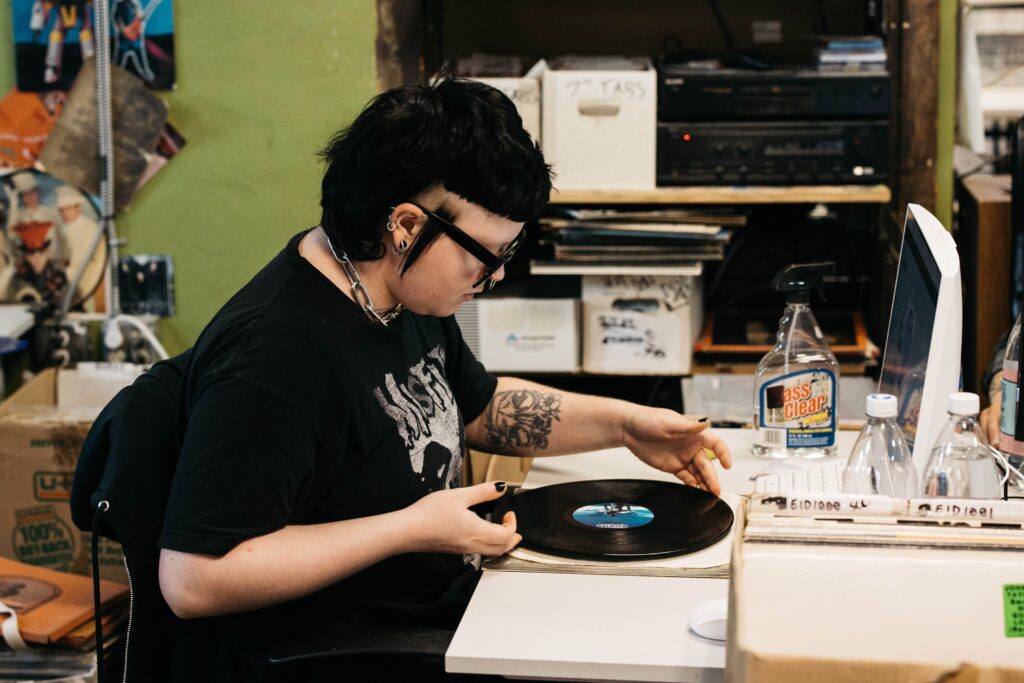
I’m sure it’s also great for locals to be able to make their orders online and then go in-person to pick their records up.
We’re at the point where we have like 10-20 pick-up orders a day. For Philly, like any East Coast city, to have a store the size of the warehouse would just be completely impossible financially. So I thought it’d be nice for all the locals who want something that’s not going to be in a store to be able to come and pick it up. A lot of the people who are buying from us on discogs are buying country records or tech-house 12-inches, and there’s no store in Philly that actually sells that, or if they did it would be once in a blue moon. I feel like that’s another nice part of the online store. I mean, as a collector, I would like what Philadelphia Music is doing.
What are some of your favorite records that are currently for sale on the Philadelphia Music discogs?
Available Here: https://www.discogs.com/sell/item/3935974423
Available Here: https://www.discogs.com/sell/item/3956188681
(yes it’s Stanley’s brother who makes one kick ass bop lp and disappears)
Note: Unfortunately, most of these have sold since Jon answered this question. Things move fast at Philadelphia Music!
Lastly, what’s coming up next for Philadelphia Music / Beautiful World Syndicate? As you mentioned, you’re going through this crazy collection right now. Anything else in particular that you’re stoked about?
We’re going to use this particularly amazing collection to try to use social media and establish our brand online a little bit more. That’s kind of the most exciting thing right now… I mean, I don’t know — this job is great. Before this call I was just talking on the phone with some crazy guy who said he had 30,000 records. Saturday, I’m going to a record show, and who knows what I’m going to find there? On Sunday, I’m doing a house call with 500 “jazz” records. It’s really not one specific thing, the whole job is just exciting going forward. What will we find next and what will happen? Four years from now, is it gonna be 90% CDs and 10% records? I’m excited to find out too!