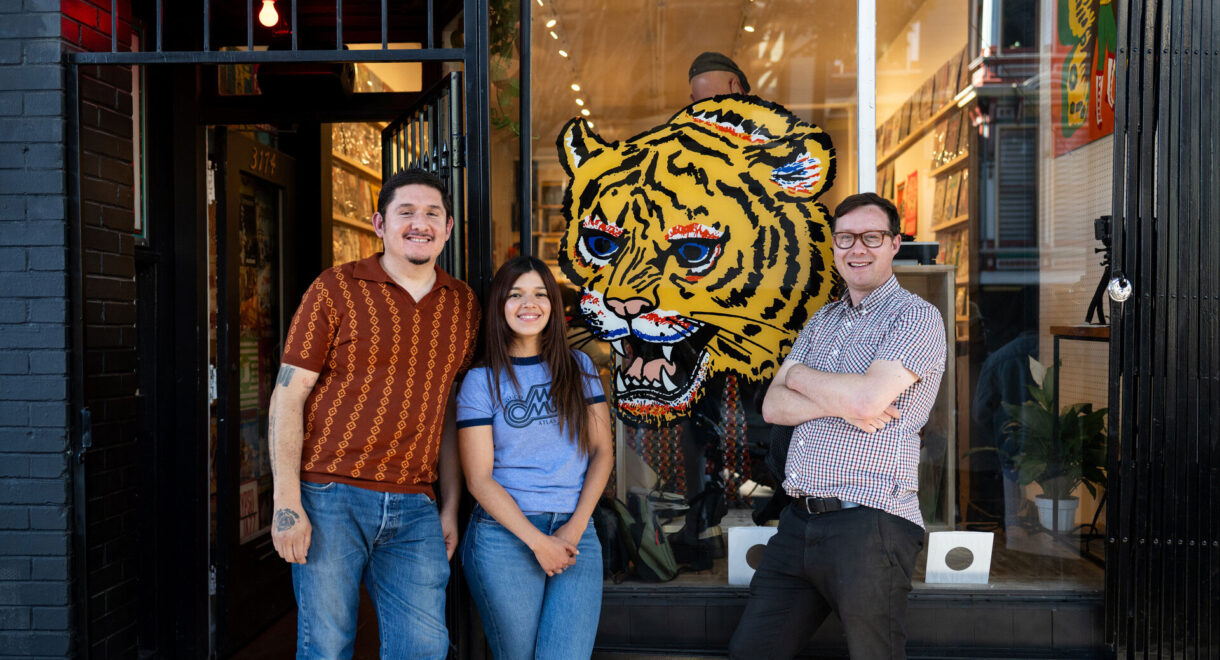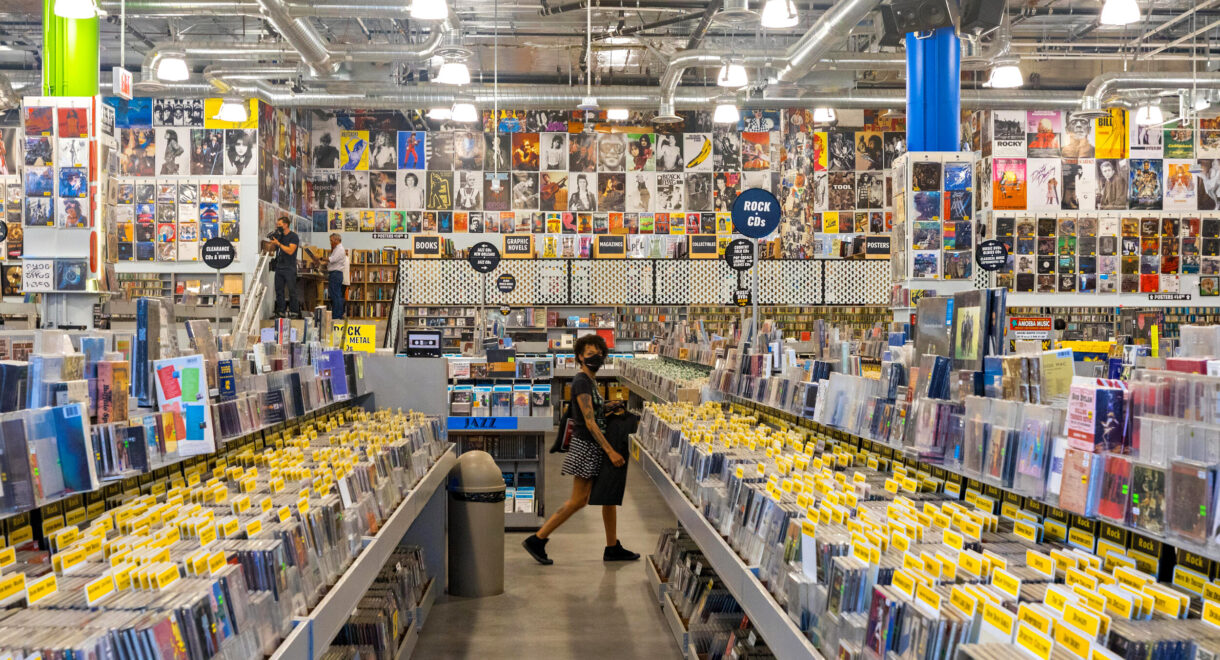



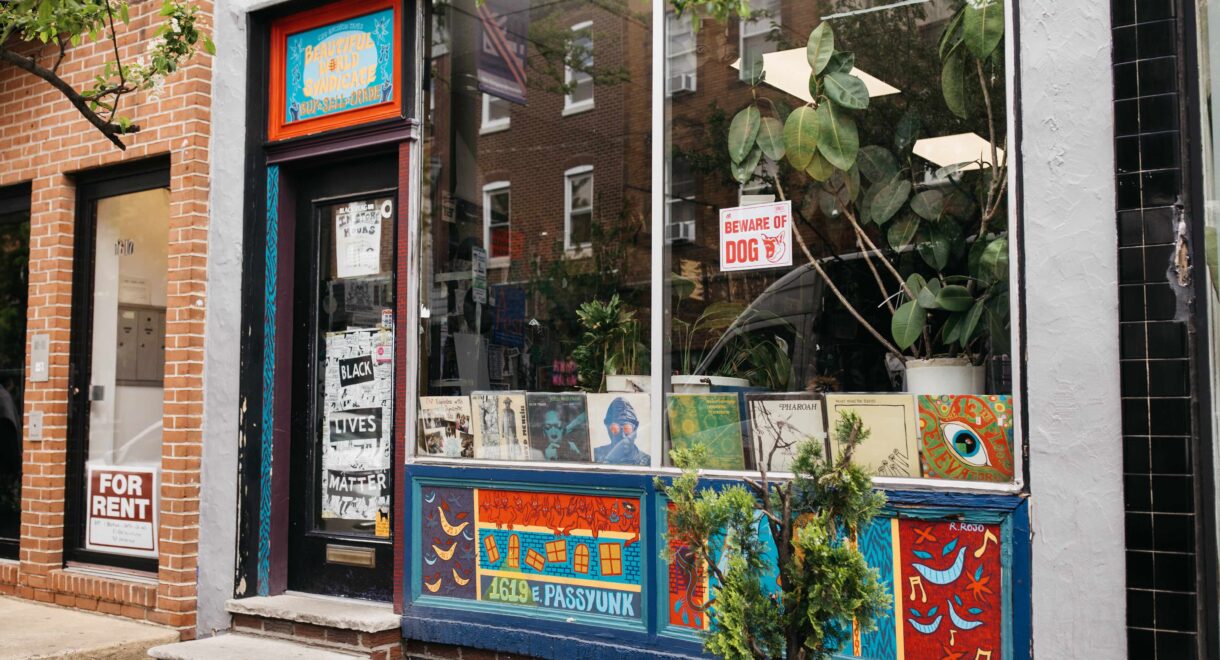
Step into one of the largest and most beloved online record shops in the world… While the defending champion Philadelphia Eagles continue their playoff run to a possible […]


If you ever visited our pop-up record shop at ROW DTLA, you might remember encountering a selection of records labeled “Sibylline,” meaning prophetic or mysterious. That bin — filled with spiritual jazz, psychedelic folk, and international records from places like Nigeria, Ghana, India, Brazil, etc. — was specially curated by our friends at Sibylline Records in Pasadena, and intended as a sort of gateway into their shop’s impeccably curated and esoteric-leaning selection.
Located in the Playhouse Village neighborhood, Sibylline Records is a 100% artist-owned, dog-friendly record shop operated by musician couple Shane Butler and Caity Shaffer. The shop opened in 2023 just shortly after the end of the pandemic, and has quickly become a community hub for music lovers and artists in Los Angeles. Catering to a wide audience of both locals and heads, the shop’s selection contains “music for all sorts” including: classics (we’ve personally picked up collection essentials by Lou Reed and Thin Lizzy there); rarities from around the world (everything from original pressing Blue Notes to private press reggae); and contemporary music from local artists and labels (get your International Anthem records here). Even better, Sibylline also operates a discogs shop with thousands more records for sale than their physical storefront…
In Sheep’s Clothing spoke with Caity and Shane at their shop to learn more about how they went from touring musicians to record store owners, community-building in Pasadena, selling on discogs, and more!
Everyone has a slightly different story, but I’m wondering how did you get into the world of vinyl?
Shane: I moved to New York City when I was 14, and we lived right down the street from Bleecker Street Records. I think that was the first spot I started buying records. I also went to boarding school near where Caity grew up and used to go to Princeton Record Exchange for dollar bin records.
Caity: That was the same shop I grew up going to as well. Princeton Record Exchange and listening to WPRB, the Princeton radio station, was how I got acquainted with the underground in the Philly area.
S: Records were so cheap back then. Every record that I bought was a dollar, and those were probably also the first records I started selling. When we first started the record store, I was like, “Oh my god. Things have shot up so much since the late ‘90s and early ‘00s.”
What kind of music were you guys buying back then?
S: It was a lot of kitschy stuff. I’d see records with crazy album covers, and buy them just to make a joke with a friend. The first record I remember buying and being really excited about was a double-disc Meat Puppets record that had a pink vinyl. I was 13 or 14 years old and was like, “Pink record? This is so cool.” Meat Puppets and Talking Heads were the first records I remember getting. I also grew up in the ‘90s CD-era, so before vinyl I was collecting alt-rock CD’s and cassettes when I was eight or nine years old. I think the first music item I ever bought was a Third Eye Blind cassette.
C: I was into folk music in high school and was in a band. I remember getting a Roy Harper CD and really loving that, and then I got into avant-garde classical music a little later. I think the first CD that I bought with my own money was probably RJD2.
Both of you have played extensively in bands, and you also had a band together? How did those experiences lead to opening a record shop?
S: Caity and I have a band called Olden Yolk. We’ve released two LPs on Chicago-based label Trouble in Mind. We were touring and playing basically right up until the pandemic. The record store came directly out of that.
C: The personal part of it is that we adopted a paraplegic dog. COVID was happening, and I just really wanted a dog. I had a paraplegic dog as a kid, so we ended up adopting this very special needs dog, and we had to start making money. We’ve both been touring or recording nonstop for basically the past ten years. The music industry is really tough right now for artists. This felt like an extension of our creative practice into something foundational that we could call our own, and still be involved with music in a more sustainable way.
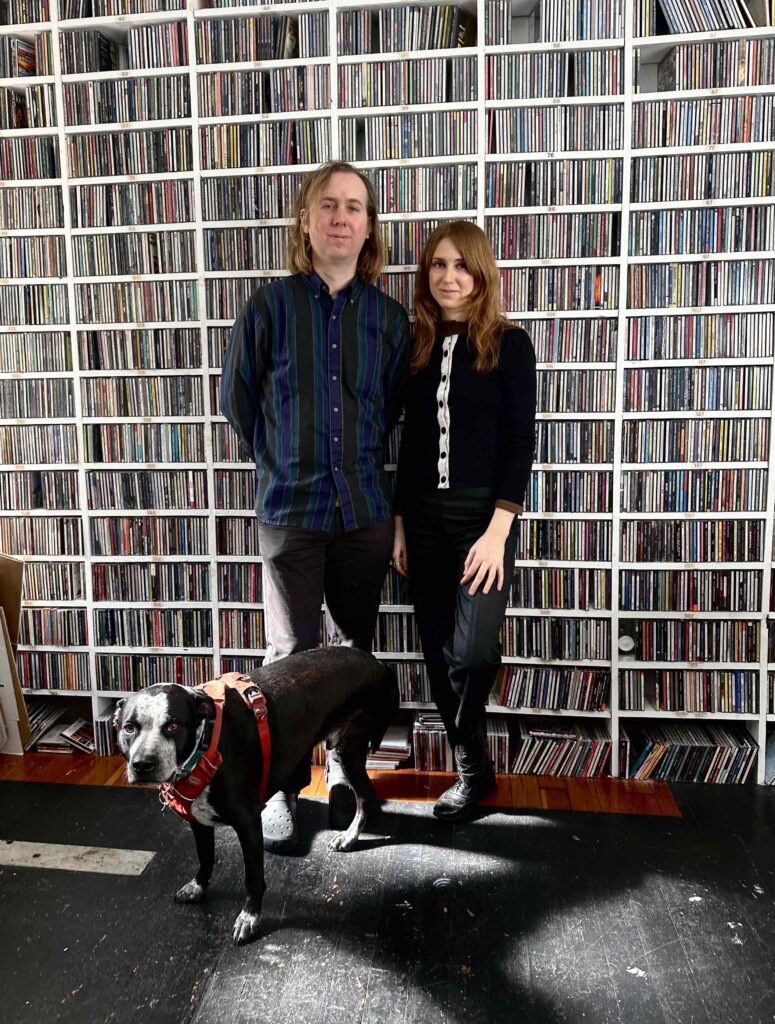
“My favorite part of having a shop is that you don’t just interact with people in your bubble. Kids, older folks, all different types of people come in, and you get to talk to them about music.”
Caity Shaffer
S: We still plan to record, play music, tour, and do that for the rest of our lives, but how can you do it in a sustainable way where you have more freedom? I feel like building the shop allowed us to think about music from a more creative place again, and not have to think about all those other sustainable elements. I just went and recorded my first record in five years, and it was just such a beautiful experience. The artist struggle feels a little bit subdued because we have such a great thing going with the shop.
C: The pivot has also been really great because we’ve created our own community. My favorite part of having a shop is that you don’t just interact with people in your bubble. Kids, older folks, all different types of people come in, and you get to talk to them about music. It’s been really gratifying in that way.
S: We were in the indie rock and experimental worlds with our music practice, and we have a great community there, but it’s also really nice to meet people from all different music communities. As a musician, you end up creating the music that you’re into, but when you’re operating a shop, you can talk with people about all different types of music. We meet tons of people from all walks of life who are introducing us to records every day that blow our minds.
That’s amazing. Running a physical and online record shop is no small feat. How did you get into it? Did you have any mentors to guide you along the way?
C: When I was living in Philly, I worked in the oldest independent bookstore called Robin’s Bookstore, which is now closed. I had an amazing mentor who taught me shopkeeping. This bookstore was a huge part of the civil rights movement in Philadelphia. They were selling banned books and really participating in the political atmosphere at that time. They were so inspiring to me when I started working there. My mentor has passed away since, but I still feel like his presence is at Sibylline. Everything I learned there really informed what we’re doing here on a community level.
S: For me, this all started during the pandemic. I didn’t really have anything beyond music. I had a little design project, but I needed a way to make money. We started going through our records, and I was like, “Oh my god. I don’t listen to this all the time. I should try to sell these.” Luckily, as I was thinking about all that, my old friend Matt moved into the apartment that Caity and I were living in before we moved to LA. He had been working at Beautiful World Syndicate / Philadelphia Music, and learned everything about selling records online and buying collections. I just started asking him every question about how to do it, and Matt basically mentored me on how to buy, ship, and grade records in the right way.
Caity and I are both huge music heads and have been for a long time, but that way of dealing with records was something we didn’t know that much about. I was really lucky to have a teacher, and we basically took a crash course over a three or four year period. Caity and I were driving all over the United States looking for records.
C: We went to Arizona for a collection. Colorado. Nevada. It was really fun, and we were like, “We love doing this.” It’s very similar to touring. Buying records for Sibylline was an attempt at making income, but it was also just a passion and a hobby.
S: We just became obsessed to the point where you’re not even thinking about it as work at all. I couldn’t sleep at night because I was having so much fun — getting a collection, going through everything, learning about these musicians. With record buying, I feel like there’s a practice to it that can be this poetic thing. Obviously, you have to think about the financial aspect of it, but for our shop, I think our mentality is really about music discovery. That can mean hearing a crazy record that you’ve never heard before. It can also mean learning about this guy from a band that you know about who released five solo records. All these things blow your mind. We just got really obsessed with it. After a few years of discovery and buying, we built this online shop on discogs. At first it was just operating out of our house, and it was a disaster…
C: Our house looked like a straight-up hoarder house. Then we had to rent storage units for these thousands of records.
I’ve definitely seen houses that are like that… When did you guys find the space for the shop? It’s a beautiful building and I love that it’s in downtown Pasadena.
S: One day we got a call from a guy who had a room full of punk reissues, which are not the easiest thing to sell online. He called back a few times, and I finally went to check it out. He was like, “I’m in Pasadena.” I thought it was going to be a house, but it ended up being a storefront. When I walked in, I was like, “God damn this place is beautiful. What is going on with this place? I love this.” I started talking to the dudes, and found out they ran this merch company called GarageLand that tours with NOFX and all these pop punk bands. They had rented this space to open a shop because the pandemic happened, and their whole business is touring. I looked through the records and was like, “These are all right, but what’s going on with this building?” He was like, “Well, actually, it’s funny you asked. We’re trying to get out of our lease…” Without even thinking, I called Caity and was like, “We’re going to open a record shop.”
C: At that time, opening a physical shop wasn’t really a goal. We were just going to be selling online, but when we saw this space it really felt like fate. Something clicked. I’m usually the cautious one in the relationship, but when I came here and saw the space, I was like, “Let’s do this.” We did not have a lot of savings. We’re low-income people. I had another job, and that helped us get started.
S: We had the online thing going. Lucky things came up to help us out. This guy from Texas came out of nowhere. He was like an angel. We’ve been importing records from Nigeria for years, and he reached out, and was like, “Can I buy African records from you? Just send me huge batches of records every week.” He basically paid us enough money to help us build the shop. Peter Boats, man, we really appreciate that guy. We were only able to do this because of our customers.
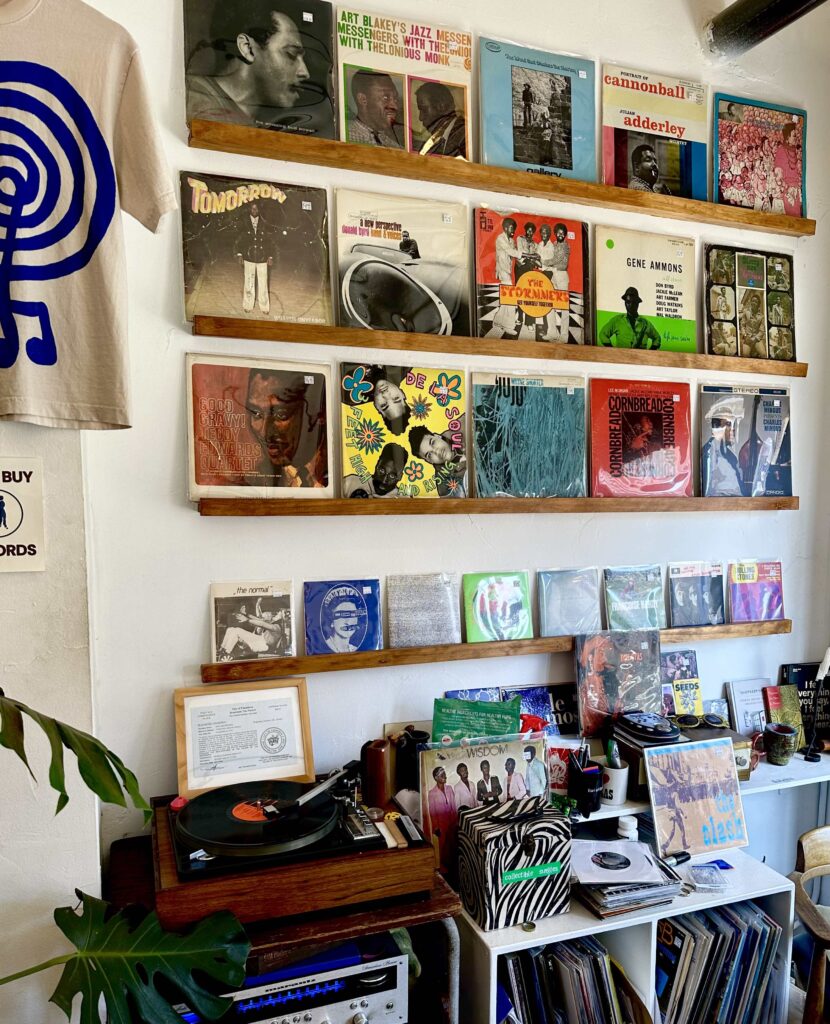
“We just became obsessed to the point where you’re not even thinking about it as work at all. I couldn’t sleep at night because I was having so much fun — getting a collection, going through everything, learning about these musicians.”
Shane Butler
For someone that hasn’t been to the shop before, how would you describe the selection at Sibylline?
S: So Sibylline is another word for esoteric. I’d say the shop’s selection is 60/40 where 60% of the records are relatively esoteric (experimental music, weirdo punk, psychedelic jazz, experimental classic, international records) and 40% of the records are pop rock and classic stuff. Our goal was to make a shop that’s cool for the heads, but also a place that you can bring your mom and dad, and they can find records they’re into as well. We wanted to have a good mix of classics, but also try to expand on the interesting off-kilter records too.
C: We want the shop to be accessible to everybody, but we also want to share the weird stuff we’re into as well.
S: Also somebody might come in looking for Led Zeppelin and then be like “What’s this?” and I’ll be like, “Oh that’s SML. They’re a great experimental jazz band.” Then I’ll play it for them, and they’ll be like, “This is great.” So they might leave with Billy Joel and Jeff Parker.
C: We have supportive relationships with local musicians and labels because we were/are part of the music community. I get a lot out of that part of things. Like International Anthem – we’ve been stocking all of their records. We love them, and they’re putting out great stuff. There’s exciting music happening in Los Angeles right now. Too many labels and groups to name. Musicians come into the shop, we get to meet them, and learn about what they’re doing. We’re starting to stock more and more new music.
Love to hear that! What’s it like having a shop in downtown Pasadena? There are a lot of different communities around here.
S: It’s been a range of things. When we first opened, we got a year of seeing the community, and then we got a year where we were hit by one of the greatest disasters in America (The Altadena Fire) in the last 100 years… We went through this huge event with the local community.
C: A lot of businesses around us closed during that time. A huge portion of our customers were affected by the fire, and they lost their houses. During that time, we gave a lot of discounts and records to folks who lost their collections. We raised money to give gift cards to those who were affected. We were affected too. All of our records that were in storage (around 3,000 records) were at our friend’s house in Altadea, and their house sadly burned down. We had to go through this process as well, not to the level of those who lost their homes, but we had to deal with insurance and the crisis in real-time.
S: I love Pasadena. We’re right next to the playhouse, which is beautiful. We’re from the East Coast, where there’s a lot of older architecture. I think that’s one of the things about this space that we connected with. It’s an old building. There’s something about being around buildings with that old European influence along with the old Spanish architecture. It’s also nice to be in an area where people actually walk around. We have people in the neighborhood who literally come by every day just to hang out. You know what I mean?
C: In a way, we’re like a bar. People come and tell us about their lives, which I freaking love. We also have amazing bookstores around here. We have Book Alley down the street, Romans, and then we have Battery Books, who also sell records. We love that we’re in an area with a lot of bookstores, but also a lot of other record stores, too. Pasadena has gotten more record stores in the time since we’ve opened, and we love that. It’s good for the community, and for people to have more options.
S: There’s also a huge number of jazz musicians in Altadena. I don’t know how it became this hub where jazz musicians from all different decades all live there. It’s been a cool thing for our shop because we love jazz. Jazz on vinyl is just a very special thing. There’s nothing quite like it. That’s been a focal point for our shop – consistently having great jazz records. It’s been great connecting with some of the musicians who lived in Altadena, and being in that mix.
S: We love jazz and really prioritize getting jazz collections. A lot of jazz lovers come in to the shop, and that’s been great.
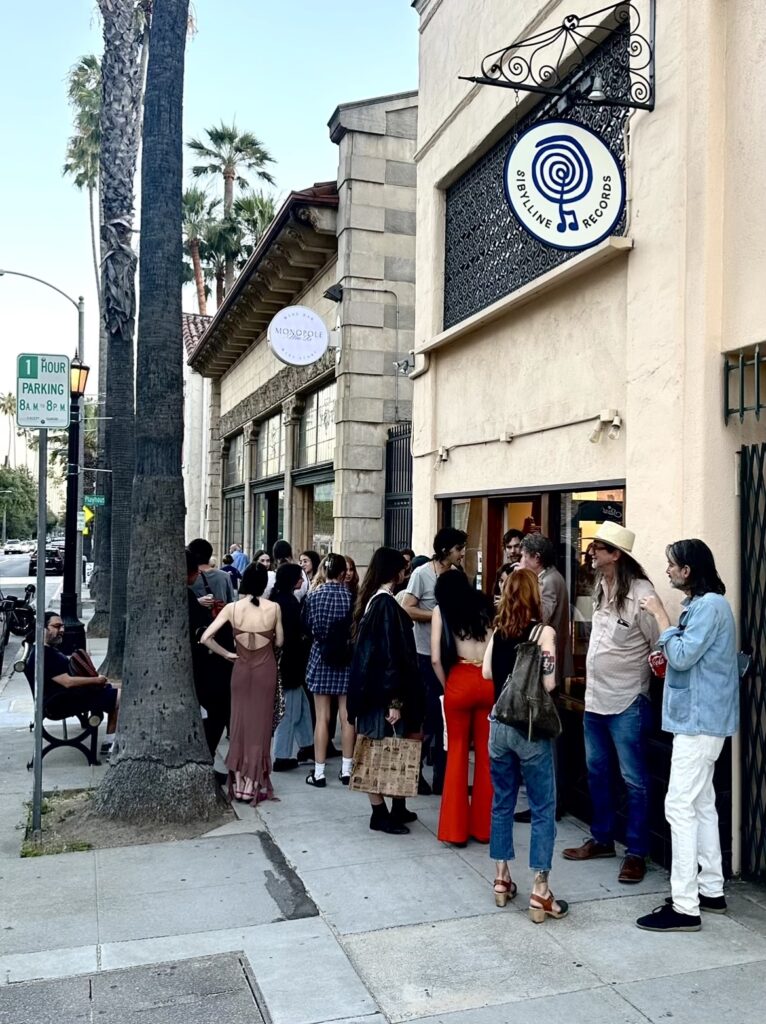
“You never know what could happen. ICE could come in and raid the city. You know what I mean? Every shop is hurting when that happens. That’s the world we’re living in now.”
Shane Butler
You guys have been open as a physical shop for three years now. It seems like everything is always changing so quickly, especially post-pandemic. How have you seen people’s listening habits change over these past few years?
S: I’ve found that people are really adventurous right now, which I think is awesome. We get a lot of kids and also long-time buyers coming in and buying things that truly surprise me. They’ll come in and get some rare grooves, and then take a chance on a newer experimental project. At this point, a lot of people have the classics, and some are looking to upgrade their copies. But I have been seeing people be pretty adventurous with their buying.
C: I would also say CD buying has gone up a lot. We get a lot of college kids from Pasadena Community College and even high school and younger who are coming in specifically for CDs. It’s a medium that really suits the youth. You can take CDs anywhere. You can have a huge collection that’s not taking up that much space.
S: One time a kid came in and bought three CDs: two were for $3 each, and one was $2. He was like, “I got three CDs for the month for $8.” I was like, “Oh you’re buying a lot of CDs these days?” He said, “Well, these three CDs are cheaper than a Spotify subscription!” That was just the funniest thing to hear. When music is “free,” but buying physical CDs is still cheaper than getting a subscription to Spotify.
C: We’re seeing a lot of people pushing back against streaming services because they’re funding ICE, funding war, and not paying artists fairly at all. People are getting more and more interested in physical media. I think it’s been happening for a while, but it’s still going strong. We’re seeing a lot more people buying CDs, and telling us that they’re getting their first CD player, boom box, or portable Walkman, which is really cool. My favorite part of this job is interacting with the customers. One of my favorite customers is from LA, but she’s obsessed with freak folk from Philly in the ‘00s. I recommend a lot of stuff to her. Our favorite thing is when people come into the shop and are like, “I like this record. What else should I buy?” That’s so fun to do with kids who are just discovering stuff for the first time.
Going sort of backwards a bit… The shop started on discogs and online sales remain a big part of the business. Can you talk about your experience of selling online while also operating a physical storefront?
S: Having an online shop has allowed us to be able to buy large collections, and curate stuff that we want to see in the shop, and then offer the other records online. It gives us a place to put things that might be not 100% in our taste. Our mission with the physical storefront is to have a small, highly curated selection, and not just put any record out there. It also allows us to give more jobs, which is great because one of our goals from the get-go was to be able to employ artists, musicians, and DJs because finding gigs can be extremely hard. We want to give people jobs that can be semi-flexible where they could still tour and pursue their craft. As the online has expanded, it’s allowed us to give more work.
Also when things get tough – like when the fires happened – we were so lucky to have the Discogs shop and also an Instagram community that was buying from us regularly. When something really crazy happens in your town, there are buyers from other places that can help support you. I personally would recommend every shop in the world to have an online presence because you never know what could happen. In LA, ICE could come in and raid the city… You know what I mean? Every shop is hurting when that happens. That’s the world we’re living in now.
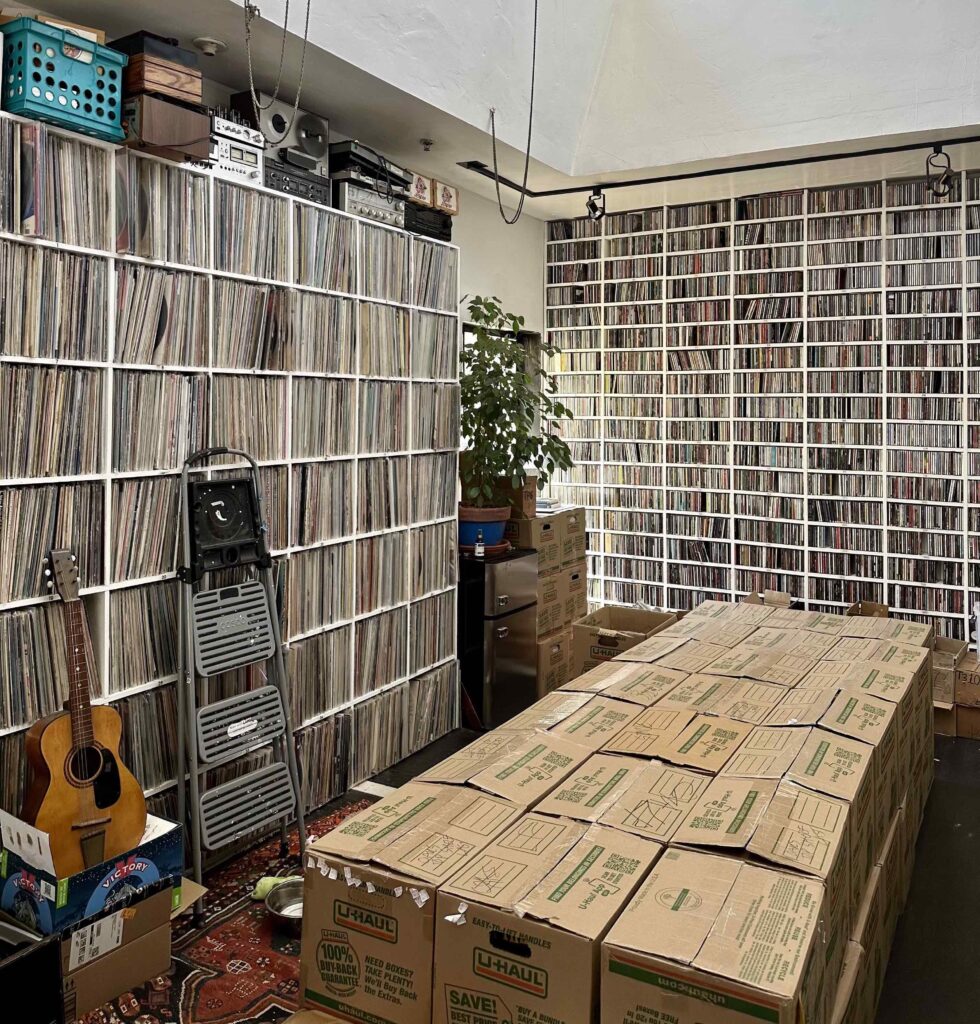
Lastly, what are some records currently available for sale in the shop that you’d recommend?