




Join us April 3rd for a celebration of Detroit techno at Agora Records featuring listening sessions of classic albums along with a DJ set from Detroit legend Santiago […]


Try fitting a cathedral in a suitcase.
That’s the quiet determination behind American Masters turning its lens on Sun Ra, an artist whose life and work feel so infinite that even ten hours would only begin to map the terrain. The documentary, called Sun Ra: Do the Impossible, first aired Friday and is available on demand from PBS. It functions less as a summation than as a wormhole into a body of music and myth that refuses containment.
To understand the artist, it helps to hear him offer guidance on the nature of creativity: “Imagination is a magic topic upon which we may sow to distant lands and climes and even go beyond the moon to any planet in the sky,” he says in the film. “If we came from nowhere here, why can’t we go somewhere there?”
Directed by Christine Turner, the American Masters episode draws heavily on archival performance footage of the Arkestra in full regalia, rehearsal-house scenes and television appearances that capture Sun Ra mid-sermon and mid-solo. Former Arkestra members including Marshall Allen, Ahmed Abdullah and the late John Gilmore speak with the kind of lived authority that resists tidy myth, recalling the discipline of daily rehearsal and the communal structure that undergirded the spectacle. Scholars, artists and critics including Moor Mother, King Britt, Harmony Holiday, Nate Chenen and Marcus J. Moore place him within the longer arc of Black experimental music and early Afrofuturist thought, while the film lets Sun Ra’s own voice cut through in interviews that are by turns playful, elliptical and declarative.
What emerges is a portrait of a composer who absorbed Fletcher Henderson and Duke Ellington, then cracked those forms open from within. The meticulous arranger who wrote tight charts is the same figure who steered his musicians toward ecstatic abstraction. The band functioned as orchestra, commune and philosophical project. Independence was infrastructure, with self-released records and hand-assembled Saturn Records sleeves decades before that model became commonplace.
It can be overwhelming to approach Ra’s music as a beginner. The discography stretches across eras, labels, philosophies and parallel universes. That’s precisely why this film matters. It functions as a generous primer, sketching the man, the myth and the method before you dive into the records themselves.
Particularly fascinating is its exploration of Sun Ra’s early and fearless use of electronics — the Clavioline, electric piano and later synthesizers — not as gimmick but as a way to sonically suggest worlds beyond the bandstand. Rather than flattening the mystery, the film provides orientation: a way into the Arkestra’s discipline, the Saturn mythology, the swing roots and the outer-space departures. From there, the listening feels less like homework and more like discovery.
Join us April 3rd for a celebration of Detroit techno at Agora Records featuring listening sessions of classic albums along with a DJ set from Detroit legend Santiago […]

A conversation about her listening habits and life with music ahead of the January 24th performance at the Wallis in Beverly Hills. Arooj Aftab is a Pakistani American […]
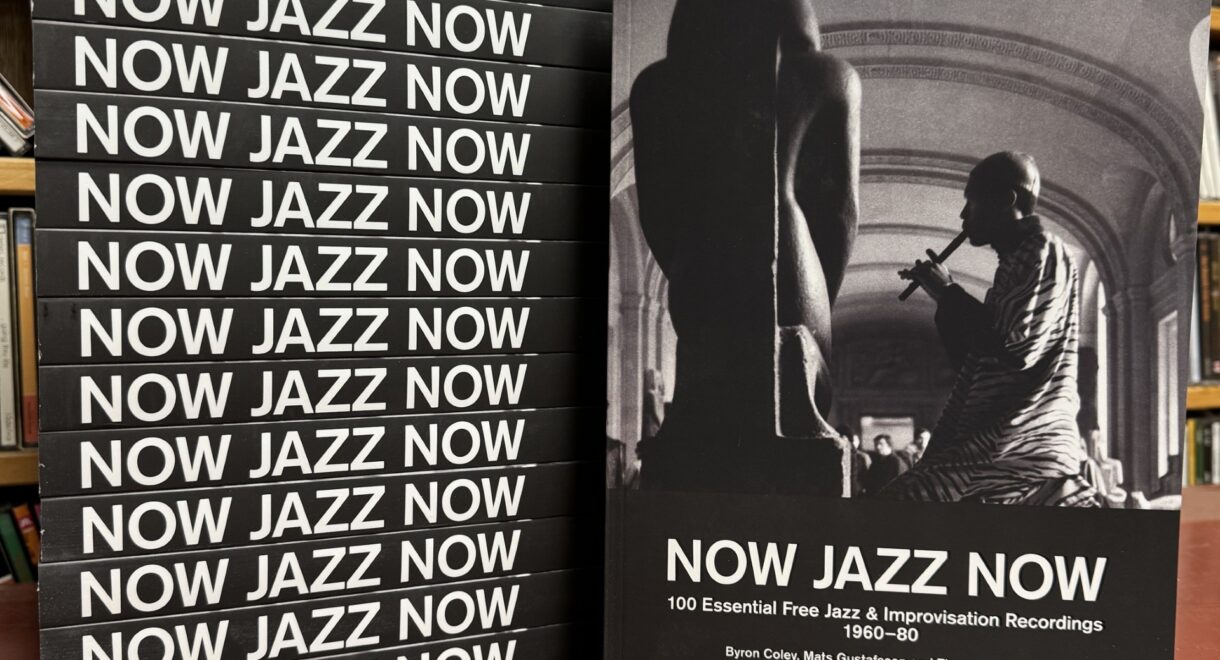
“…just three guys who really like records trying to make a case for their collective obsessions,” writes Coley. The just published book Now Jazz Now took decades to […]

At 80, British singer and songwriter Vashti Bunyan remains careful about when she records and why. After decades away, she returned in 2005 with Lookaftering, a record that […]

Two records, two sets of constraints: Brendan Eder’s Cape Cod Cottage and Therapy limited repress available via In Sheep’s Clothing. The story behind Cape Cod Cottage carries the quiet allure of a […]

The story of Slint and the Louisville music culture they emerged from. Recommended by a friend who heard skateboard legend Ray Barbee having an enthusiastic conversation about it […]