



MEITEI’s latest album AGATE / 瑪瑙 is available now for pre-order via In Sheep’s Clothing Records. Daisuke Fujita aka MEITEI is a Hiroshima-born, Kyoto-based artist and composer who […]

Tampere sits about 110 miles north of Helsinki, built between two lakes, Näsijärvi and Pyhäjärvi, with the Tammerkoski rapids cutting through the middle. What started as an industrial city still shows in the red-brick factories along the water, many now repurposed into studios and shared workspaces.
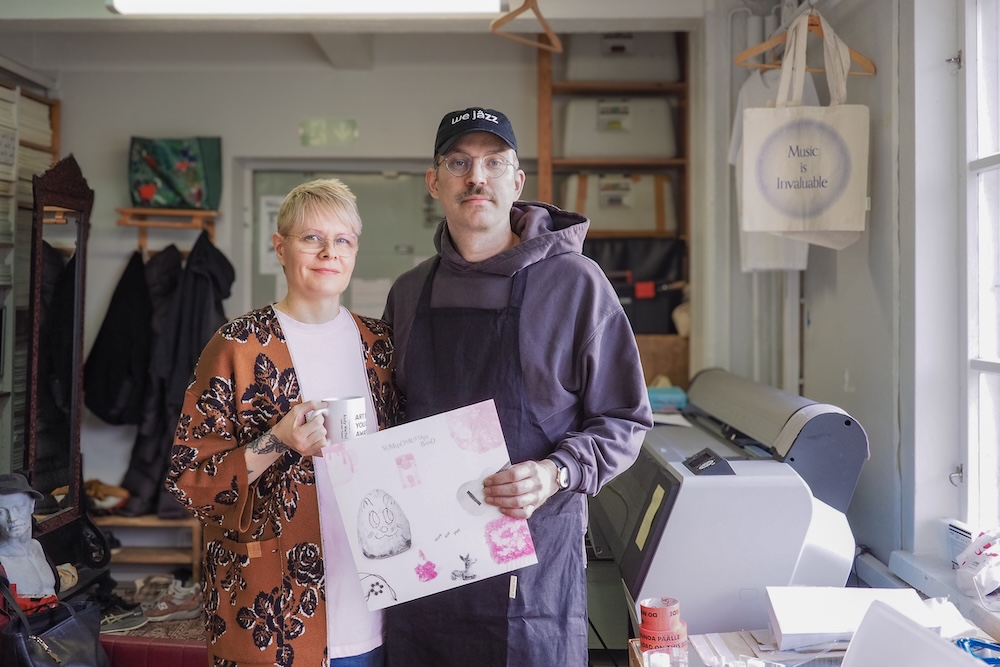
From the outside, it reads like the kind of place where scenes stay close-knit and overlap easily, where musicians, printmakers and designers end up working in the same rooms and sharing tools and ideas. That proximity shows up clearly in the work of Puro Recordings and Ultraääni, two Tampere-based labels that share not just a city but a workspace, a screenprinting setup and, at this point, a daily exchange of ideas.
The musician and producer Teemu Into started Puro as a home for his own recordings before it opened outward, while artist, printmaker and music fan Arsi Keva built Ultraääni as a way to document the music happening around him, initially pressing records for friends and collaborators. Their overlap is practical as much as philosophical, a shared warehouse, shared tools, and a willingness to fold each other into releases when it makes sense.
We’re psyched to begin distributing Puro Recordings and Ultraääni stateside, bringing a catalog that feels shaped as much by process and place as by genre. One of the first titles we’re carrying is Luurankolauluja, the second album by Uusi Aika, released by Puro Recordings. The album moves from a stark shakuhachi prelude rooted in Zen tradition into a wide-ranging suite of compositions that draw on Finnish folk imagery, raga-informed textures and a spacious, exploratory jazz language, culminating in a sweeping, multi-part finale that expands the group’s scale and reach.
Shop Puro Recordings and Ultraääni records in our webshop.
Another key title in the catalog is the Organic Pulse Ensemble’s Zither Suite, a co-release between Puro Recordings and Ultraääni. Recorded in an apartment just outside Gothenburg, the album centers on a found zither that threads through the sessions as a kind of tonal anchor, shaping a set of original compositions alongside “Jämtland,” a piece drawn from a Swedish folk melody dating back to the late 18th century.
Another highlight is Meidän Täytyy Valvoa Jottemme Nukkuisi, Sillä Maailma On Liukas by Pietu Arvola, released by Ultraääni. As The Quietus put it, “Arvola’s sound world fully reveals itself through a thick forest carpet of electronic layers, ghost sounds, humming, buzzing, scampering, and the wind in the trees,” a dense, immersive approach that rewards total attention and pulls the listener into something distinctly his own.
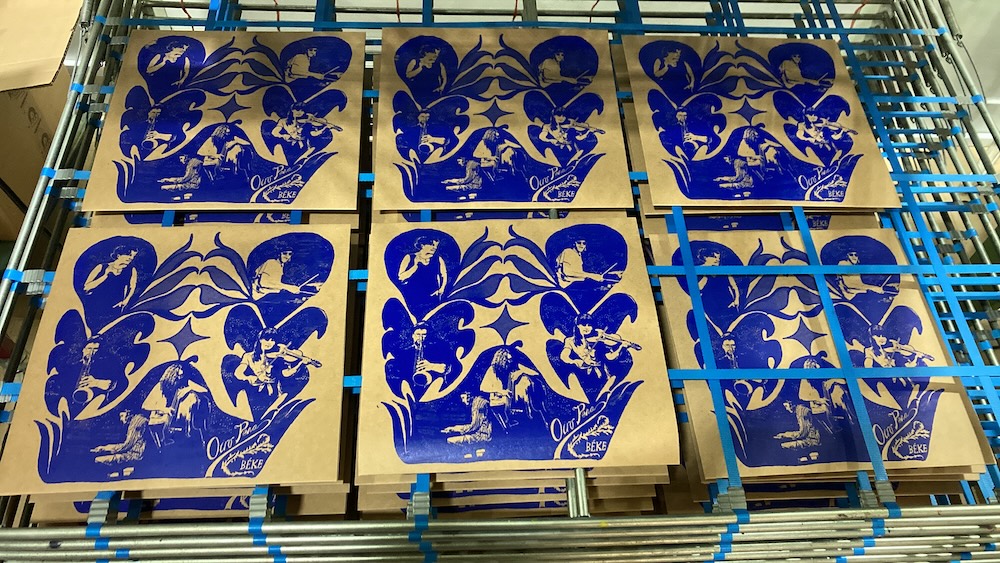
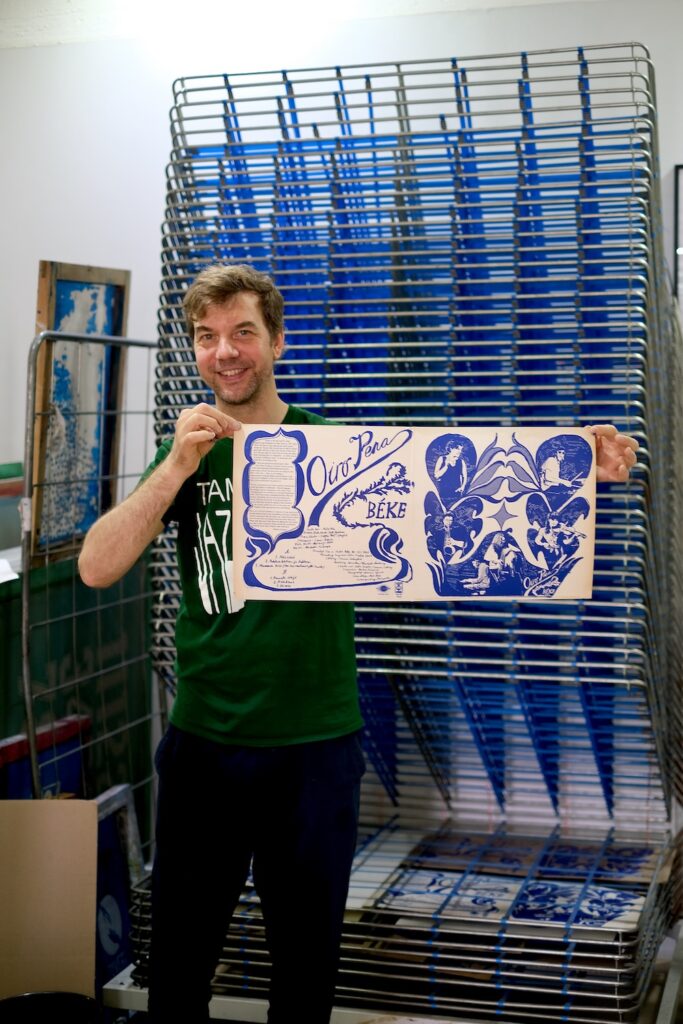
Also in the mix is Béke by Oiro Pena, released by Ultraääni. Tracked in a countryside studio during the winter months, the album shifts toward a more song-centered approach, pairing contrasting vocal tones with a fluid ensemble that moves between folk-rooted passages and freer improvisation, including a reworking of “Motherless Child” that gives the record a wider emotional and historical frame.
Teemu Into of Puro Recordings and Arsi Keva of Ultraääni recently answered a set of questions over email, illuminating how the two labels intersect, where they deliberately diverge and what it means to build a catalog slowly, from a place like Tampere.
Randall Roberts: For those discovering your labels for the first time, how would you each describe Puro and Ultraääni in your own words?
Teemu Into: Puro is about releasing music that’s somehow timeless, records that you can imagine people discovering 50 years from now. We try to go against the modern emphasis on release dates and release cycles, our aim is to build a catalogue that stands the test of time. We’ve always been music archaeologists and diggers at heart, and we love discovering music that feels like a hidden treasure. Success for us is giving the listener that same experience of finding something rare and beautiful.
Arsi: Ultraääni is a tiny record label from Tampere, Finland. The releases of the label combine music and fine art printmaking (screenprinting,risoprinting,letterpress etc). The label is best known for the jazz releases, but there’s plenty of other good stuff in the catalog as well.
What’s the connection between Puro and Ultraääni, shared roots, overlapping communities or something more informal? How do you see your relationship to each other, and where do your paths diverge?
Teemu: I’ve known Arsi for only a few years, but I’ve followed Ultraääni since the beginning. When we started Puro, I often asked Arsi for advice, and he was always eager to help. The thing I most admire about Arsi is that he truly does not have a competitive cell in his body. He’s all about collaboration and sharing. I was visiting him once when he was about to release the Ad Hoc LP from Organic Pulse Ensemble, he played it for me, I loved it, and he immediately proposed we release it together. That’s just who he is. I owe so much to him for getting our label off the ground. We now share a headquarters where we run our daily operations, bounce ideas and cheer each other on. We wouldn’t be this far without Arsi.
Arsi: Both of the labels are from Tampere, which makes collaborating natural. We share the same warehouse and screenprint lab these days. We have mutual interest in same kind of musical aesthetics, but the paths diverge on how strict we narrow down what we release genre-wise. The catalog of Ultraääni is kind of bouncing all over the place.
What first pushed you to start your label, and what gap were you hoping to fill at the time?
Teemu: We initially started the label as a vehicle for my own music, Mirror Ghost. Then an opportunity arose to release an album by our beloved local jazz legends, Hot Heros, which was received very well. From there, the collaboration with Arsi really took off. We never had a rigid master plan, or a specific angle in releasing music, but we believe in the longevity of the music we put out. Perhaps our approach is a counter-reaction to the engineered disposability of the streaming age.
Arsi: I wanted to document the underground music scene of Finland. To be more specific, I wanted to make the music of my friends available for other friends. I had a skateboarding-related knee-injury in 2016, and I couldn’t skate for a year so I needed to focus my energy and time on something else. That was kind of what pushed the idea of the label forward in the beginning.
Both of you are based in Tampere. How does the city shape your approach, its pace, its community, the kinds of music you’re drawn to and how artists around you connect?
Teemu: Tampere has a long lineage of interesting independent labels. Our friends at Fonal Records, in particular, proved you can reach a global audience from here. The scene is small and familial, with a lot of cross-pollination between arts and makers. There are great venues for underground artists, lots of interesting festivals etc. I’m actually also involved in an annual community driven ambient festival here called Siirtymä, which connects environmental art with ambient music performances.
There definitely is a specific pace here. Tampere is surrounded by lakes and forests, and the long, dark Finnish winters naturally lend themselves to a certain focused, internal creativity. It’s a stark contrast to the pace of a place like LA, and I think you can hear that stillness in many of our releases. Puro actually means “Brook” in English, and I think it frames our aesthetic quite well.
Arsi: Tampere is the counterculture capital of Finland. The size of the city is small, but the music and culture scene here is very active. People from different fields of art collaborate and work together in various projects. The encouraging vibe of the local scene has shaped alot how I want to work and how I value teamwork.
Tampere also has a strong history of standing against the bourgeois. The current extreme right-wing government of Finland is trashing the society. They hate everything they don’t understand, and they fail to understand anything they can’t monetize. This is dangerous for art and for any living creature. We must spread love, stick together and defend each other – and that’s what we’re doing here in Tampere. The ethos of the scene here is the best antidote to fight against this current political environment in Finland.
What tends to draw you to a project or artist when you decide to release something, and how involved are you in shaping a release, sonically, visually or conceptually?
Teemu: It’s all about the music. It has to feel unique, sincere, and heartfelt. Sometimes an artist delivers a 100% finished package, other times we are deeply involved in the production. For Uusi Aika, Johanna and I suggested the running order and I mixed the project. With the new Sumuposauttaja Band release, I ended up producing the whole thing. We are also obsessed with the tactile experience of the art. We believe the art and packaging is vital to the “mystique” of a record. It’s hard to explain, but you really know it when you hold the final item in your hand.
Arsi: I want to release music that is something I wanna listen to myself at home, alone or together with my family and friends.
Usually I’m interested and inspired by musicians who have their own approach, whether it be that they are completely self-taught or they have cast-off from their institutional background. People who are following their own path in art and in life. I am delighted by that attitude and approach.
Often the music is almost ready when the artist sends it over and I just try to match the visual aesthetics with the vibe of the music so that they somehow go hand in hand together.
A year ago Oiro Pena was recording their album ‘’Béke’’ in Studio Pelto, a small hut in the countryside. I was working in the tiny kitchen for two days helping the master chef Thomas Södergård. Chopping vegetables and heating up the wooden oven, making sure the band stayed fed and could play 24/7. That was my part of the studio work, and I actually loved it and would do it again anytime!
Many of your releases reward close, attentive listening. How do you think about the listening experience and the role of vinyl in shaping that?
Teemu: It’s essential. Listening to music from a physical medium is so different from streaming. Not only the listening experience, but how you value the music you’re hearing. With streaming, everything seems temporary and easily dismissible. The music can be so much more easily forgotten. When you have music in a physical format, it’s going to be there for a long time. You might not connect with it now, but it’s there for you or someone else to discover for years and years to come. It feels permanent. There’s so much value in that.
Arsi: Physical releases are in key role in preserving the music for future listeners. People can find them in a different time and place, and they give it a different value depending on their own viewpoint and cultural context. I view the physical releases of my label as objects / pieces of art that live their own lives. People attach their own memories to the records in their own collection. The items, the artworks become part of their life.
Looking at your most recent releases and what’s ahead, what feels new or different right now? Are there ideas, visual directions or projects that define this current phase of your labels?
Teemu: We’re really excited about what’s coming. I never thought we’d release an accordion-led album, but the upcoming release from the augmented accordion/drums duo Kuusijärvi & Rönkkö is one I’m perhaps most excited about putting out in the world. It’s a kind of electronic jazz from the future. Our big emphasis right now is to diversify our roster further. We also want to keep it small, keep it fun. We feel there are endless possibilities in music, and we want to create a platform for exploring and sharing all those strange and beautiful nooks and corners of sound.
Arsi: In the future I want to experiment and learn more of different print making techniques.
Ultraääni Records turns 10 years old this year. In the beginning the label was a side-hustle of a record nerd art student, and somehow it has slowly turned into the main job of a record nerd father of 2. I am excited of the current phase. I finally had the chance to move the office and the warehouse from my basement into a bigger, shared space with our own screenprinting equipment. The location is great, there’s a lot of artists and musicians working in a studio-complex right next to our place. It feels like this is just the beginning of the story.
Thanks to everyone and support your local recordstores!