



Until April 18th, save hundreds on KLH’s iconic Model Three, Five, and Seven speakers. One of the most beloved speaker brands around, KLH was reborn in 2018 under […]

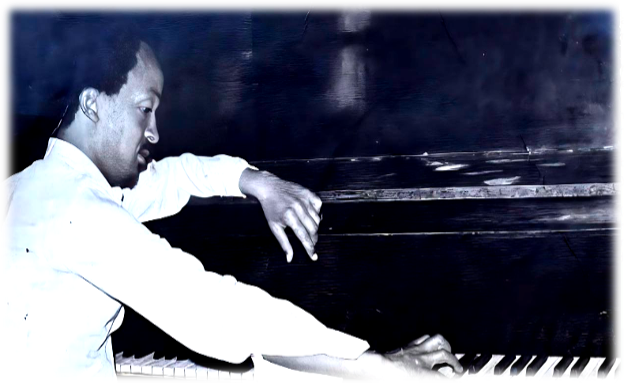
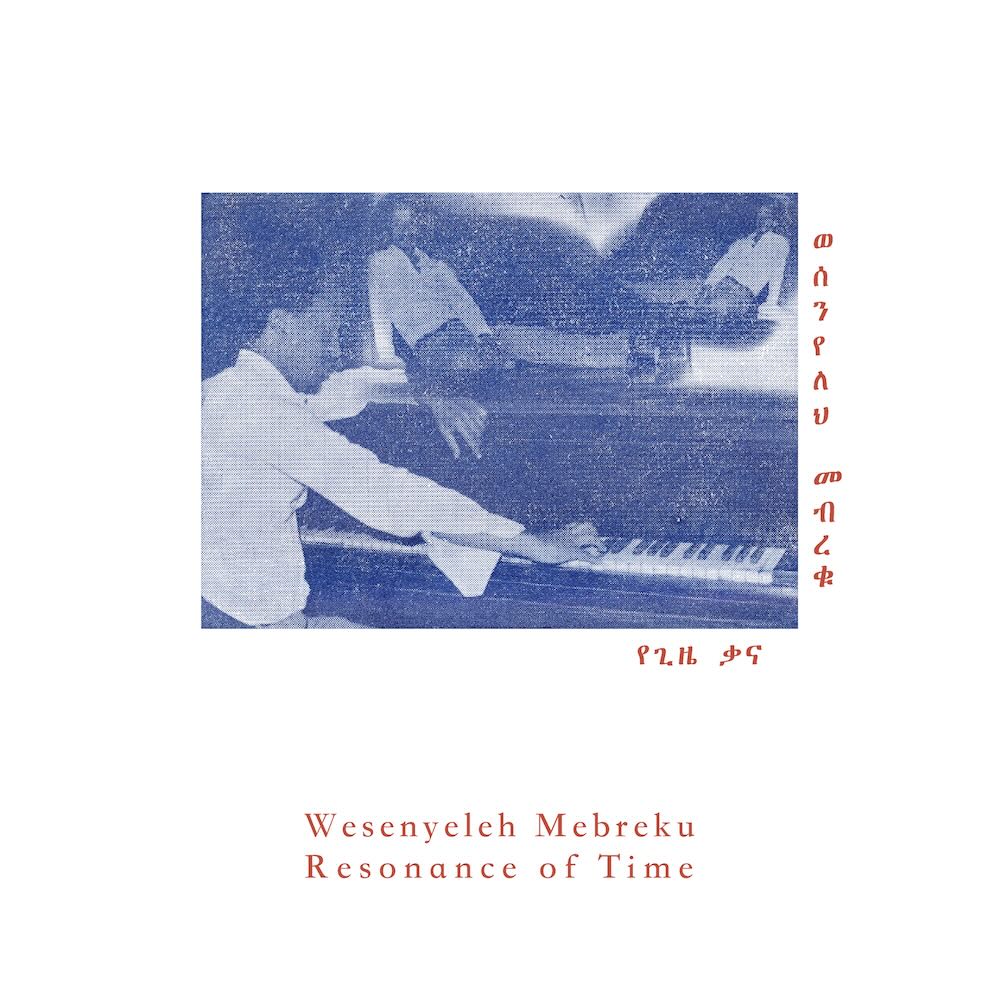
The journey to Resonance of Time, a forthcoming Tone Poem reissue collection of cassette-era recordings by Ethiopian composer and educator Wesenyeleh Mebreku, begins with a tape that lingered. “I started collecting Ethiopian tapes like this probably about a decade ago, and I found his cassette while digging for other music like it,” Tone Poem’s Austin Tretwold says, tracing the moment the music first entered his orbit.
Mebreku’s recorded output is remarkably small, drawn from two cassette releases made in the 1980s. Using a Casiotone keyboard, he reworked Ethiopian folk songs, lullabies, and popular compositions into a spare electronic form, part of a broader shift when, as expressed in the release notes, “traditional melodies started being interpreted on electronic keyboards, and the advent of cassette tape recording allowed for music to be transmitted more accessibly than centuries-old oral traditions.”
In Ethiopia, the cassette was not just a format but an infrastructure. Recordings were made quickly, duplicated locally, and passed hand to hand through shops, taxis, and personal collections. Much of the music was never formally archived, and copies often degraded as they circulated. What survives from that period does so unevenly, scattered across private holdings and partial transfers, its preservation tied as much to chance as to intention.
Bringing those recordings forward took time. “I’d been trying to contact him for a really long time,” Tretwold says, describing a search that stretched across years before finally resolving. The tapes themselves required similar patience, pieced together from fragile, inconsistent copies until one held. In Sheep’s Clothing is proud to be distributing the release, now available for preorder, alongside other titles from Tone Poem and its sibling label, Incidental Music.
Mebreku, now based in Addis Ababa, responded generously to a set of questions over email, reflecting on the recordings, their origins, and the musical ideas that continue to shape his work. His answers follow.
Randall Roberts: What first drew you to making instrumental versions of these songs back when you recorded them?
Wesenyeleh Mebreku: What first drew me to creating instrumental versions of these songs back when I recorded them was a deep desire to let the music speak beyond words. I felt that the melodies themselves carried an emotional truth that didn’t always need lyrics to be understood. By stripping the songs down to their instrumental core, I could highlight the purity of the harmonic movement, the phrasing, and the subtle dialogue between instruments.
There was also a strong artistic curiosity — an urge to explore how these songs would breathe in a different form. Instrumental versions allowed me to reinterpret the pieces, sometimes revealing hidden textures and nuances that might be overshadowed by vocals. In many ways, it became a process of rediscovery.
Additionally, coming from a background rooted in both Ethiopian pentatonic traditions and Western musical structure, I was drawn to the idea of creating a space where instruments could carry cultural expression just as powerfully as the human voice. The kirar, piano, or even a simple melodic line could convey nostalgia, longing, or joy in a very direct and universal way. Ultimately, it was about freedom — freedom to reimagine, to deepen the musical conversation, and to connect with listeners on a more intimate, almost meditative level.
How did you choose which traditional pieces to include on those original cassette recordings?
Choosing which traditional pieces to include on those original cassette recordings was a very intentional and thoughtful process. I wasn’t just selecting songs — I was curating a musical identity.
First, I was guided by cultural and emotional significance. I chose pieces that carried deep roots in Ethiopian musical heritage — melodies that people already felt connected to, whether through memory, ceremony, or everyday life. These were not just songs; they were part of a living tradition.
Second, I looked at the modal diversity within Ethiopian music — the different kignit — and wanted the recordings to reflect a balanced journey through these modes, each with its own emotional color. That way, the cassette wouldn’t feel one-dimensional, but rather like a complete musical story.
Another important factor was how well a piece could translate into an instrumental form. Some songs naturally lend themselves to instrumental interpretation — their melodies are strong, their phrasing is expressive, and they allow space for variation and improvisation. I was particularly drawn to pieces where instruments like the kirar or piano could “sing” in place of the human voice.
I also considered contrast and flow. A cassette has its own listening experience, so I arranged the pieces in a way that created movement — shifting moods, tempos, and tonal centers — to keep the listener engaged from beginning to end.
Finally, there was a personal connection. Some pieces were chosen because they had shaped me as a musician — songs I had lived with, taught, or performed over the years. Including them was a way of preserving not just tradition, but my own journey within it.
In the end, the selection became a bridge — between past and present, voice and instrument, tradition and reinterpretation.
Even though it was a simple electronic keyboard, I discovered that with careful touch and phrasing, I could adapt Ethiopian pentatonic expressions onto it. I could imitate the feeling of instruments like the kirar or masinko in my own way — not perfectly, but creatively.
Wesenyeleh Mebreku
What led you to use the Casiotone keyboard at that time?
What led me to use the Casiotone keyboard at that time was largely a mix of practicality, accessibility, and creative possibility.
First, it was one of the few instruments that was realistically available and affordable. In those days, especially in our environment, access to full acoustic instruments or recording setups was limited. The Casiotone offered an entire palette of sounds in one compact instrument — something that was very valuable for a working musician.
Second, it gave me independence. With one keyboard, I could explore melody, harmony, and even rhythm without needing a full ensemble. That was important for arranging and recording instrumental versions, because I could build layers and experiment freely, even when other musicians were not available.
Another reason was its versatility. Even though it was a simple electronic keyboard, I discovered that with careful touch and phrasing, I could adapt Ethiopian pentatonic expressions onto it. I could imitate the feeling of instruments like the kirar or masinko in my own way — not perfectly, but creatively. It became a tool for translation between traditional sound and modern medium.
There was also a spirit of experimentation. At that time, electronic instruments were still relatively new in our musical context, and I was curious about how they could serve Ethiopian music rather than replace it. The Casiotone allowed me to explore that boundary — keeping the soul of the music while using a different voice.
In the end, it wasn’t just about the instrument itself — it was about what it made possible. It gave me a way to continue creating, arranging, and preserving music under the conditions I had, while still opening a door to new sounds.
When you were making these recordings in the cassette era, did it feel like preservation, experimentation, or something else? Can you tell me a bit about the cassette market at the time?
It honestly felt like all of those things at once — but if I had to describe it clearly, it was a blend of preservation and experimentation, driven by necessity.
On one hand, there was a strong sense of preservation. During the cassette era, many traditional Ethiopian melodies were not formally archived. They lived in performance, in memory, in community. By recording instrumental versions, I felt I was capturing something fragile — especially the character of the kignit, the phrasing, and the emotional tone of the music. In that sense, the cassette became a small archive, a way of safeguarding musical identity for future listeners.
At the same time, it was deeply experimental. Using instruments like the Casiotone keyboard, I wasn’t simply reproducing tradition — I was reinterpreting it. I was asking: What happens when Ethiopian pentatonic music is voiced through a modern electronic instrument? That curiosity pushed me to try new textures, layering ideas, and simplified arrangements that could still carry depth.
But there was also something else — survival and communication. Recording was not just artistic; it was practical. It was a way to stay active as a musician, to reach listeners, and to keep music circulating even when live performance opportunities were limited.
About the cassette market at the time: The cassette market was the main artery of music distribution. Before digital platforms, before CDs became widespread, cassettes were how music lived and moved.
Accessibility: Cassette players were relatively affordable, and people could listen at home, in taxis, in shops. Music became portable in a new way.
Local production: Small studios and shops — ike those around Piazza or places such as Axum Music Shop — played a big role. Recordings didn’t always require large institutions; they could be produced and duplicated locally.
Duplication culture: Once a cassette was released, it would often be copied many times. This meant wider reach, even if the artist didn’t always benefit financially.
Curated listening: Unlike today’s playlists, each cassette had a fixed sequence. So we thought carefully about the order — how Side A begins, how Side B resolves. It was almost like composing a full journey.
Community circulation: People shared cassettes — among friends, families, even across regions. A recording could travel far beyond where it was made.
So in truth, those recordings were not just products — they were living documents. They carried memory, experimentation, limitation, and hope — all encoded in magnetic tape.
How were you thinking about blending Ethiopian musical modes with Western harmony back then?
I was thinking of it less as “blending systems” and more as protecting the identity of the kignit while gently surrounding it with harmony.
At that time, Ethiopian modes like Tizita, Bati, Ambassel, and Anchihoye were already complete musical worlds in themselves. They didn’t need Western harmony. So my mindset was careful: don’t impose—support.
How I approached it
• The mode leads, harmony follows: I always began with the melodic line. In Ethiopian music, the melody carries history, language, and emotion. I would listen to where the phrase settles — its natural resting points — and only then place chords underneath. The harmony had to agree with the melody, not redirect it.
• Working inside the pentatonic space: Because the modes are pentatonic, I avoided introducing notes that would disturb that color. Even when I used Western chords, I selected or adjusted them so they fit within, or very close to, the five-note structure. Sometimes that meant leaving chords incomplete or open.
• Simplicity over complexity: Instead of rich, changing chord progressions, I often stayed with one or two harmonic centers for a long stretch. This allowed the modal feeling to remain strong. Too many chord changes would shift the music away from its Ethiopian character.
• Harmony as atmosphere: I treated harmony like light in a painting — it should reveal, not dominate. A sustained chord, a soft movement in the bass, or parallel intervals could be enough to support the melody without overwhelming it.
• Voice-leading inspired by singing: Even when using keyboard, I imagined voices — like SATB or traditional call-and-response. Each note had to move naturally, almost like a singer would phrase it. This helped preserve the expressive quality of Ethiopian music.
It was not about modernizing or changing the tradition. It was about opening a dialogue — allowing Ethiopian modes to remain at the center, while Western harmony quietly adds depth, space, and a new listening perspective. In the end, the goal was simple: when you hear it, you should still feel Ethiopia first — everything else is just support.
Wesenyeleh Mebreku
There was always a tension: If I used too much Western harmony, the music lost its Ethiopian soul. If I used none at all, I missed the opportunity to expand its texture. So I was constantly adjusting, listening, refining.
It was not about modernizing or changing the tradition. It was about opening a dialogue — allowing Ethiopian modes to remain at the center, while Western harmony quietly adds depth, space, and a new listening perspective. In the end, the goal was simple: when you hear it, you should still feel Ethiopia first — everything else is just support.
How did your work as a teacher shape those recordings at the time?
My work as a teacher shaped those recordings in a very direct and practical way — it made me think of music not only as something to perform, but as something to explain, simplify, and pass on.
First, teaching trained me to clarify musical ideas. When you are in front of students, you cannot hide behind complexity — you have to break things down. That mindset carried into the recordings. I tended to choose clear melodic lines, balanced phrasing, and structured arrangements so that a listener — even without formal training — could follow the music.
Second, it influenced how I handled arrangement and texture. In a classroom, especially with beginners, you learn the value of space. Too many ideas at once can confuse the ear. So in those recordings, I often kept the textures open and transparent. Each musical line had a purpose, almost like demonstrating parts in a lesson.
Third, it shaped my approach to instrumental interpretation. As a teacher, I was always thinking: how would I demonstrate this mode? How would I show the character of Tizita or Bati to a student? The recordings became, in a way, practical examples — not formal exercises, but musical illustrations of Ethiopian modes and phrasing.
It also made me more disciplined. Teaching requires structure — progression from simple to more complex ideas. That influenced how I organized the cassette itself: the sequence of pieces, the contrast between them, even the pacing. It wasn’t random; it followed a kind of educational logic.
Finally, teaching deepened my sense of responsibility. I wasn’t just creating for myself — I was contributing to a larger musical culture. That made me more careful, more respectful of tradition, and more intentional about what I recorded. In that sense, those recordings were not only artistic works — they were also quiet lessons, shaped by the classroom and offered to a wider audience.
How did this music find its way from those original cassettes to Incidental Music now? Did the interest in the recordings surprise you?
The path from those original cassettes to Incidental Music was not something I mapped out — it grew slowly, through time, memory, and the persistence of the music itself.
At the beginning, the recordings were very local. They moved hand to hand — through cassette copies, small shops, students, and fellow musicians. Like many works of that era, they weren’t formally archived, but they lived in people’s collections. Some listeners kept them carefully; others shared them, and eventually a few were digitized. That is really how the bridge began — from magnetic tape into a form that could travel further.
Over time, there was a growing curiosity — especially among collectors, researchers, and listeners interested in Ethiopian sound and its unique modal language. The recordings started to resurface in those circles. From there, the connection to Incidental Music came quite naturally. They recognized that these were not just old recordings, but documents of a musical approach — the meeting of Ethiopian kignit with a minimalist, instrumental, almost meditative style.
Did the interest surprise me?
Yes, it truly did.
When I recorded those pieces, I was not thinking about future recognition or international release. I was working within the reality of the time — limited resources, simple tools, and a strong desire to create and preserve. The idea that, years later, people would listen with such attention and appreciation — it was unexpected.
But at the same time, I felt a quiet understanding of why it happened. Because the music was honest. It wasn’t trying to follow trends — it was rooted in tradition, shaped by necessity, and open to exploration. Sometimes, that kind of work travels further than you imagine.
Seeing the recordings re-emerge through Incidental Music feels like a continuation rather than a revival. The music has simply found a new context, a new audience, and a new way of being heard. It connects generations — the cassette listener of yesterday and the digital listener of today — and reminds us that even the simplest recordings, made with care and intention, can carry forward across time.
Listening back today, what do you hear differently in these recordings, and what do you hope new listeners hear in them?
Listening back today, I hear the recordings with a very different ear — both as a musician who has grown, and as someone who now understands more deeply the journey behind them.
First, I hear simplicity — but now I recognize it as a strength, not a limitation. At the time, some of that simplicity came from circumstance: limited instruments, limited recording means. But today I hear clarity, space, and focus. The melodies are allowed to breathe, and the musical ideas are not crowded. There is an honesty in that.
I also hear a kind of innocence and directness. I was not overthinking. I was responding intuitively — to the kignit, to the feeling of the moment, to the sound of the Casiotone keyboard. There is a purity in that approach that is sometimes harder to achieve later, when you know more and begin to question more.
At the same time, I can hear things I might do differently now — perhaps more developed harmonies, more refined sound, or different balances. But I don’t see those as flaws. They are part of the truth of that time. The recordings reflect exactly where I was, both artistically and personally.
What I hope new listeners hear:
I hope they hear the soul of Ethiopian music — the depth of the modes, the emotional weight carried in a simple melodic line. I hope they hear space — that not everything needs to be filled, that silence and restraint are also musical. I hope they hear a bridge — between traditional Ethiopian sound and a more minimal, instrumental expression. Not as a fusion that replaces anything, but as a respectful dialogue.
And perhaps most importantly, I hope they hear sincerity. These recordings were not made to impress—they were made to express, to preserve, and to explore. In the end, when I listen now, I don’t just hear the music. I hear a moment in time — captured quietly, but still speaking.
Preorder Wesenyeleh Mebreku’s Resonance of Time now through In Sheep’s Clothing, and explore new releases from Tone Poem and Incidental Music.