


The LA-based ambient country-folk duo share recent favorites! Last month, the meditative Los Angeles instrumental outfit North Americans released Long Cool World, its fifth album overall and second […]


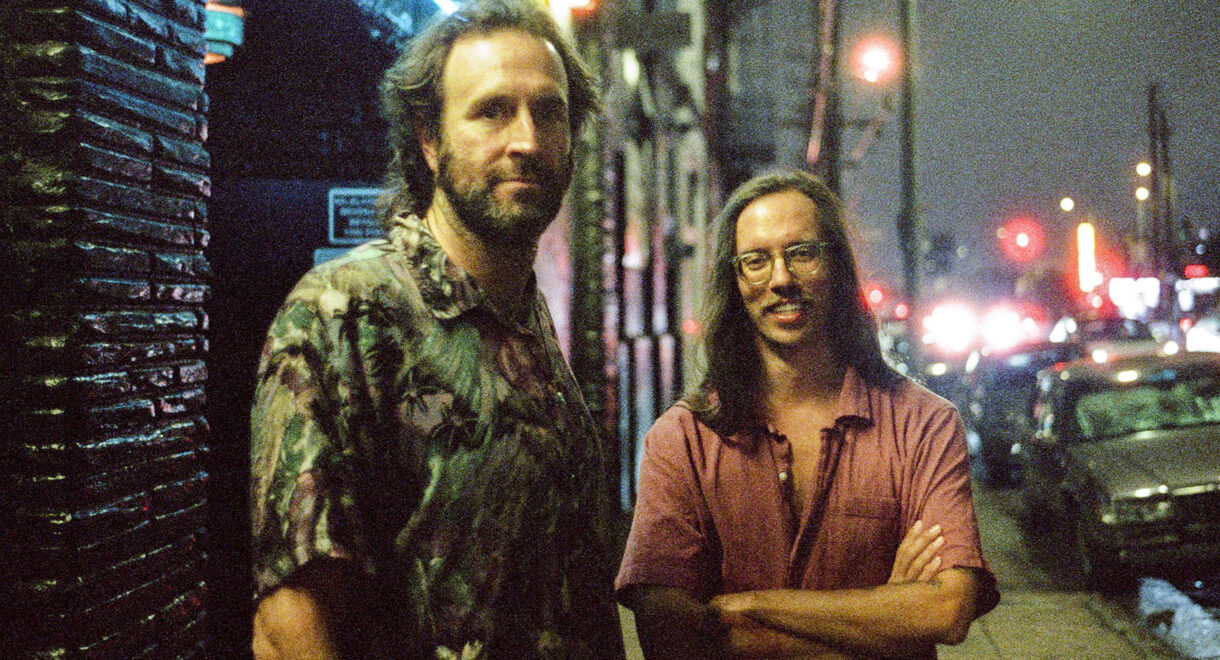
Elliot Bergman and Rodrigo Amarante are two multi-disciplinary artists with deep musical histories: Bergman’s credits include cult 4AD group His Name is Alive, afro-beat collective NOMO, and sessions with Dos Santos, LA LOM, and Neal Francis; Amarante was a founding member of Brazilian rock band Los Hermanos, samba big band Orquestra Imperial, Little Joy with The Strokes’ drummer Fabrizio Moretti, and composed the iconic theme song for Narcos. In some ways worlds apart — Bergman’s roots lie in Michigan while Amarante called Rio de Janeiro home for decades — the pair would by chance come together as kindred spirits and collaborators through Los Angeles’ web of musical connections.
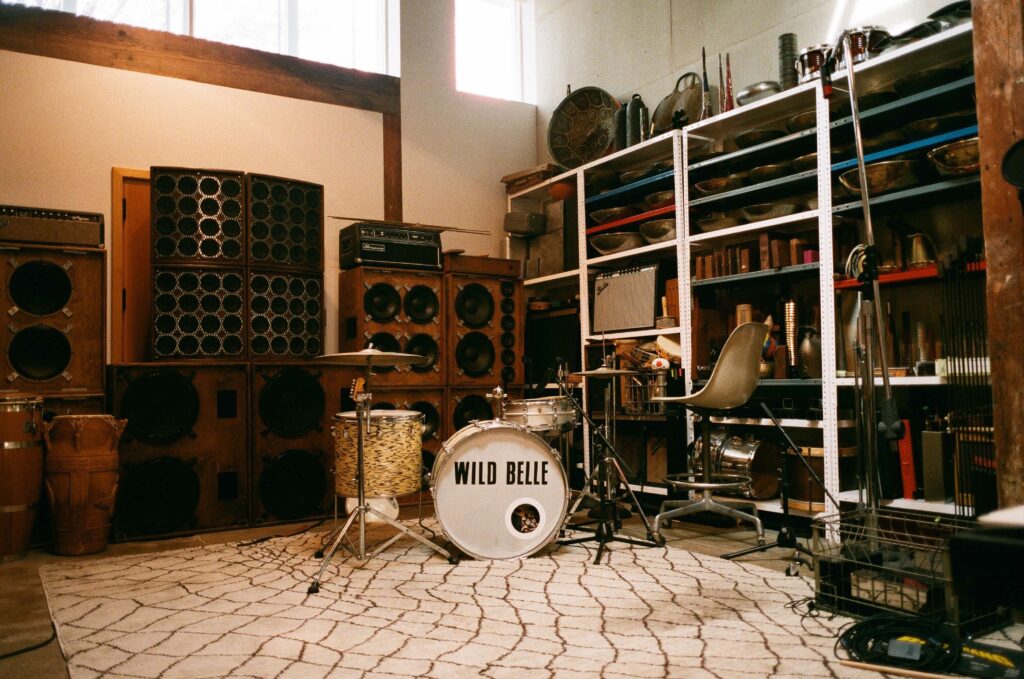
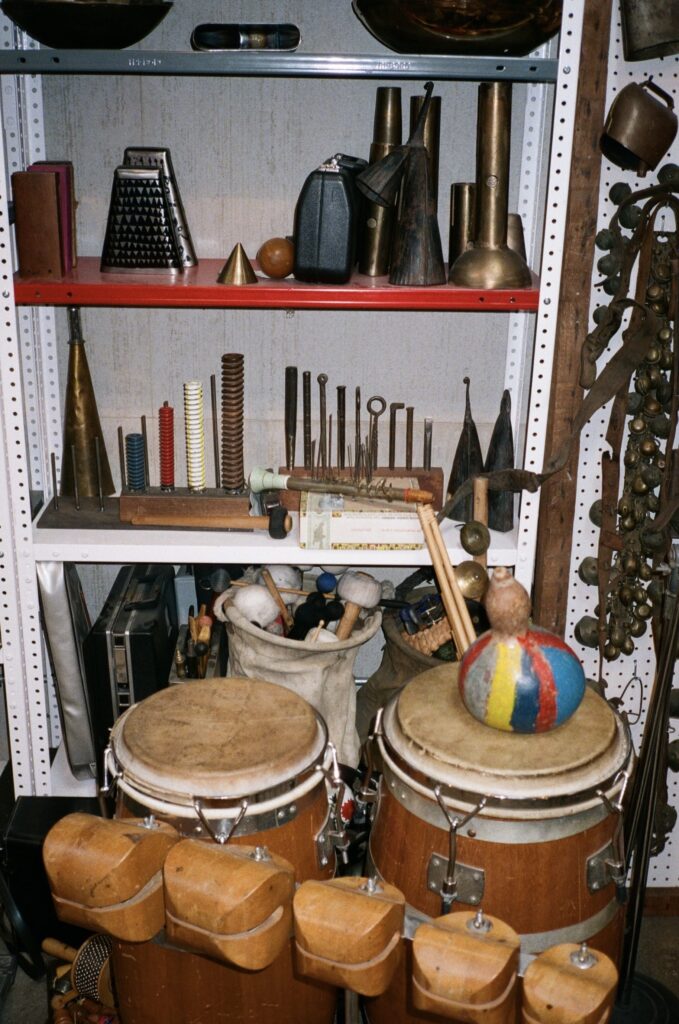
Last week, Bergman and Amarante released their debut collaboration Glacier via Fellowship Records. Originally intended to be the score for an experimental film about the disappearance of glaciers around the world, the album is a deeply meditative listen with fragments of melody, slow-moving drone textures and organic percussion rhythms. The recordings took place over a number of sessions at Bergman’s Studio Figueroa in Los Angeles and feature many of his own handmade bell instruments along with various woodwinds. Somewhere between improvisational jazz, drone, and musique concrète, Glacier has a wonderfully otherworldly quality to it, drawing listeners in with its uniquely abstract pace and cavernous atmospheres.
A few copies of the limited cassette tape are available now via In Sheep’s Clothing Records.
Shops can reach out [email protected] for wholesale pricing.
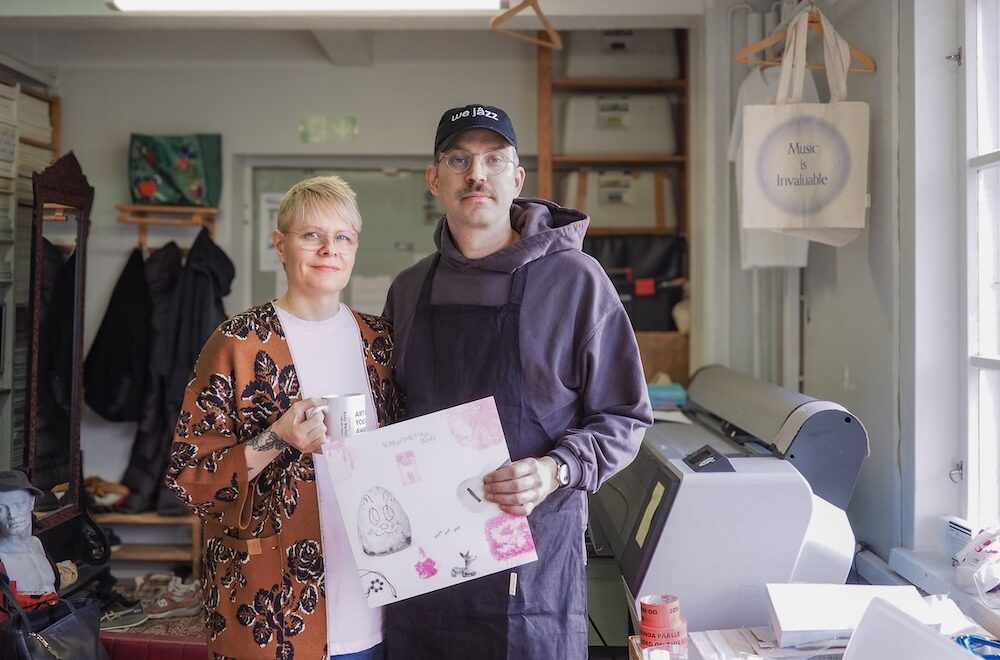
In Sheep’s Clothing’s Phil Cho visited Bergman at his Figueroa studio to learn more about how the album was made, gamelan music, bell making, influences, and more!
How did you and Rodrigo first meet? You seem to come from quite different backgrounds / worlds of music?
I’m trying to remember exactly when we met, but it was through mutual friends in music. I remember he came to my studio in Chicago once when he was on tour with Devendra Banhart. Then we started hanging out at my studio here in Cypress Park, which I built in 2018. This record came about because Rodrigo had a friend who was working on a film about glaciers. We just started experimenting, recording, and playing around with different percussive ideas.
Can you talk about some of those early sessions?
I’ve always liked what Rodrigo has done musically, so there was already a nice common ground. I remember that one of the first records that I did in this studio was with this band, Dos Santos, and Rodrigo had been around for some of those hangs. We were all just trying to figure out what we could do in this space. Some of the earlier sessions were these free-form, open jams.
Then Rodrido’s director friend came to us with his film about glaciers and the destruction of the environment. It was this ominous sort of feeling that he wanted, so we tried to do something related to that idea. We started recording these sessions that were very textural and atmospheric, with not a lot of distinct melodic or harmonic movement. We’d record everything to tape, and then slow them down – so the performances were, in a sense, played sped up with the understanding that everything would be later shifted down. That’s how this material came together.
“If you looked at the two of our musical histories, you wouldn’t imagine this is the collaboration that would come about.”
Elliot Bergman
Looking around this room, there are a ton of different instruments here. You’re both multi-instrumentalists. How did you go about deciding the instruments to be used for this particular project?
I think we were just trying to do something that was dynamic and had a fairly elemental feeling to it. The recordings feature basically all wooden and metallic instruments with some type of woodwind on top, whether that be flutes, clarinets, or these bamboo saxophones that I have. Rodrigo and I both play horns, so a lot of the time one of us would be playing percussion while the other was playing horns. We were just trying to create this environment that was a little bit ambiguous. What is this? Where or when is this from? I think we were inspired by some of the musique concrète records that were used in ‘60s French film soundtracks where the compositions are almost event-based.
It’s interesting that Matt (Fellowship Records) heard some of this stuff a while back, and has always been like, “Can I hear that again?” He kept asking about it. I think it’s so different from anything Rodrigo or I have ever done. If you looked at the two of our musical histories, you wouldn’t imagine this is the collaboration that would come about. It’s strange, but it’s almost like Matt’s energy and input was a part of the whole process and how this record was realized.
It definitely sounds like a record that would be sold at his shop. You mentioned musique concrète – were these influences discussed before recording?
Not really, to be honest. We just got into it. I think that we had this unspoken shared understanding of what we were going for. There wasn’t anything too explicit, and it really was just an experiment. Once we got going, we realized pretty quickly what worked. We wanted to leave a lot of space and have these dissonant beds of sounds that contributed to this ominous or doomed feeling. Essentially, it was an exploration of texture and these distinct percussion events.
Despite the abstract and free-form quality of the recording, it still comes across as two musicians improvising and reacting to each other. Can you talk a bit about that process of playing and improvising together?
I think we were both trying to approach it almost as if we were making sounds more than music. For example, Rodrigo can play horns, but he’s not a trained saxophonist, so his playing almost had this naive quality to it. It was fun playing with him in this way where I was like, “Okay, I’m just going to make sounds with Rodrigo.” It was almost like two children playing together or something. It wasn’t super methodical, and pretty free and spontaneous.
With the percussion, there’s no groove so we’re also not trying to get a rhythm going, and instead thinking of everything from this perspective of what certain sounds are going to do within this framework. It’s almost like wearing a mask or something. When you record something, and then slow it way down, it takes on this otherworldly or even unfamiliar quality, and everything gets bassier. So you have to essentially distance yourself from what you’re doing and feel slightly insulated by the process. I think we were just playing around with that.
It’s certainly not very advanced, but we basically did a number of performances, and then slowed everything way down. Then we lined up the two performances and overlaid different sections on top of each other to get a balance of the percussive sounds and the woodwind sounds. You could pan right or left to hear each part individually, and then the two combined give it a slightly more dimensional sound.
I would love to actually hear this record with the glaciers and the visual accompaniment. Even without it, you certainly get that otherworldly feeling. It sounds like the music could’ve been recorded at any time or from any place.
We were talking about how we would describe this record to people. I said that it almost sounds like underwater, slowed down gamelan music. Then Rodrigo goes, “It’s actually like an aluminum teapot factory at closing time.” What are the images that are evoked from these sounds? I don’t know… It’s also interesting to think about a piece of music in service of something else. This music was supposed to go with this image of glaciers. Then, for whatever reason, that film project didn’t come to fruition. Then what does this do on its own? Does it do something different?
You mentioned gamelan. I read that you first studied gamelan at university?
Yeah that was at the University of Michigan, which had a really great gamelan program. There was this guy Wasi Bantolo there who led the gamelan ensemble. I’ve always loved gamelan and Indonesian music. That’s been an inspiration for me in terms of bell making and exploring metallic sounds. I think gamelan is some of the most beautiful music on Earth. I’m certainly not a scholar, but I’ve had a few years of playing in the gamelan ensemble.
“I said that it almost sounds like underwater, slowed down gamelan music. Then Rodrigo goes, ‘It’s actually like an aluminum teapot factory at closing time.'”
On that note of bell making… Your practice as a sculptor seems to directly intertwine with your musical work. When did that begin, and what is it about bells that draws you in?
Bells have been a focus of mine for the last 15 years. I’ve been making them and trying to understand them. It’s a beautiful and mysterious process. I actually started collecting bells when I was a kid in Michigan combing through junkyards and thrift stores trying to find any little type of bell that I could. Then I started making bells at community college, and when I graduated I worked with a few different foundries around Chicago. I love bells. They’re unique in the musical world in terms of their overtones and sound. With the whole pitch shifting process, I like that you’re able to take an object that’s very small and make it sound massive. Even just a small bell, as you pitch shift it down, it starts to sound like a massive church bell because it retains some of the overtones.
That disorienting quality of changing the pitch is a big part of my music. When you transpose something to a different register, you get the music to do different things. It’s transformative enough that you can almost step away from the performance. It takes on this other quality that feels separate from you. You can have this different experience of making music where you’re not so worried about technically executing something. It becomes something else, almost more like a sample. That allows you to have a more free, objective relationship to the recording. It’s just another material or texture. I feel like when you come from a background of being trained on an instrument, sometimes you can be more free if you’re able to have some detachment from the performance. In the case of this record, the manipulated bell tones almost become atmospheric, or their own environment. It’s almost not even music, depending on how you think about it.
Besides the instruments being played, I feel like space is also very important in this record. It almost sounds like it was recorded in a cave, but obviously wasn’t. How did you achieve that sound?
We wanted to have a fairly live room sound. I think we just set up a couple condenser microphones and moved them around. I like the cave analogy. It does have this feeling of ambiguity like, “Where this music could be coming from?” I’m always interested in recordings that make you feel like you are immediately situated in some space. There’s just an instantaneous feeling of being somewhere else. For me, it’s hard to experience this record with that sort of blank slate audio imagination, but it’s always something that I love when I’m listening to other records. Phil Spector’s recordings, The Beach Boys, or a lot of the stuff from Chess Records just have this immediate feeling. Whether it’s real or artificial – it could be a reverb chamber, plate, spring, or whatever – but the illusion of space is always one thing that I am most drawn to. Maybe that’s why we listen to records. We’re looking for a place to go, inhabit, and try on. I guess I’m always craving that element of discovery or surprise in terms of what you’re hearing and trying to experience something that you hadn’t quite heard before.
What you’re describing reminds me a bit of field recordings. I was actually just at Matt’s house the other day listening to a bunch of his field recording records. This record definitely has some of those similar transportive qualities.
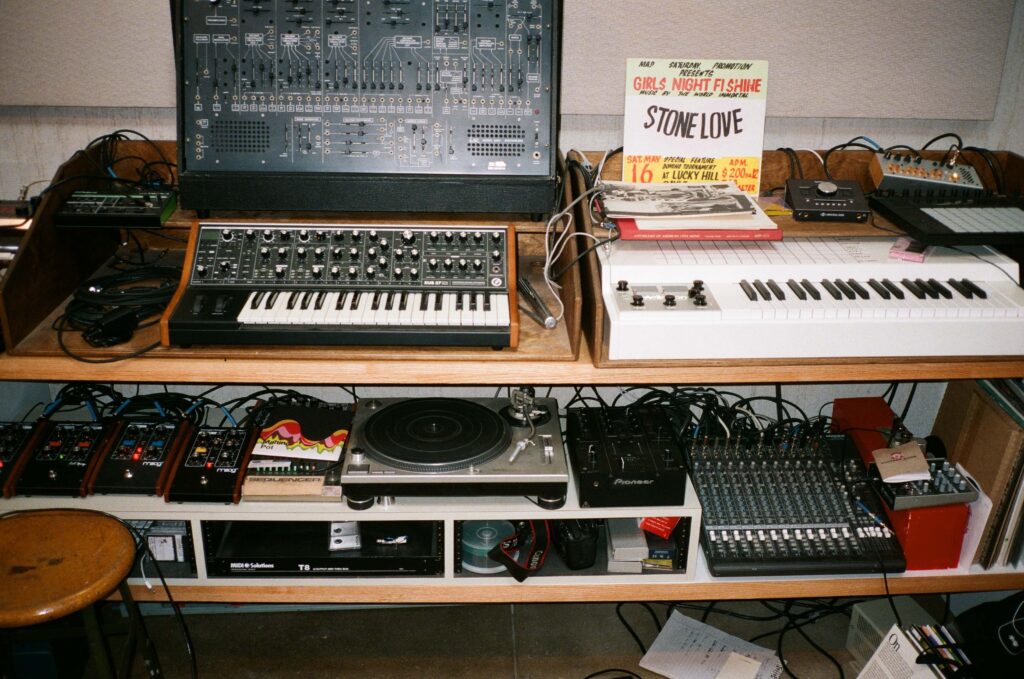
The machine that we used is actually a field recording machine. It’s an old Marantz cassette recorder. I’ve used that machine a lot of records that I’ve worked on. We just run things through it because it just does this thing that makes it sound like a field recording. I certainly don’t have a very strict feeling about recording technology, though. I use Ableton. I like to use outdated technology. The MPC is amazing. I also love this Akai 612 sampler, which has a very distinctive sound that I’ve started to recognize in other recordings that have used it.
We always like to include some additional music in these interview articles. We can go a number of different ways with this, but maybe you can share a few of your favorite percussion albums, or favorite soundtracks, or even favorite records that have that transportive feeling you mentioned before.
This is a pretty wide-ranging list of records with incredible percussive or rhythmic elements. I can’t say that the Glacier tape has much to do with any of this, but this is a nice trove of percussive sounds.
And some new stuff / Friend’s stuff:
Lastly, what’s coming up next? Any installation projects to mention, or upcoming music?
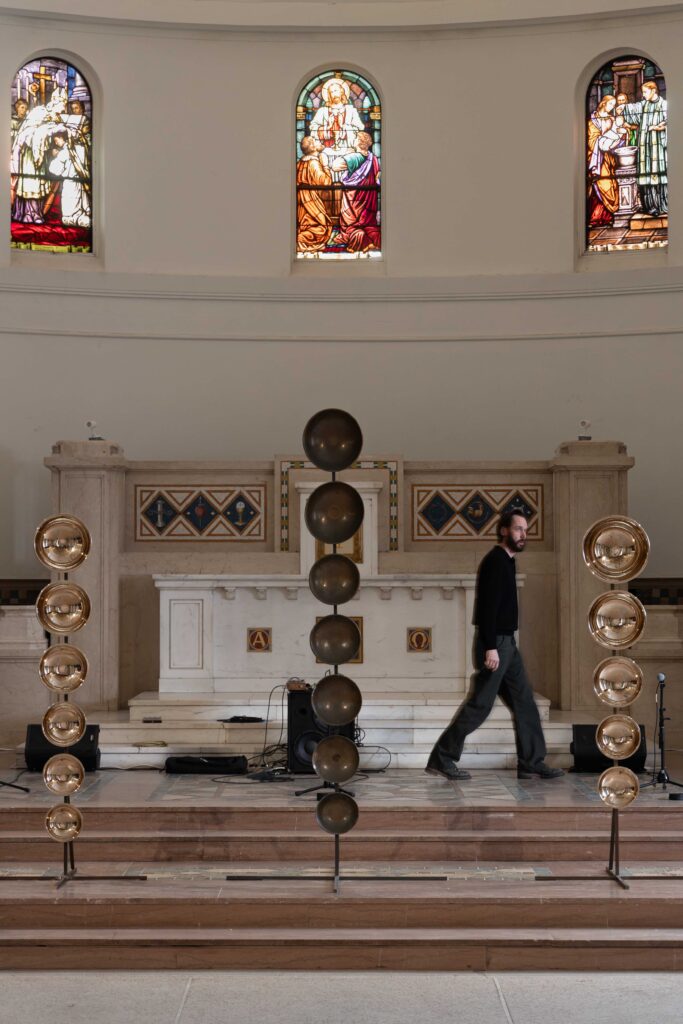
I just participated in a group show at a gallery in Detroit called the Shepherd. It’s a former Catholic Church built over 100 years ago, and beautifully renovated by the people behind the Library Street Collective gallery. It’s an incredible space, and very reverberant. I have a new group of bell trees in the space, and we did a performance for the opening. The show is up through April 18th and I’m hoping we can get back in there and do a performance for the closing. It was great to be back in Michigan and see some of my old collaborators there. Jamie Register from NOMO played with me, as well as Adam Bradley Schreiber, and Jonathan Barahal. I’m hoping to get some other friends involved if we’re able to play again. Warren Defever from His Name is Alive has been a friend and mentor for over 20 years and Gretchen Gonzales too. Detroit is a very special place, and there’s a lot of exciting things happening there lately. I have just finished a new solo record that pulls from many of the installations I’ve done over the last 10 years, and I’m hoping to release that later this year.